
Niche targeting improves engagement rate because it aligns content with people who actually care. Many Twitter accounts struggle with low engagement not because they lack followers, but because their audience is too broad, unfocused, or irrelevant. When content is shown to users who do not share the same interests, engagement naturally drops. Likes feel random, replies disappear, and retweets become rare. Over time, this disconnect weakens both visibility and credibility, making growth harder rather than easier.
On Twitter, relevance is the strongest currency. Accounts that speak clearly to a specific niche often outperform larger accounts with mixed audiences. Engagement rate increases when tweets resonate with a defined group that understands the context, language, and value behind each post. Niche targeting is not about limiting growth. It is about sharpening focus so that growth produces interaction instead of noise.
This guide explains how niche targeting improves engagement rate by aligning audience intent, content relevance, and engagement signals. This article breaks down why broad targeting fails, how niche audiences interact differently, how the Twitter algorithm responds to relevance, and how niche focused strategies create stronger, more sustainable engagement over time.
What Is Niche Targeting on Twitter?
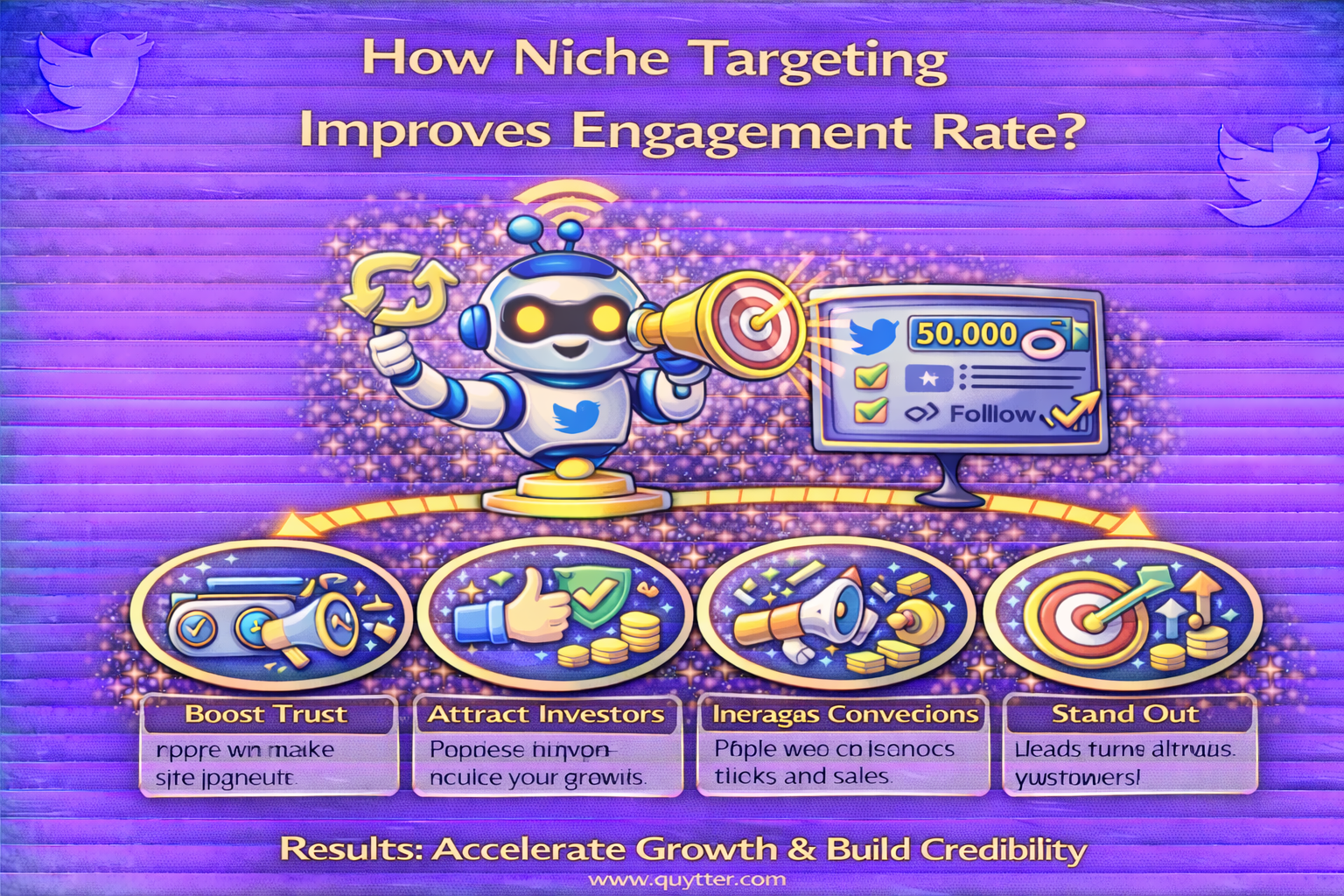
Niche targeting on Twitter means intentionally focusing content, audience, and engagement around a clearly defined topic, industry, or interest group. Instead of trying to appeal to everyone, niche targeting prioritizes relevance for a specific audience segment. This could be crypto investors, SaaS founders, gaming creators, NFT collectors, local businesses, or personal brand followers interested in a particular expertise.
At its core, niche targeting is about alignment. Content aligns with audience interest. Audience aligns with engagement behavior. Engagement aligns with algorithmic distribution. When these elements work together, engagement rate increases naturally.
Broad targeting often creates diluted signals. A tweet might attract followers, but not interaction. Niche targeting reduces this friction by narrowing focus. Followers know why they follow the account. Tweets meet expectations. Engagement becomes consistent rather than unpredictable.
Niche targeting affects multiple layers of a Twitter account:
- Content topics and language
- Audience composition
- Engagement patterns
- Profile positioning
- Growth strategy
For example, a crypto focused account that consistently posts about market insights, project updates, and narratives attracts users who expect and engage with that content. A general account posting random thoughts, promotions, and unrelated topics confuses both users and the algorithm.
Niche targeting is not about being repetitive. It is about being coherent. Within a niche, content can still be diverse, but it always connects back to a central theme that the audience values.
Why Engagement Rate Drops with Broad Audiences?
Engagement rate drops when audiences are too broad because relevance declines. When followers have mixed interests, most tweets only appeal to a small portion of the audience. The rest scroll past without interacting. Over time, this reduces overall engagement signals and weakens visibility.
Broad audiences often form unintentionally. Accounts chase followers from different niches, trends, or regions without a clear strategy. While follower counts increase, engagement does not scale proportionally. This creates an imbalance where metrics look impressive but performance is weak.
One major issue with broad audiences is inconsistent interest. A tweet about crypto may resonate with one segment, while a post about marketing resonates with another. However, neither group consistently engages with all content. The algorithm detects this inconsistency and reduces distribution.
Another problem is unclear positioning. Users follow accounts that meet specific expectations. When content shifts frequently, trust erodes. Followers stop paying attention because they no longer know what value to expect.
Common reasons engagement rate drops with broad audiences include:
- Mixed interests among followers
- Low relevance for most tweets
- Weak early engagement signals
- Inconsistent interaction patterns
- Algorithm confusion about audience fit
Broad targeting also affects replies. Users are less likely to comment when they feel disconnected from the topic. Replies require higher intent than likes. When content lacks relevance, conversation disappears first.
Over time, accounts with broad audiences experience declining engagement rates even as follower counts grow. This leads to frustration and the false belief that Twitter is saturated or broken. In reality, the issue is misalignment.
How Niche Targeting Aligns Content with Audience Intent
Audience intent is the reason someone follows an account and engages with its content. Niche targeting improves engagement rate by aligning content directly with that intent. When users see tweets that match their expectations, interaction becomes natural rather than forced.
Intent varies by niche. Crypto users want timely insights, narratives, and updates. SaaS founders want clarity, frameworks, and lessons. Gaming audiences want entertainment, personality, and highlights. When content matches intent, engagement feels effortless.
Niche targeting allows content creators to speak the audience’s language. Terminology, tone, and references feel familiar. This creates psychological relevance, which increases the likelihood of likes, replies, and retweets.
Another benefit is reduced cognitive load. Users do not need to evaluate whether a tweet is relevant. They already trust the account’s focus. This trust lowers friction and increases interaction frequency.
Niche alignment also improves content planning. Instead of guessing what might work, creators understand their audience’s needs. This leads to more consistent posting and fewer engagement droughts.
Effective alignment often includes:
- Clear niche positioning in bio and content
- Consistent themes across tweets
- Familiar language and references
- Predictable value delivery
When content aligns with audience intent, engagement rate improves because users feel seen and understood. Tweets stop competing for attention and start fulfilling expectations.
The Relationship Between Niche Targeting and the Twitter Algorithm
The Twitter algorithm is designed to amplify content that generates meaningful interaction. Niche targeting improves engagement rate by creating consistent signals that help the algorithm understand who the content is for.
Early engagement plays a critical role. When a tweet receives quick likes, replies, or retweets from users with similar interests, the algorithm is more likely to show it to others within the same niche. This creates a visibility loop where relevance reinforces reach.
Niche targeting reduces signal noise. When followers share similar interests, engagement patterns become more predictable. The algorithm sees consistent interaction and increases distribution confidence.
Language consistency also matters. Tweets written in the same tone and terminology help the algorithm classify content. This classification improves recommendations and timeline placement for users interested in that niche.
Another factor is engagement depth. Niche audiences are more likely to reply and participate in conversations. Replies are strong signals of relevance. When replies come from users within the same niche, the algorithm interprets this as high value interaction.
Key algorithmic benefits of niche targeting include:
- Stronger early engagement signals
- More consistent interaction patterns
- Better content classification
- Increased niche specific distribution
Without niche targeting, engagement signals become scattered. The algorithm struggles to identify the right audience, leading to reduced reach and lower engagement rates.
Engagement Quality vs Engagement Quantity
Engagement quantity refers to raw numbers such as total likes or views. Engagement quality refers to how meaningful and relevant those interactions are. Niche targeting improves engagement rate by increasing quality, not just volume.
High quality engagement includes replies, thoughtful retweets, and repeat interactions from the same audience. These signals indicate genuine interest rather than passive scrolling.
Broad audiences may produce higher raw numbers occasionally, but engagement is often shallow. Likes come from users who do not follow closely. Replies are rare. Retention is low.
Niche audiences engage differently. They return, comment, and participate. This creates a stronger engagement rate even with fewer followers.
Different niches value different engagement types:
- Crypto prioritizes retweets and replies
- SaaS values thoughtful replies
- Gaming values replies and views
- Personal brands value conversation
Quality engagement also compounds. When users feel part of a niche community, they engage more frequently over time. This increases lifetime engagement value per follower.
Focusing on quality over quantity prevents vanity metrics from distorting strategy. Engagement rate improves because interactions come from users who care.
Examples of Niche Targeting That Improve Engagement
Niche targeting works across industries, but the execution differs.
In crypto, niche targeting focuses on narratives, updates, and community discussion. Engagement increases when content speaks directly to investors and builders rather than the general public.
In SaaS, niche targeting centers on founders, marketers, or developers. Educational threads and insights drive replies and saves.
In gaming, niche targeting emphasizes specific games or communities. Clips, memes, and reactions resonate with fans who share the same interests.
For personal brands, niche targeting revolves around expertise or perspective. Followers engage because they relate to the creator’s focus.
These examples show that engagement rate improves when content speaks to a clearly defined audience with shared context.
Common Mistakes When Targeting a Niche
One common mistake is targeting too broadly while believing the niche is defined. Vague positioning leads to mixed audiences and weak engagement.
Another mistake is targeting too narrowly. Over specialization can limit content variety and growth potential.
Inconsistency is also damaging. Switching niches frequently confuses followers and reduces trust.
Overusing growth tools without maintaining relevance is another issue. Growth should support niche alignment, not dilute it.
Avoiding these mistakes requires clarity, patience, and continuous refinement.
How to Combine Niche Targeting with Twitter Growth Services?
Twitter growth services work best when they are used to reinforce niche targeting rather than replace organic strategy. A clearly defined niche gives growth services a direction, ensuring that any added visibility reaches users who are already aligned with the content. Without niche clarity, growth services may increase numbers but fail to improve engagement rate or long term retention.
The first step is ensuring that content speaks directly to a specific audience. Tweets should reflect a consistent theme, tone, and problem space. Once this foundation is in place, growth services can be applied selectively to posts that already match audience intent. These are usually educational tweets, strong opinions, launch announcements, or content that has shown early organic interaction.
Timing also plays an important role. Growth services should support early engagement so the algorithm can quickly identify niche relevance. When likes, views, or retweets arrive during the initial visibility window, Twitter is more likely to distribute the tweet to similar users within the same niche.
Balanced usage is essential. Overusing growth services can distort engagement ratios and reduce trust, even if the niche targeting is correct. Services should be used as reinforcement, not as a constant crutch. A healthy approach often includes:
- Applying services only to high quality, niche aligned posts
- Allowing organic engagement to appear first
- Matching delivery speed with normal activity patterns
- Monitoring engagement ratios over time
When combined thoughtfully, niche targeting and Twitter growth services work together to improve engagement rate without compromising credibility. The niche creates relevance, while growth services provide momentum, allowing content to reach the right audience faster and more consistently.
Why Quytter Helps Improve Engagement Through Niche Targeting?
Quytter is designed to support engagement growth by aligning services with niche relevance and organic behavior. Instead of delivering random metrics, Quytter focuses on balance and pacing.
Quytter provides real Twitter followers that align with niche interests, helping accounts build relevant audiences. Engagement services such as likes, retweets, comments, and views are delivered gradually to reinforce visibility without overwhelming organic signals.
With Quytter, users can:
- Buy real Twitter followers aligned with niche focus
- Buy Twitter likes to support early engagement
- Buy Twitter retweets to expand niche reach
- Buy Twitter comments to encourage discussion
- Buy Twitter views to reinforce visibility
Quytter’s approach helps niche focused accounts amplify content that already resonates. Services act as support, not shortcuts.
This makes Quytter suitable for brands and creators who value engagement quality and sustainable growth.
Conclusion
Niche targeting improves engagement rate by aligning content, audience intent, and algorithmic signals. When tweets reach people who care, interaction increases naturally. Broad targeting often inflates follower counts but weakens engagement. Niche focus does the opposite.
By speaking clearly to a defined audience, accounts build trust, consistency, and meaningful interaction. Engagement rate improves because relevance replaces randomness.
When niche targeting is combined with balanced growth support, results scale without sacrificing credibility. For creators and brands seeking sustainable engagement, Quytter offers tools that complement niche strategy rather than disrupt it.
In the long term, engagement belongs to those who choose relevance over reach.