
Buying Twitter accounts is no longer a niche tactic used only by underground marketers. Today, it has become a calculated business decision for brands, growth teams, affiliates, and agencies that need scale, speed, or redundancy. However, the real risk does not come from the act of buying itself. The real danger comes from choosing the wrong site to buy from.
Most account failures, suspensions, and losses do not happen because the buyer used the account incorrectly. They happen because the account was sourced, aged, or handled improperly long before it reached the buyer. This is why understanding how to choose a trusted site to buy Twitter accounts is far more important than obsessing over follower count, verification status, or price.
This guide focuses on helping you evaluate sellers, understand how account supply chains work, and reduce risk through informed decision making rather than blind trust.
Why Choosing the Right Site Matters More Than the Account Itself?
Many buyers make the same mistake when entering the Twitter account market. They focus almost entirely on the account specifications. Age, followers, profile completeness, or verification signals. While these factors matter, they are only surface level indicators. The deeper risk lies in the site or seller behind the account.
A trusted site does more than deliver login credentials. It controls the entire lifecycle of the account before and after delivery. This includes how the account was created, how it was aged, how many times it has changed hands, and whether it has been exposed to risky behavior patterns.
Untrusted sellers often operate with a volume mindset. They acquire or generate accounts in bulk, flip them quickly, and disappear once the transaction is complete. When an account fails days or weeks later, the buyer has no recourse. The damage is already done, not just financially, but operationally.
From an experience standpoint, buyers who consistently choose reliable providers report fewer immediate suspensions, smoother warm up periods, and longer usable lifespans. This is not luck. It is the result of controlled sourcing and responsible distribution.
From an expertise perspective, a legitimate seller understands Twitter enforcement patterns, device fingerprinting risks, and behavioral triggers. They design their supply process to minimize these risks before the account ever reaches you.
From a trust standpoint, the right site offers accountability. Clear communication, realistic expectations, and defined post purchase policies. These are signals of a business built for long term operation rather than short term extraction.
Choosing the wrong site turns every downstream decision into damage control. Choosing the right one allows you to focus on growth, engagement, or automation without constantly worrying about sudden account loss.
How Twitter Account Sellers Actually Source Their Accounts?
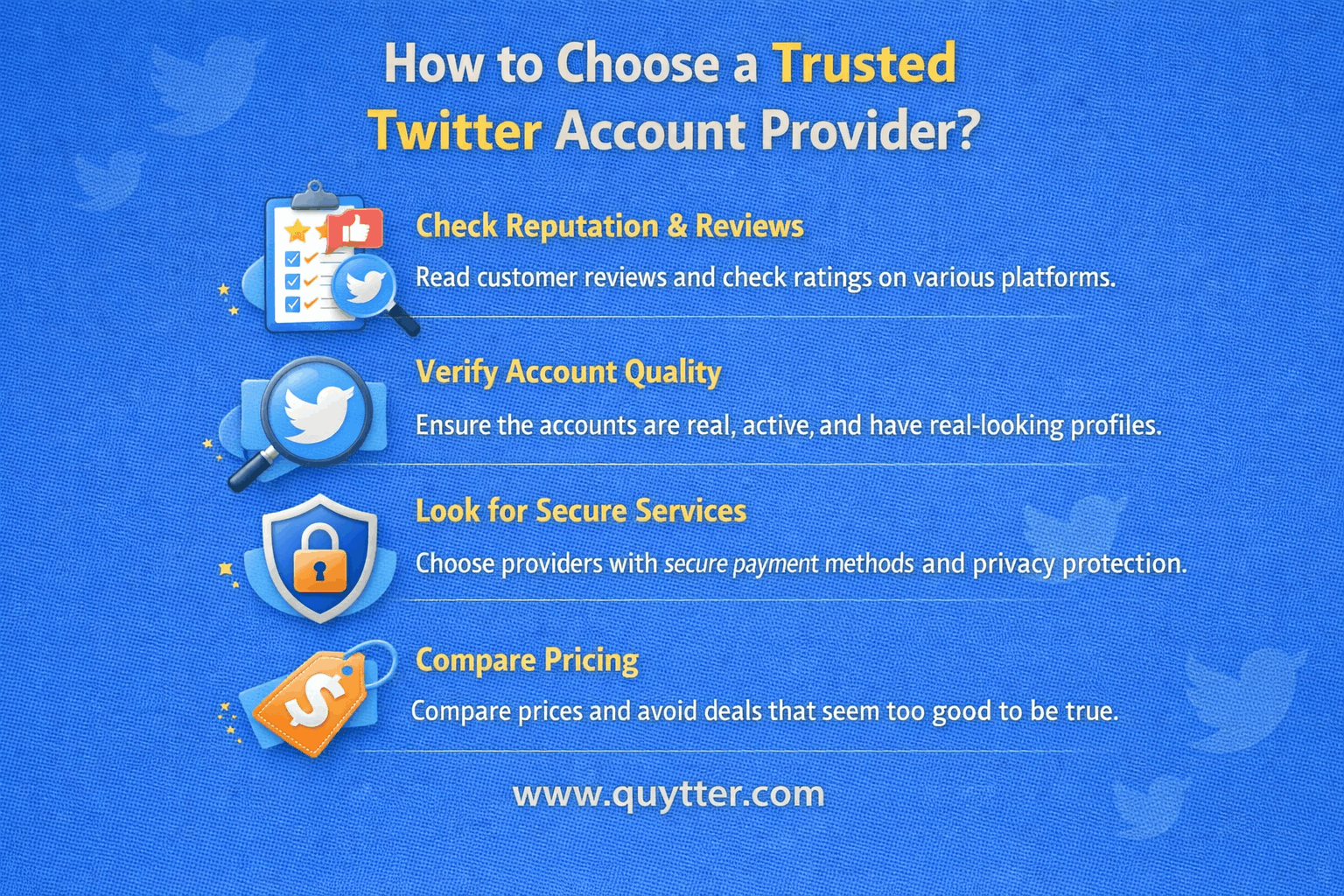
To choose a trusted site, you must first understand how sellers source the accounts they sell. Most buyers assume all accounts are created equal. They are not. The sourcing method determines the baseline risk profile of every account.
There are generally four sourcing models used across the market.
The first model is organic aging. These accounts are created manually or semi manually and then aged through controlled, low risk activity. They often follow real users, consume content, and build a natural looking timeline. This approach is time consuming and expensive, which is why accounts sourced this way cost more. However, they also tend to survive longer.
The second model is controlled automation. Accounts are generated using automation tools but within strict behavioral limits. IPs, devices, and activity patterns are rotated carefully. When done properly, this method can produce usable accounts, but it requires technical discipline. When done poorly, it results in burned inventory.
The third model is resold inventory. These accounts may have passed through multiple sellers before reaching you. Each transfer increases exposure risk. Password changes, IP changes, and inconsistent usage history create red flags that Twitter systems are designed to detect.
The fourth model is black market harvesting. These accounts are often compromised, recycled, or mass created with no aging. They may look attractive on the surface but carry extreme suspension risk. Trusted sites do not rely on this model because it destroys long term credibility.
Understanding which model a seller uses is critical. Trusted sites are usually transparent about their sourcing approach at least at a high level. Untrusted sellers avoid these conversations or provide vague answers.
A useful way to evaluate sourcing credibility is to ask yourself whether the seller’s business model would survive if accounts lasted only a few days. If the answer is yes, you are likely dealing with a volume driven operation rather than a quality driven one.
Core Trust Signals of a Reliable Twitter Account Seller
Trust is not built through claims. It is built through observable behavior and structural signals. When evaluating a site, look for patterns that indicate long term intent rather than short term profit.
One major trust signal is transparency. Reliable sellers clearly explain what type of accounts they sell, what use cases they are suitable for, and what limitations exist. They do not promise immunity from bans or claim that their accounts are undetectable. These phrases are marketing red flags.
Another signal is consistency. Trusted sites maintain stable pricing, inventory descriptions, and communication style over time. Frequent changes, aggressive discounts, or constantly shifting offers often indicate unstable supply.
Accountability is equally important. Legitimate providers define what happens if an account fails shortly after delivery. This does not mean unlimited refunds, but it does mean a clearly stated replacement or support policy. Silence after payment is one of the strongest indicators of an untrustworthy seller.
Communication quality also matters. Sellers who respond thoughtfully to pre sale questions and provide usage guidance demonstrate expertise and experience. Those who rush you to checkout without understanding your needs are optimizing for transaction speed, not success.
Not every trusted site will check every box perfectly, but the absence of multiple trust signals should give you pause. Trust is cumulative. Each small signal contributes to a larger picture.
Warning Signs That a Twitter Account Site Is Not Trustworthy
Just as there are trust signals, there are also warning signs that should immediately slow you down. Ignoring these signs often leads to account loss, wasted resources, and operational disruption.
One of the most common red flags is unrealistic guarantees. Any site that claims zero suspension risk or lifetime safety is not operating in reality. Twitter enforcement is dynamic and no seller can control it fully.
Another warning sign is lack of usage guidance. Trusted sellers care about how accounts are used because misuse reflects back on their supply chain. Sellers who provide no guidance or disclaim all responsibility are signaling that account survival is not their concern.
Generic inventory descriptions are also problematic. Phrases like high quality accounts without specifics usually mean the seller cannot or will not explain how the accounts were prepared.
Payment pressure is another indicator. Countdown timers, aggressive upsells, or limited time claims are often used to rush buyers into poor decisions. Trusted sites rely on repeat customers, not impulse purchases.
Finally, absence of post purchase support should be treated as a deal breaker. Even experienced buyers encounter issues. A seller who disappears after delivery is not a partner, only a broker.
Recognizing these warning signs early protects not only your money but also your broader Twitter strategy.
How to Evaluate Account Quality Before You Buy?
Evaluating account quality is not about inspecting a single metric. It is about understanding whether the account’s history aligns with your intended use.
Account age is often misunderstood. Age alone does not guarantee safety. An inactive account that suddenly becomes active can trigger just as many flags as a new one. What matters is behavioral continuity.
Verification signals such as phone or email confirmation add a layer of credibility, but they are not foolproof. The quality of the verification process matters more than the presence of a badge.
Activity history is one of the strongest indicators of survivability. Accounts that show natural follow patterns, content consumption, and timeline diversity tend to blend better into the platform ecosystem.
Infrastructure exposure is harder to evaluate but equally important. Accounts that have been logged in from many locations or devices are more likely to be flagged. Trusted sellers minimize these transitions before delivery.
When possible, ask sellers how many times an account has changed hands. While not all will answer, those who do demonstrate confidence in their inventory.
Evaluating these factors together provides a more accurate risk profile than relying on surface level attributes alone.
Matching a Seller to Your Intended Use Case
Not all Twitter accounts are suitable for all purposes. One of the most overlooked aspects of choosing a trusted site is alignment between the seller’s strengths and your use case.
For brand presence or reputation management, stability matters more than scale. Sellers who focus on well aged, low volume accounts are better suited for this purpose.
For automation or growth testing, you may accept higher turnover in exchange for scalability. In this case, transparency about failure rates and replacement policies becomes critical.
For network building or influencer seeding, account history and niche relevance matter. Sellers who understand audience behavior can provide better alignment.
A trusted site will ask about your intended use before recommending a product. If a seller offers the same account type for every use case, they are likely prioritizing inventory clearance over customer success.
Choosing the right seller is not about finding the best account in isolation. It is about finding the right partner for your specific objectives.
How a Trusted Twitter Account Service Supports Buyers Long Term?
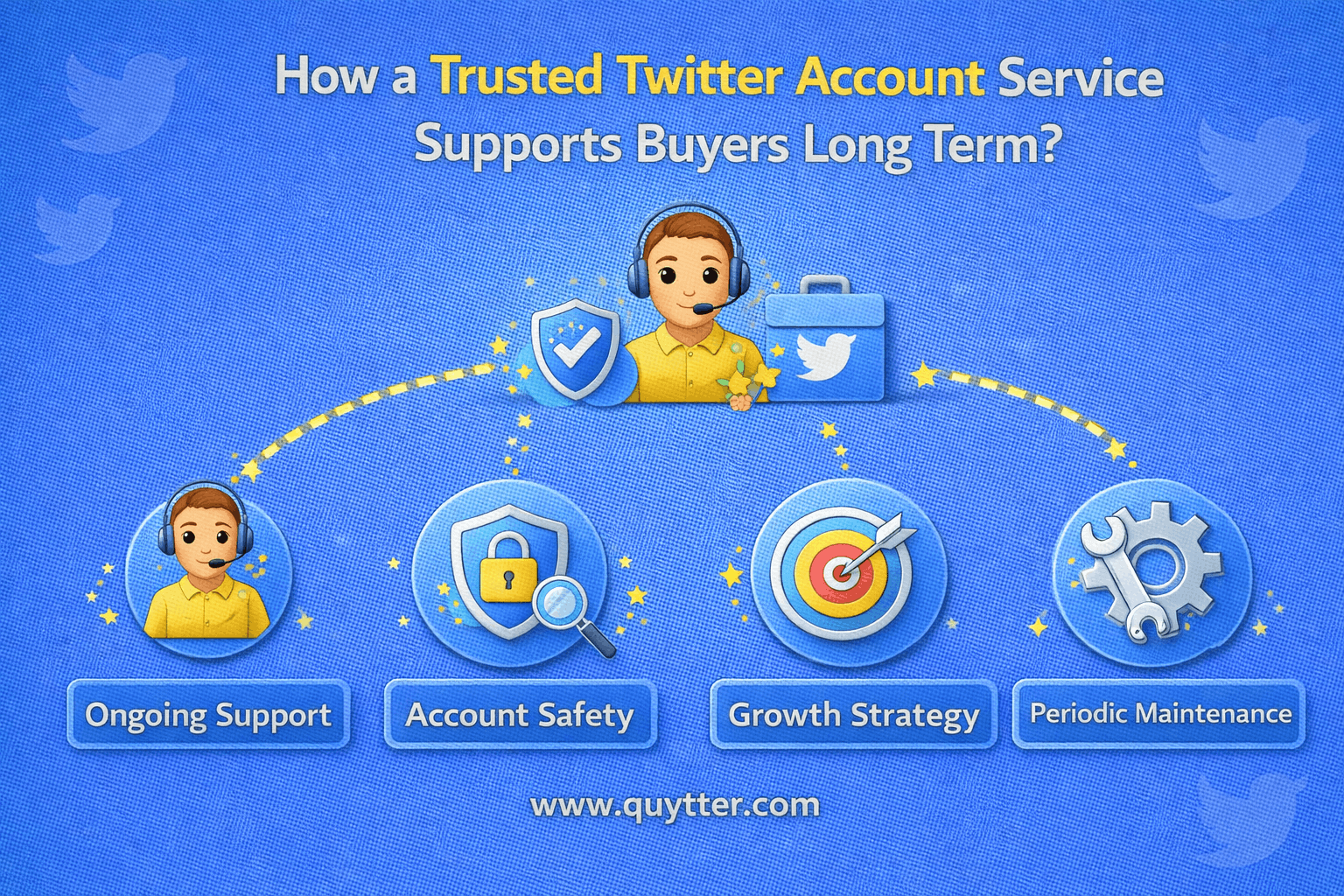
Before moving into a final decision, it is important to understand what real service looks like in this space. A trusted Twitter account provider does not disappear after delivery. They support buyers through education, guidance, and structured risk management.
This includes helping buyers choose appropriate account types, advising on warm up strategies, and setting realistic expectations. It also includes filtering inventory so that only accounts meeting defined quality thresholds are delivered.
A service oriented approach reduces friction, saves time, and lowers long term costs. Instead of constantly replacing burned accounts, buyers can focus on execution and optimization.
This is where platforms like Quytter position themselves differently. Rather than acting as a simple marketplace, they focus on aligning account sourcing with buyer intent, filtering out high risk inventory, and providing guidance that improves account survivability.
When evaluating services, look beyond price and specifications. Evaluate whether the provider is invested in your outcome or merely completing a transaction.
Marketplace vs Direct Provider Which Model Is Safer
One of the most critical decisions buyers overlook is whether they are purchasing from a marketplace or a direct provider. While both models exist openly in the Twitter account ecosystem, they carry very different risk profiles.
A marketplace operates as a middle layer. It aggregates inventory from multiple sellers and lists them under one platform. This structure can offer variety and convenience, but it also introduces complexity. The marketplace often does not control how each account was sourced, aged, or handled. Quality assurance becomes inconsistent, and responsibility is fragmented.
Direct providers, on the other hand, control their supply chain. They create, age, and distribute accounts internally or through tightly managed partners. This allows for consistent standards and predictable outcomes. When issues arise, accountability is clearer.
From an experience standpoint, buyers who rely on marketplaces often report uneven results. One batch performs well, another burns quickly. This inconsistency is not accidental. It reflects the varied sourcing methods of multiple sellers operating under the same roof.
From an expertise perspective, direct providers tend to understand enforcement signals more deeply because they see patterns across their own inventory. Marketplaces see data, but they lack behavioral continuity.
From a trust perspective, marketplaces dilute responsibility. When an account fails, the buyer is often redirected between platform support and the individual seller. Direct providers have nowhere to redirect blame, which incentivizes better preparation.
This does not mean all marketplaces are untrustworthy. It means that how to choose a trusted site to buy Twitter accounts requires understanding whether the platform truly owns its inventory or simply brokers it.
Understanding Post Purchase Risk and Why It Matters
Most buyers assume risk ends once credentials are delivered. In reality, post purchase behavior is often the deciding factor in whether an account survives or fails.
Trusted sites understand this and design their service accordingly. They do not just sell accounts. They manage risk expectations.
Post purchase risk includes sudden IP changes, aggressive posting, automation spikes, and unnatural interaction patterns. Even a well aged account can be flagged if mishandled.
Untrusted sellers often ignore this phase entirely. Once the transaction is complete, the buyer is on their own. When suspensions occur, the seller points to buyer behavior as an excuse, even when the account was already fragile.
Experienced providers approach this differently. They educate buyers on warm up timelines, acceptable activity thresholds, and behavioral consistency. They may even refuse sales if the buyer intent does not align with the account type.
This level of guidance is not a bonus. It is a trust signal. It shows that the seller values long term outcomes over short term revenue.
If a site does not acknowledge post purchase risk, it is not equipped to protect buyers from it.
How to Assess Seller Expertise Without Technical Knowledge?
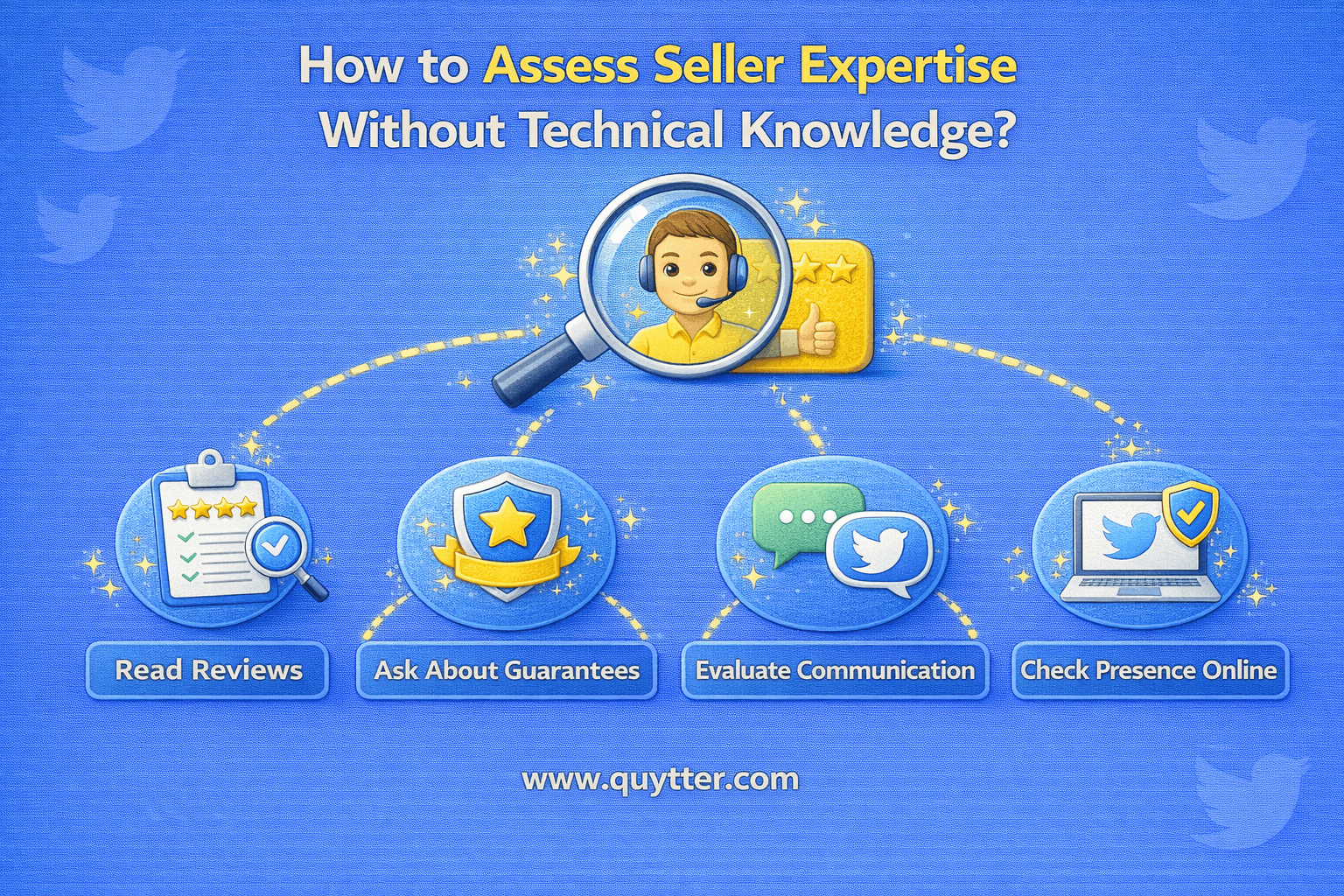
Not every buyer has the technical background to evaluate account fingerprints, IP reputation, or behavioral models. Fortunately, you do not need deep technical expertise to assess whether a seller has it.
One way is through language. Sellers with real experience speak in probabilities, not absolutes. They explain tradeoffs rather than making promises. They acknowledge risk instead of denying it.
Another method is through boundaries. Trusted sellers say no. They limit quantities, restrict certain use cases, or delay fulfillment when conditions are not right. Sellers who say yes to everything are not managing risk, they are managing volume.
Support interactions also reveal expertise. Ask a scenario based question. For example, what happens if an account is idle for weeks before use. Or how to handle login transitions. The depth and clarity of the response will tell you whether the seller understands real world dynamics.
Finally, consistency across channels matters. A seller whose website, support replies, and documentation all align is more likely operating with a structured process rather than improvisation.
Expertise is not hidden. It shows itself through caution, clarity, and consistency.
The Role of Reputation and Community Signals
Reputation in this space does not function like mainstream ecommerce. Reviews can be manipulated, and testimonials can be fabricated. However, reputation still leaves traces.
Long term presence is one signal. Sellers who have operated under the same name and domain for an extended period have more to lose. Fly by night operations change identities frequently.
Community mentions are another indicator. Not promotional content, but organic discussions in forums, private groups, or comment sections. Patterns matter more than individual opinions.
Refund and replacement stories are particularly revealing. A seller who handles issues professionally earns trust even when things go wrong. Silence or hostility destroys it.
It is also worth noting how a seller responds to criticism. Defensive or dismissive behavior often indicates insecurity. Calm, factual responses suggest confidence in their process.
Reputation is not about perfection. It is about reliability under pressure.
Pricing Logic and Why Cheap Accounts Are Expensive?
Price is one of the most misleading signals in the Twitter account market. Cheap accounts appear attractive, especially for buyers looking to scale. However, the true cost of an account is not its purchase price, but its usable lifespan.
Trusted sites price accounts based on sourcing cost, aging time, and failure risk. These factors cannot be compressed indefinitely without consequences.
Extremely low prices often indicate compromised sourcing. Recycled inventory, minimal aging, or high exposure histories. These accounts may work briefly, but they fail when stress is applied.
From an economic perspective, replacing burned accounts costs more than investing in stable ones. Time lost, operational disruption, and opportunity cost compound quickly.
Experienced buyers understand that trusted sites to buy Twitter accounts are not the cheapest. They are the most cost effective over time.
A seller who explains their pricing logic transparently demonstrates confidence in their value. A seller who competes solely on price is signaling that longevity is not their selling point.
Compliance Awareness Without Fear Marketing
Another important distinction between trusted and untrusted sites is how they discuss Twitter rules.
Untrusted sellers often use fear marketing. They exaggerate enforcement threats to upsell protection services or premium tiers. Alternatively, they dismiss rules entirely and claim their accounts are immune.
Trusted sellers take a balanced approach. They understand platform policies, but they do not weaponize them. They explain what behaviors increase risk and how to operate within reasonable boundaries.
This approach reflects real expertise. It shows that the seller operates within the platform ecosystem rather than trying to outsmart it recklessly.
Compliance awareness does not mean avoidance. It means informed participation.
If a site never mentions rules or mentions them only to scare you, it is not guiding you responsibly.
Building a Long Term Account Strategy With the Right Provider
Buying Twitter accounts should not be a one time decision. It should be part of a broader strategy that considers scale, redundancy, and adaptability.
Trusted providers think in these terms. They help buyers plan batches, stagger usage, and rotate activity. They understand that account management is an ongoing process, not a transaction.
This strategic mindset reduces dependency on constant replacements. It allows buyers to build systems rather than chase fixes.
Over time, this relationship becomes an asset. The provider learns your use cases, your risk tolerance, and your operational style. Inventory quality improves as alignment deepens.
This level of partnership is impossible with sellers who prioritize volume over relationships.
Why Service Oriented Platforms Stand Out?
At this point, it becomes clear that choosing the right site is not about features alone. It is about philosophy.
Service oriented platforms focus on outcomes. They curate inventory, educate buyers, and absorb part of the risk through structured policies. They are selective about what they sell and to whom.
Platforms like Quytter position themselves within this model. Instead of acting as anonymous vendors, they emphasize controlled sourcing, realistic guidance, and post purchase support.
This approach aligns with E E A T principles. Experience through pattern recognition. Expertise through risk management. Authority through consistency. Trust through accountability.
When evaluating options, ask yourself which sites behave like long term operators rather than opportunistic sellers.
How to Choose a Trusted Site to Buy Twitter Accounts for Your Goals?
Choosing the right site ultimately comes down to alignment.
Alignment between sourcing and use case
Alignment between pricing and longevity
Alignment between support and complexity
Alignment between risk tolerance and strategy
The more alignment you see, the higher the probability of success.
Avoid sellers who oversimplify. Avoid sellers who overpromise. Look for those who explain tradeoffs, set boundaries, and guide decisions.
How to choose a trusted site to buy Twitter accounts is not about finding guarantees. It is about minimizing unknowns and partnering with providers who understand the ecosystem as deeply as you do.
Ready to Work With a Trusted Twitter Account Provider
Before concluding, it is important to address where this knowledge leads.
Understanding how to evaluate sellers is only useful if you act on it. The next step is choosing a provider that embodies the principles outlined in this guide.
If you are looking for a service that prioritizes account quality, controlled sourcing, realistic guidance, and long term usability, platforms like Quytter are designed for that purpose. Their focus on responsible distribution and buyer education makes them a strong option for businesses and individuals who value stability over shortcuts.
Rather than gambling on anonymous sellers, working with a structured service reduces risk and improves outcomes over time.
Conclusion
Buying Twitter accounts is not inherently risky. Buying from the wrong site is.
Throughout this guide, we have explored how sourcing methods, seller behavior, pricing logic, and support structures determine whether an account survives or fails. The difference between success and frustration often comes down to who you trust.
By applying the principles outlined here, you can move beyond guesswork and make informed decisions that support your long term goals.
If you are ready to take the next step, consider partnering with a provider that treats account quality and buyer success as a shared responsibility. Choosing the right service today can save you countless hours and resources tomorrow.