
Understanding How Twitter algorithm values comments vs likes has become one of the biggest challenges for creators, marketers, and brands trying to grow visibility. Many users assume that collecting large numbers of likes automatically improves reach, but performance data and platform behavior show that engagement signals carry different weights. Some tweets with fewer likes outperform viral posts because they generate deeper discussions, stronger audience retention, and more meaningful interactions. Without understanding how these engagement metrics influence ranking signals, users often focus on vanity numbers instead of growth-driving interactions that increase tweet visibility and long term engagement authority.
This article explores Twitter engagement ranking factors and explains how different interaction types influence content distribution. This guide breaks down Twitter interaction metrics, compares comments vs likes importance, and analyzes how engagement quality affects algorithm visibility. Readers will learn how reply engagement strengthens ranking signals, how likes support tweet discovery, and how to design a balanced engagement strategy that improves performance across the platform. By understanding the relationship between interaction behavior and ranking logic, users can optimize tweets for stronger reach, better conversation engagement rate, and improved algorithm trust score.
Understanding How the X Algorithm Ranks Tweets
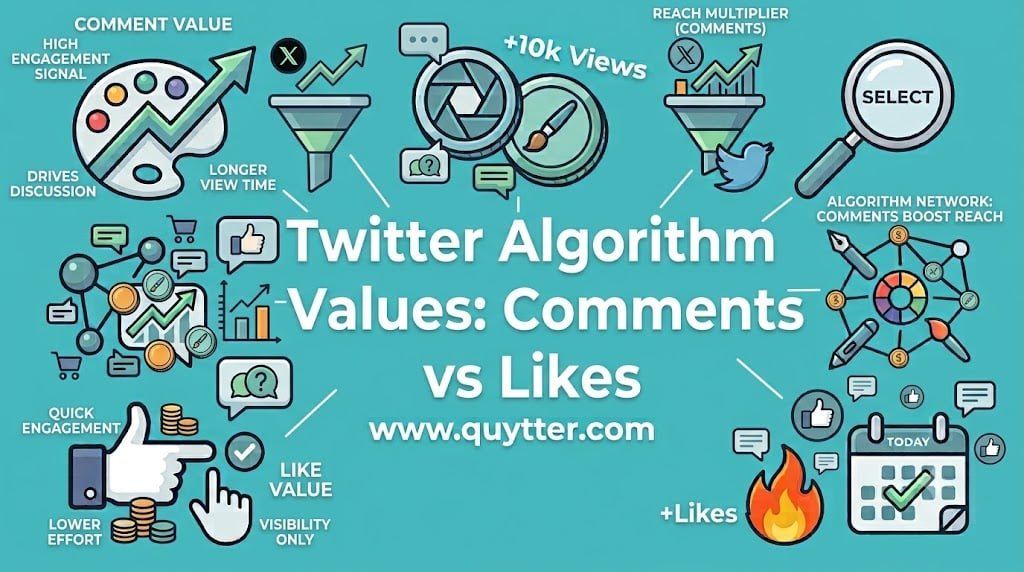
Core Purpose of Twitter Ranking System
The ranking system behind social conversation platforms focuses on maximizing user retention, content discovery, and relevance. The algorithm constantly evaluates millions of tweets and determines which posts deserve expanded visibility across feeds, timelines, and discovery tabs. Instead of simply ranking content by popularity, the system prioritizes engagement quality, interaction patterns, and user interest signals.
When users scroll their timeline, the platform aims to show content that generates continued interaction rather than quick passive reactions. This means tweets that encourage users to reply, quote, or continue conversations often receive stronger distribution signals. The algorithm analyzes how long users stay engaged with posts, whether they interact with replies, and how frequently they return to ongoing discussions.
Content discovery is also heavily influenced by conversation depth. Tweets that create meaningful discussions often appear in extended timelines, search results, and recommended content sections. The algorithm attempts to detect which tweets generate authentic community interaction rather than superficial engagement.
Another major objective involves building personalized content feeds. The algorithm evaluates user interests, relationship strength with accounts, and historical interaction patterns. Tweets that align with audience behavior signals are more likely to gain visibility. Understanding this ranking structure helps explain why engagement quality plays a crucial role in visibility compared to raw engagement numbers.
Main Twitter Algorithm Signals
The algorithm relies on multiple ranking signals to determine tweet visibility. These signals collectively shape how tweets are distributed across audiences and how long content remains relevant.
Engagement activity represents one of the strongest ranking indicators. This includes replies, likes, retweets, quote tweets, and profile clicks. Each type of engagement contributes differently to the algorithm evaluation system. Replies often signal deeper interaction while likes signal quick approval.
Recency also influences ranking. New tweets typically receive temporary visibility priority while the system tests engagement performance. If early interactions indicate strong conversation engagement rate, the tweet may gain extended reach.
Relationship strength measures how often users interact with specific accounts. If users frequently reply to or engage with certain creators, future tweets from those accounts gain higher ranking potential in personalized feeds.
Content relevance involves analyzing tweet topics, keywords, hashtags, and user interests. The algorithm compares tweet themes to audience behavior signals to determine visibility potential.
User behavior patterns represent long term engagement indicators. The system evaluates scrolling behavior, reading time, interaction frequency, and conversation participation. These signals help determine whether content encourages meaningful interaction or simple passive consumption.
What Counts as Engagement Signals?
Many users believe engagement is measured only through visible metrics such as likes or retweets. However, ranking systems evaluate a much broader range of tweet ranking signals.
Replies represent active conversation engagement. They require effort, time, and cognitive participation. Because replies indicate deeper audience involvement, they often carry stronger ranking weight.
Likes represent passive approval. They provide quick feedback and social validation but require minimal effort. While likes still support ranking momentum, they usually deliver lower engagement weight compared to replies.
Retweets act as amplification signals. They expand content reach by exposing tweets to new audiences. Retweets help increase visibility quickly but do not necessarily indicate conversation depth.
Quote tweets combine amplification with additional content context. When users add commentary while sharing tweets, they create layered discussions that extend interaction lifespan.
Time spent on tweet represents a powerful hidden engagement signal. The algorithm monitors how long users read replies, watch media, or interact with threads. Longer engagement duration suggests higher content relevance.
Profile clicks and follow actions also strengthen ranking signals. If users explore an account after reading a tweet, the algorithm interprets the content as valuable and trustworthy.
Why Comments Are Considered High Value Engagement?
Conversation Depth Signals
Replies generate some of the strongest conversation depth signals within social ranking systems. Unlike passive interactions, comments indicate that users actively participate in discussions. This type of engagement suggests that content sparks curiosity, emotional response, or intellectual debate.
When tweets generate multiple reply layers, they form extended conversation threads. The algorithm interprets these threads as community building signals. Longer discussions increase interaction frequency and encourage users to remain engaged with content for extended periods.
Conversation threads also improve engagement retention. Users frequently return to ongoing discussions to read responses, contribute new perspectives, or monitor conversation progress. This repeated interaction strengthens algorithm trust score and improves content distribution.
Another important factor involves interaction diversity. Replies often introduce new participants into conversations. When multiple users contribute to discussions, the algorithm detects broader audience interest and increases tweet reach optimization.
Reply Engagement vs Passive Engagement
Reply engagement requires greater user effort compared to liking content. Writing comments involves reading, thinking, and responding, which indicates stronger audience involvement. Because replies require intentional participation, they represent higher quality social signals than simple reaction metrics.
Passive engagement such as likes often occurs during quick scrolling behavior. While likes still provide positive ranking influence, they rarely generate additional interaction chains. Replies, on the other hand, frequently trigger further engagement loops. One comment can lead to multiple responses, extended discussion threads, and increased visibility across multiple timelines.
Reply engagement also reflects emotional or intellectual investment. Users typically comment when they strongly agree, disagree, or want to contribute additional insights. This interaction behavior helps the algorithm identify content that drives meaningful discussions rather than superficial attention.
Another advantage of reply engagement involves content authority development. Tweets that consistently generate discussions strengthen creator credibility and audience relationship strength. This long term interaction pattern increases overall algorithm visibility and improves ranking consistency.
How Reply Threads Increase Tweet Reach?
Reply threads function as interaction expansion engines. When users comment on tweets, their replies may appear in their followers’ timelines, creating additional exposure beyond the original audience. This ripple effect significantly improves content discovery signals.
Extended reply threads also increase content lifespan. Tweets that continue generating conversation often remain visible longer compared to posts that receive short bursts of likes without sustained interaction.
Reply chains encourage algorithm expansion because they demonstrate authentic community interest. The system monitors how frequently new users join discussions and how long conversations remain active. If interaction frequency remains high, the algorithm may distribute tweets to broader audiences.
Checklist: Signals that increase reply engagement weight
- Multi user conversation threads
- Repeated participation from returning users
- High interaction frequency within reply chains
- Extended time spent reading replies
- Diverse audience contribution to discussions
How Likes Influence Twitter Algorithm Visibility?
Likes as Quick Approval Signals
Likes represent one of the most common engagement types because they require minimal effort. Users can quickly acknowledge content without participating in discussions. Despite being passive interactions, likes still provide valuable engagement weight during early ranking stages.
When tweets receive quick likes shortly after posting, the algorithm interprets them as early popularity signals. This initial validation helps the system test content performance and determine whether tweets deserve additional distribution.
Likes also contribute to social proof development. Tweets with visible approval metrics appear more trustworthy and attractive to new viewers. Social validation encourages additional engagement, including replies and retweets.
Another benefit involves interaction accessibility. Some users prefer liking tweets instead of commenting due to time constraints or conversation hesitation. Likes allow broader audiences to engage without committing to public discussions.
When Likes Still Matter for Tweet Growth?
Likes play an important role in building early momentum for tweet performance. During the initial distribution phase, the algorithm evaluates whether tweets receive quick engagement responses. If likes accumulate rapidly, the system may increase visibility testing across new audience segments.
Likes also reinforce content popularity signals. Tweets with consistent approval metrics are more likely to appear in recommended content sections. This exposure helps creators reach audiences outside their follower base.
Another important factor involves content discovery signals. When tweets receive high like activity, they may gain improved ranking in search results and topic based feeds. Likes help the algorithm determine which tweets align with audience preferences and trending discussions.
Likes also support engagement stacking. When tweets accumulate both likes and replies, the combined interaction metrics create stronger ranking signals. Balanced engagement improves algorithm evaluation accuracy and increases tweet reach potential.
Limitations of Like Only Engagement
Although likes provide valuable ranking support, they have limitations compared to reply engagement. Passive approval does not necessarily indicate deep audience involvement. Tweets that receive high like numbers without generating discussion may experience shorter engagement lifespan.
Likes rarely trigger extended interaction chains. Unlike replies, they do not create conversation threads or community participation opportunities. Without discussion driven engagement, tweets may struggle to maintain visibility over time.
Another limitation involves algorithm interpretation. Likes may indicate general approval but provide limited insight into user intent or content relevance depth. Reply engagement offers richer behavioral signals, helping the algorithm evaluate content quality more accurately.
Tweets that rely solely on likes often experience temporary visibility spikes followed by rapid decline. Without sustained conversation engagement rate, the algorithm may reduce distribution priority and focus on content generating deeper interactions.
Comments vs Likes: Which Engagement Carries More Algorithm Weight?
Engagement Weight Comparison
Comparing comments vs likes importance reveals significant differences in how ranking systems evaluate interaction types. Replies typically generate stronger engagement quality signals because they represent intentional participation. The algorithm interprets replies as indicators of meaningful audience involvement.
Likes contribute valuable approval metrics but provide limited conversation depth. While likes help establish early popularity signals, they rarely sustain long term interaction growth without additional engagement types.
Replies also strengthen interaction frequency signals. When users comment, they often return to conversations, creating repeated engagement loops. These loops improve engagement retention and increase algorithm confidence in content relevance.
Another factor involves audience expansion potential. Reply threads frequently introduce new participants into discussions. Likes usually remain confined to individual user interaction without triggering extended community participation.
Engagement Quality vs Engagement Quantity
The algorithm prioritizes engagement quality over raw engagement quantity. Tweets with smaller but more interactive audiences often outperform posts with large passive reaction numbers. This ranking logic reflects the platform’s focus on building active conversation environments.
Engagement quality signals include reply depth, thread length, interaction diversity, and user retention behavior. These signals help determine whether tweets encourage ongoing discussions or simply attract momentary attention.
Quantity based engagement such as high like counts may boost short term visibility but lacks sustained ranking power. Quality engagement builds long term algorithm trust and strengthens creator authority.
Content creators who focus on encouraging discussions often experience more stable visibility patterns. Balanced engagement strategies combining likes, replies, and amplification signals deliver stronger overall ranking performance.
The Role of Retweets and Quote Tweets in Engagement Balance
While comparing comments vs likes importance, it is also critical to analyze how amplification signals influence ranking strength. Retweets and quote tweets act as distribution accelerators. These interaction types help expand content reach and introduce tweets to audiences outside the original follower base.
Retweets primarily serve as visibility multipliers. When users retweet content, they share it directly with their own followers. This creates exposure loops that significantly increase tweet reach optimization. Unlike replies, retweets do not always create discussion threads, but they signal content relevance and approval across multiple audience clusters.
Quote tweets combine amplification with conversation engagement. When users add commentary while sharing posts, they extend content lifespan and create layered discussions. Quote tweets function as hybrid engagement signals because they combine content sharing with personal opinion. The algorithm often values quote tweets highly because they introduce new contextual conversations around original content.
Balanced engagement strategies typically include a mix of replies, likes, retweets, and quote tweets. Each interaction type supports different ranking signals. Retweets increase distribution speed. Quote tweets extend discussion diversity. Replies deepen interaction strength. Likes provide early approval validation.
Creators who successfully combine all engagement types often achieve stronger Twitter engagement ranking factors. The algorithm prefers tweets that generate multi layer interaction patterns rather than single metric performance spikes.
How Engagement Quality Influences Long Term Algorithm Trust?
Behavioral Signals That Strengthen Ranking Authority
The algorithm evaluates long term content performance by analyzing engagement consistency. Tweets that repeatedly generate meaningful interaction build strong trust signals. This trust increases visibility across timelines, search results, and recommendation feeds.
One of the most powerful ranking indicators involves user return behavior. If audiences frequently revisit tweet discussions, the algorithm interprets this as high relevance. Returning users contribute additional comments, creating extended conversation engagement rate growth.
Another important behavioral metric involves interaction diversity. When multiple audience segments engage with tweets, content relevance appears broader. The algorithm uses this diversity to determine whether content appeals to niche or mainstream audiences.
Time spent interacting with tweets also influences ranking strength. Posts that encourage users to read replies, scroll through discussions, or participate in threads generate higher engagement retention scores. This signal suggests deeper audience interest and improves distribution potential.
Why Authentic Interaction Matters More Than Volume?
The algorithm continuously improves its ability to detect unnatural engagement patterns. Artificial interaction spikes without natural conversation flow often fail to produce sustainable ranking performance. Authentic engagement signals include conversation continuity, audience participation variety, and contextual interaction relevance.
Tweets that generate thoughtful discussions typically outperform posts with artificially inflated metrics. Authentic engagement demonstrates content authority and strengthens creator credibility signals. These signals influence how frequently tweets appear in personalized feeds.
Checklist: Signals that indicate high engagement quality
- Conversations that evolve across multiple replies
- Audience members interacting with each other, not only with the creator
- Comments introducing new insights or perspectives
- Consistent engagement growth rather than sudden spikes
- Returning users contributing to discussion updates
Strategies to Increase Both Comments and Likes Simultaneously
Writing Tweets That Encourage Conversation
Successful creators design tweets that naturally invite interaction. Instead of posting simple statements, they introduce questions, opinions, or discussion prompts. Tweets that encourage audiences to share perspectives often generate stronger reply engagement.
Story driven tweets also increase interaction potential. Personal experiences or controversial insights tend to trigger emotional or intellectual responses. Emotional engagement often leads to higher conversation depth and increased audience participation.
Content structure plays a significant role in engagement optimization. Tweets that present clear opinions followed by open ended questions often encourage discussion. Structured storytelling combined with engagement prompts can significantly increase both like activity and reply engagement.
Creators also benefit from posting content during peak audience activity periods. When followers are active, tweets receive faster engagement responses. Early interaction signals influence ranking performance and improve content visibility testing.
Using Thread Based Content to Expand Interaction
Thread based tweets allow creators to deliver detailed content while encouraging ongoing discussion. Threads provide multiple interaction points where users can reply to specific segments. This increases engagement frequency and strengthens conversation retention.
Educational threads often perform well because they provide value while inviting feedback. Users frequently comment with additional insights, questions, or discussion contributions. Thread content creates layered engagement that strengthens algorithm ranking signals.
Creators who respond to audience replies further increase interaction loops. Replying to comments encourages additional participation and demonstrates active community engagement. This interaction pattern strengthens relationship signals and increases future tweet visibility.
Combining Visual Content with Interaction Prompts
Media content significantly improves engagement performance. Tweets that include images, videos, or graphics attract attention and increase interaction probability. Visual content improves scrolling retention and encourages users to stop and engage.
Pairing media content with conversation prompts often produces strong engagement stacking. For example, informational graphics combined with opinion based questions can generate both likes and replies. This combination improves overall interaction metrics and strengthens ranking signals.
Common Mistakes That Reduce Tweet Engagement Value
Over Focusing on Vanity Metrics
Many users prioritize likes as primary success indicators. While likes provide social validation, they do not always indicate meaningful audience interaction. Over focusing on passive engagement can reduce conversation engagement rate and limit algorithm ranking strength.
Creators who chase high like counts often neglect discussion prompts or audience interaction opportunities. Without conversation depth, tweets may experience temporary visibility followed by rapid ranking decline.
Ignoring Audience Interaction After Posting
Engagement does not end after publishing tweets. Creators who ignore replies miss opportunities to extend conversation threads. Active participation in discussions strengthens relationship signals and increases engagement retention.
Replying to comments demonstrates community involvement. This behavior encourages additional interaction and improves algorithm trust score. Ignoring discussions reduces engagement continuity and limits ranking potential.
Posting Content Without Clear Interaction Goals
Tweets without engagement strategy often generate inconsistent performance. Successful creators design content with specific interaction goals such as encouraging debate, gathering opinions, or sharing insights.
Posting random content without audience intent alignment reduces interaction quality. Tweets must align with audience interests to generate meaningful engagement signals. Understanding follower preferences helps creators design content that encourages conversation participation.
Engagement Optimization Tools Used by Social Media Professionals
Professional marketers often rely on analytics and engagement monitoring tools to track performance. Platforms such as Hootsuite help analyze interaction metrics, track conversation engagement rate, and identify high performing content strategies.
Another widely used analytics platform is Sprout Social which provides audience interaction insights and engagement quality analysis. These tools help creators understand which interaction types generate stronger ranking signals.
Using analytics platforms allows marketers to optimize tweet performance by tracking engagement patterns, posting schedules, and audience behavior. Data driven content strategies often outperform guess based engagement tactics.
How Businesses Use Comment Driven Engagement to Increase Brand Authority?
Businesses use engagement strategies to strengthen brand visibility and customer relationship signals. Reply driven engagement helps brands build trust, answer customer questions, and create interactive marketing campaigns.
Customer conversations increase brand authenticity. When brands actively participate in discussions, they demonstrate transparency and accessibility. This interaction strengthens customer loyalty and improves social credibility signals.
Brands also use discussion based marketing strategies to gather feedback and identify audience preferences. Audience interaction data helps businesses refine marketing strategies and improve content targeting accuracy.
Interactive campaigns such as polls, discussion prompts, and audience challenges often generate strong engagement stacking. These campaigns encourage users to participate actively, increasing brand visibility and improving algorithm ranking signals.
Why Many Creators Use Comment Growth Services to Accelerate Engagement?
Growing discussion engagement organically often requires time, audience building, and content experimentation. Many creators and businesses use professional engagement growth services to accelerate visibility and establish initial interaction momentum.
Strategic engagement support helps creators increase conversation depth, improve social proof signals, and strengthen ranking authority. When implemented correctly, engagement support services can help tweets gain early interaction momentum that improves algorithm visibility testing.
Professional services also help creators maintain consistent engagement performance across multiple campaigns. This consistency strengthens audience trust and improves long term ranking stability.
Want to Increase Twitter Engagement Faster? Professional Comment Growth Solutions
Building strong discussion engagement requires strategy, audience understanding, and consistent interaction optimization. Many creators struggle to generate natural conversation momentum, especially when launching new campaigns or accounts.
Our engagement growth service helps creators and brands increase Twitter interaction metrics, improve conversation engagement rate, and strengthen algorithm ranking signals through safe and strategic engagement solutions. We focus on providing high quality engagement support designed to enhance visibility while maintaining natural interaction patterns.
Our service helps users improve tweet reach optimization, increase discussion participation, and strengthen social credibility signals. By combining engagement strategy consulting with interaction growth support, we help creators build sustainable engagement ecosystems that improve long term visibility and ranking stability.
If you want to strengthen your engagement authority and improve ranking signals faster, our professional engagement growth solutions can help accelerate conversation driven performance.
Conclusion
Understanding How Twitter algorithm values comments vs likes is essential for creators who want to maximize visibility and engagement performance. While likes provide quick approval signals and early visibility momentum, comments generate deeper conversation engagement and stronger ranking authority. The most successful engagement strategies combine both interaction types while focusing on meaningful audience participation.
Creators who prioritize engagement quality over vanity metrics often achieve more sustainable growth and stronger algorithm trust signals. Building discussion driven engagement ecosystems improves tweet visibility, strengthens audience relationships, and increases long term ranking stability.
If you want to accelerate engagement growth and improve interaction authority, leveraging professional engagement strategies can help you achieve consistent performance and stronger social credibility signals.