
Twitter (X) in 2026 is no longer a simple timeline sorted by time or popularity. It is a behavior-driven distribution system designed to maximize attention efficiency. Every tweet competes for visibility inside a layered testing framework where user behavior, not follower count, determines reach.
Many users still believe the algorithm rewards popularity, volume, or posting frequency. In reality, Twitter rewards predictable behavioral value. Tweets spread only when the system learns—through repeated testing—that showing your content to more users is worth the attention cost.
This article explains how Twitter’s algorithm actually works in 2026, what signals it prioritizes, how distribution expands or collapses, and why many accounts stagnate despite consistent posting. If you understand these mechanics, you can align content, growth tactics, and distribution strategies with how Twitter truly evaluates performance.
How Twitter’s Algorithm Has Evolved?
Twitter’s algorithm has shifted away from surface metrics toward behavioral modeling. Earlier versions focused heavily on likes, retweets, and follower relationships. Today, those metrics are contextual inputs, not decision drivers.
The modern system asks three core questions for every tweet:
- Who is most likely to care about this?
- How do they behave when they see it?
- Should it be shown to more people?
Everything else—likes, impressions, followers—is secondary to these behavioral answers.
Twitter now treats timelines as dynamic testing environments, not broadcast feeds. Content is constantly evaluated, expanded, or suppressed based on real-time feedback loops.
The Core Principle: Twitter Is Behavioral, Not Cosmetic
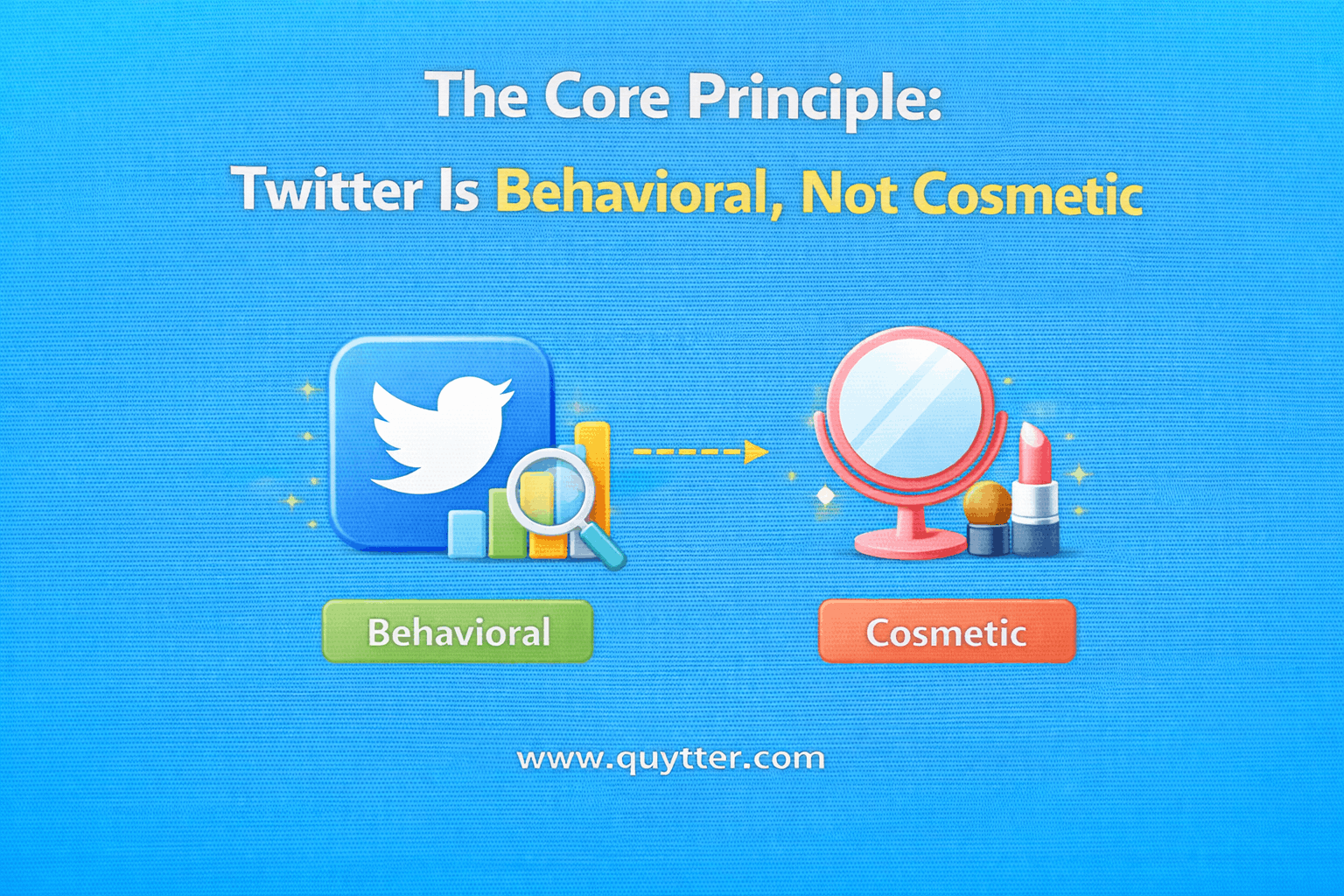
In 2026, Twitter’s algorithm does not evaluate accounts based on how impressive they look on the surface. Follower count, like totals, and profile aesthetics are not ranking inputs. What matters is how users behave after they are exposed to your content.
Every tweet becomes a behavioral test. Twitter observes whether users pause their scroll, how long they stay on the tweet, whether they open the thread, click the profile, or take any downstream action. These micro-behaviors collectively tell the system whether the content created real attention or was simply ignored.
Replies, reading time, and continuation behavior carry more weight than passive reactions. A user who stops, reads, replies, and then engages with another tweet sends a much stronger signal than ten users who tap “like” and keep scrolling. This is why tweets with modest like counts but active conversations often receive broader distribution than tweets that look popular but generate shallow interaction.
Cosmetic metrics can be inflated. Behavioral depth cannot. When an account consistently produces weak post-exposure behavior, Twitter does not punish it directly. Instead, it quietly reallocates attention elsewhere. Distribution narrows, testing slows, and reach declines—not because of a penalty, but because the algorithm learned that exposure rarely leads to meaningful outcomes.
This is the reason many “popular-looking” accounts struggle to grow in 2026. Their numbers suggest success, but user behavior tells a different story. Twitter optimizes for reduced uncertainty, and behavioral consistency is the clearest way to provide it.
How Tweet Distribution Actually Starts?
Every tweet begins in a limited testing phase.
When you publish a tweet, Twitter does not push it to all followers. Instead, it selects a small test group based on:
- Recent interaction history
- Topic relevance
- User activity patterns
- Relationship proximity
This group usually includes a subset of your followers and a few non-followers who match interest signals.
Twitter then observes how this group behaves.
If behavior is strong, the tweet moves forward. If behavior is weak, distribution stalls—sometimes permanently.
Early Engagement Signals That Matter Most
The first minutes after posting are critical, not because of timing myths, but because early behavior becomes training data.
Twitter weighs:
- Replies (highest intent)
- Profile clicks
- Reading time
- Retweets with commentary
- Conversation depth
Silence is the worst possible signal. A tweet that receives no interaction early teaches the system that the content failed to justify attention, even if the tweet itself is high quality.
This is why many tweets never recover after a weak start. Twitter optimizes for efficiency, not fairness.
Why Replies Matter More Than Likes?
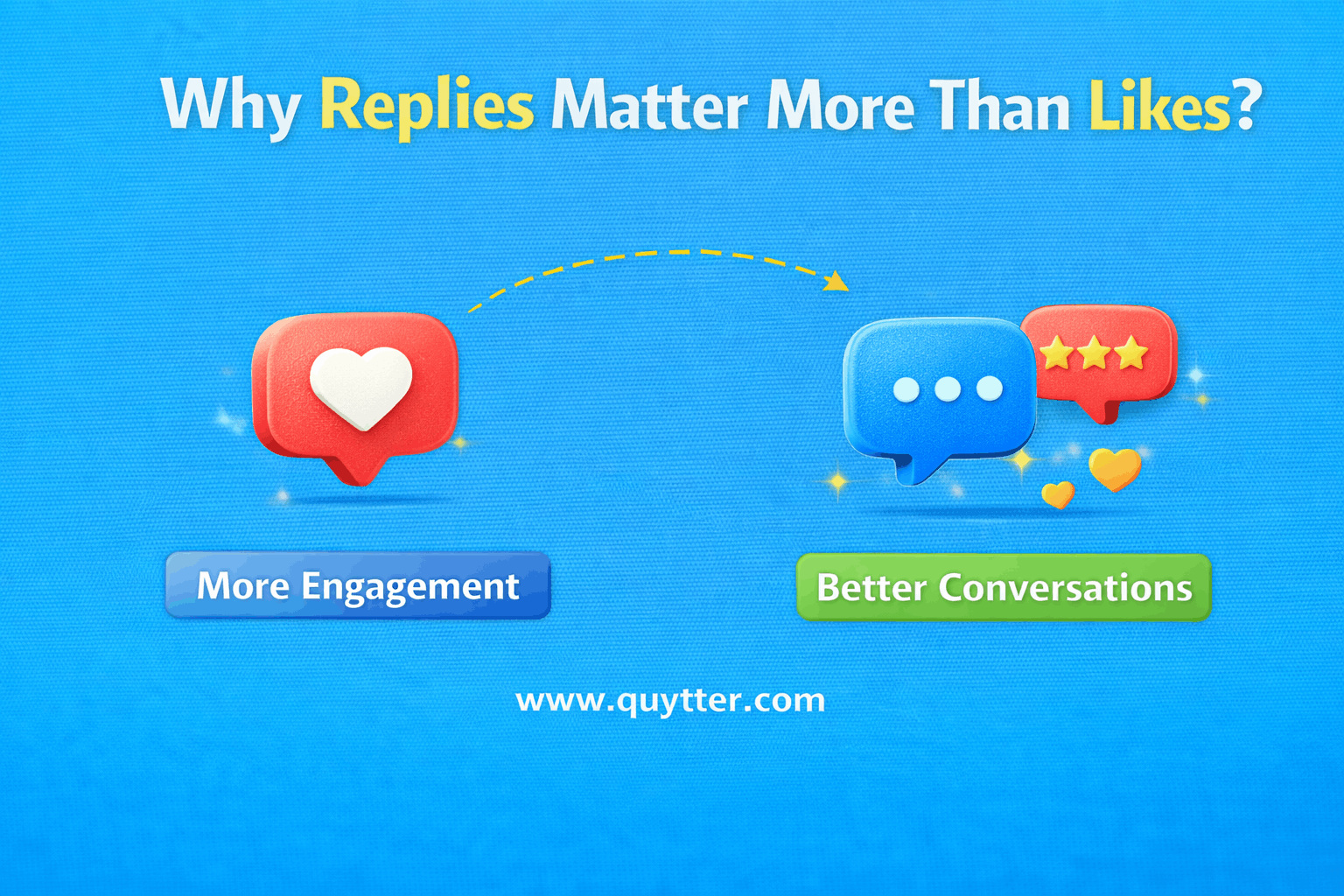
Likes are passive acknowledgments. Replies are active commitments.
When someone replies, they invest time, context, and intent. Twitter interprets this as evidence that the tweet created conversation, not just reaction.
Replies also keep tweets alive:
- They resurface the tweet in timelines
- They create contextual depth
- They generate secondary engagement opportunities
This is why tweets with fewer likes but many replies often outperform high-like, low-reply tweets in reach.
If your strategy optimizes for likes instead of replies, you are optimizing for shallow signals.
Retweets as Distribution Triggers
Retweets act as recommendation signals.
When someone retweets your content, Twitter treats it as a vote to show that tweet to a new audience. This expands the testing pool beyond your immediate network.
However, not all retweets are equal.
Twitter evaluates:
- Timing variation
- Account credibility
- Downstream behavior after retweet exposure
Artificial or poorly timed retweets can weaken signals instead of strengthening them.
How Follower Quality Affects Distribution?
Followers are not a trust badge. They are a distribution input.
Your followers form the first behavioral test layer for most tweets. If this audience consistently ignores your content, Twitter learns that your tweets are low priority—even before testing them elsewhere.
This is why fake or inactive followers are dangerous. They corrupt the feedback loop.
Twitter does not need to label followers as fake. It only needs to observe that behavior does not match expectations.
Why Reach Declines Without Penalties?
Most drops in reach are not the result of punishment. They are the result of optimization.
Twitter’s algorithm is constantly reallocating attention. Every tweet competes for limited timeline space, and Twitter prioritizes content that has proven—through repeated testing—to generate meaningful user behavior. When tweets consistently produce weak signals, the system simply reduces how often they are tested.
This reduction happens quietly. Tweets are shown to smaller initial audiences. Fewer secondary tests are triggered. Expansion thresholds become harder to reach. Nothing is “blocked,” flagged, or penalized. The system just learns that allocating more exposure to this content is inefficient.
From the user’s perspective, this feels like a shadowban: impressions drop, replies slow, and reach collapses despite following the rules. From Twitter’s perspective, it is a rational optimization decision based on historical performance.
This is why accounts can post regularly, avoid policy violations, and still lose visibility over time. The algorithm is not reacting to rule-breaking—it is reacting to behavior patterns. Weak engagement trains the system to test less. Less testing leads to less reach. And without intervention, the decline reinforces itself.
Reach doesn’t disappear because Twitter is angry. It disappears because the algorithm has learned to expect low returns.
Topic Modeling and Interest Graphs
In 2026, Twitter’s distribution system is built around topic modeling rather than follower relationships alone. The algorithm continuously maps what your account is about by observing patterns in content, engagement, and audience behavior, then places you inside one or more interest graphs.
These graphs are formed from multiple signals working together: the subjects you post about consistently, the types of users who reply or engage, the topics your audience already consumes, and how your tweets appear inside ongoing conversations. Over time, Twitter learns which interest clusters your content belongs to and which timelines it should be tested in.
Tweets that align clearly with an established topic graph move through distribution more efficiently. They are shown to users who have already demonstrated interest in similar conversations, which increases the probability of early engagement and downstream interaction. This reduces uncertainty for the algorithm and lowers the threshold needed for expansion.
By contrast, accounts that jump between unrelated topics fragment their signals. When an account posts about crypto, then productivity, then memes, then politics, the system struggles to predict who should care. This weakens initial testing, slows distribution, and forces every tweet to “reintroduce” itself to the algorithm instead of benefiting from accumulated topical trust.
This is why niche clarity outperforms broad posting in 2026. Consistent topical focus strengthens your position inside specific interest graphs, allowing Twitter to test your content faster, expand reach more confidently, and compound visibility over time instead of resetting with every post.
Timing, Context, and Audience Alignment
There is no universal “best time” to post on Twitter. Timing only matters in relation to who your audience is and what mental state they are in at the moment of exposure.
A tweet performs best when the target audience is not just online, but ready to react. This usually means they are already thinking about the topic, emotionally or intellectually engaged with it, and open to responding rather than passively scrolling.
Effective timing aligns three conditions at once:
- The audience is active on the platform
- The topic is already present in their mental feed (news, trends, ongoing conversations)
- The tweet adds tension, insight, or perspective at the right moment
Posting strong content at the wrong moment produces weak signals because users scroll past without processing. Twitter interprets this as low relevance, even if the content itself is good. Meanwhile, average content posted at the right moment can outperform better writing simply because the audience is primed to react.
Context acts as a multiplier. Tweets that fit naturally into what users are already thinking about generate faster replies, longer reading time, and stronger early signals. Ignore context, and even well-crafted tweets struggle to move beyond initial testing.
Why Distribution Matters More Than Content Alone?
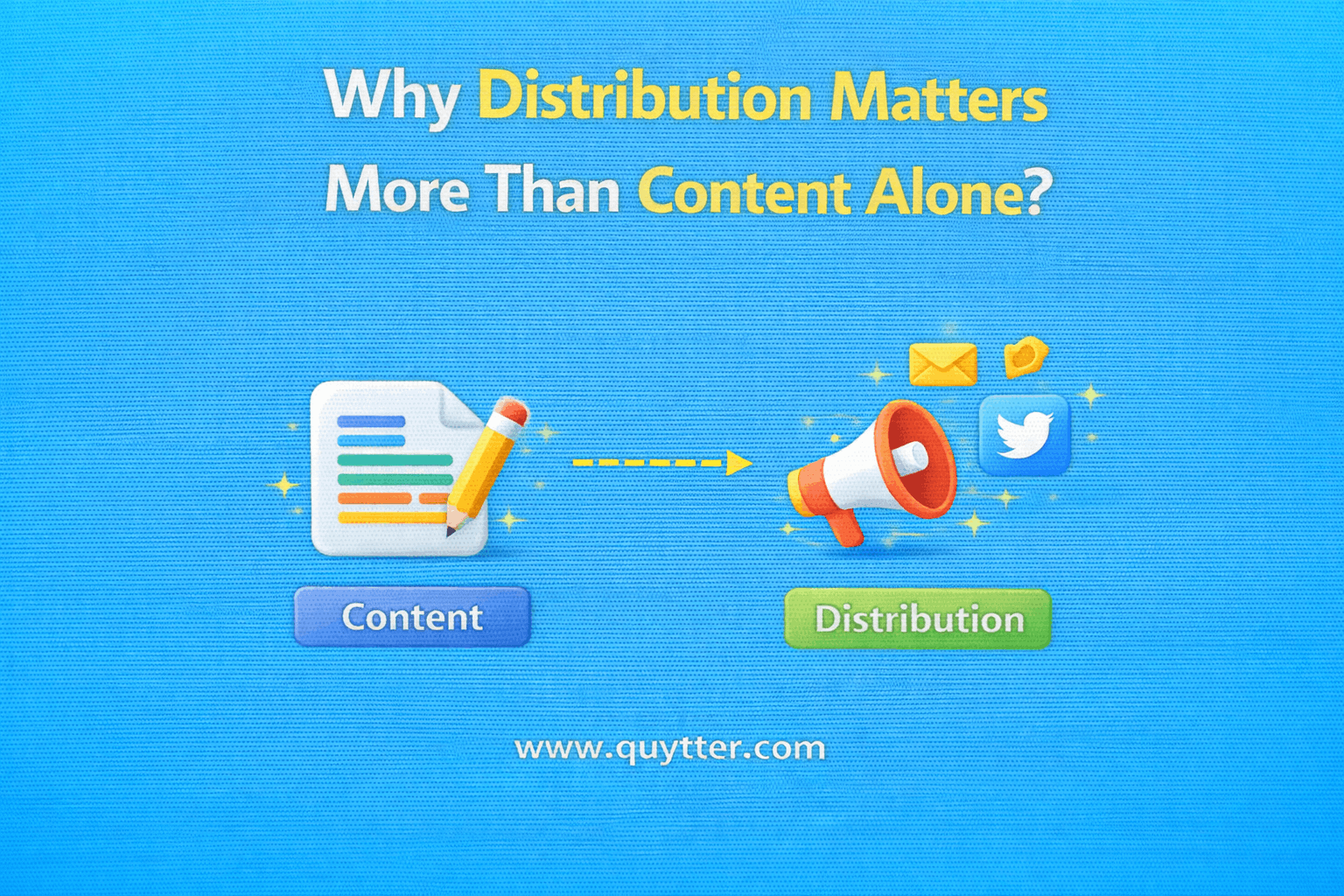
Content does not go viral by itself. Distribution is what allows content to become viral.
Many high-quality tweets fail not because they are poorly written, but because they never reach users who are capable of amplifying them. Without early exposure to relevant timelines, Twitter cannot collect the behavioral signals needed to justify expansion.
The algorithm does not evaluate content in isolation. It evaluates how users respond after seeing it. If the first wave of exposure reaches the wrong audience, even strong content produces silence. That silence tells Twitter to stop testing.
This is why effective viral strategies focus on who sees the tweet first, not just what the tweet says. Early distribution to users who are likely to reply, quote, or retweet dramatically increases the probability of secondary exposure.
Viral tweets are not celebrated first — they are distributed first. Celebration is the outcome, not the trigger.
The Feedback Loop That Drives Growth
Twitter’s algorithm operates as a connected feedback system, not a set of independent metrics.
Each stage of performance feeds directly into the next:
- Weak views result in fewer engagement tests
- Weak engagement lowers confidence in follower relevance
- Weak follower signals suppress future reach
- Suppressed reach limits conversions and downstream actions
This loop compounds over time. When signals are strong, growth feels exponential because each layer reinforces the next. When signals are weak, growth feels impossible because every layer restricts the one above it.
The system does not punish accounts. It reallocates attention based on observed behavior. Accounts that consistently generate strong signals are tested more often. Accounts that produce weak signals are tested less.
This is why fixing one layer of the funnel in isolation rarely works. Sustainable growth happens when views, engagement, followers, and conversions all reinforce each other through consistent behavioral feedback.
Why Vanity Metrics Fail in 2026?
Likes, followers, and raw impressions no longer function as growth levers in 2026. They are results of distribution, not signals that drive it. Optimizing for these numbers in isolation gives Twitter no useful information about content quality, relevance, or audience fit.
Twitter’s algorithm is now almost entirely behavioral. It evaluates how users act after exposure, not how many surface-level metrics a tweet accumulates. A tweet with many likes but no replies, no profile clicks, and no follow-through teaches the system very little. In contrast, fewer interactions with deeper intent carry far more weight.
What Twitter actually rewards in 2026 is pattern consistency:
- Do users regularly stop and engage with your content?
- Does your audience behave predictably around your tweets?
- Do interactions vary naturally instead of appearing synchronized or forced?
Vanity metrics often fail because they flatten behavior. They create numbers without context, making engagement look shallow or artificial. Twitter doesn’t need to punish this explicitly. It simply reallocates attention toward accounts that generate clearer, more reliable behavioral data.
In short, chasing vanity metrics doesn’t break accounts — it just starves them of future distribution.
How Sustainable Growth Actually Happens?
Sustainable growth on Twitter in 2026 is not driven by spikes. It is driven by pattern formation.
Accounts that grow consistently share the same behavioral structure, regardless of niche or size. They reduce uncertainty for the algorithm by behaving in ways that are easy to model, predict, and scale.
These accounts typically show:
- Clear topical focus
Tweets cluster around related ideas, allowing Twitter to understand who the content is for. - Reply-driven content
Posts invite interpretation, disagreement, or contribution — not just approval. - Gradual distribution expansion
Reach grows in steps, not jumps, giving the algorithm time to validate each layer. - Real engagement from real users
Engagement arrives unevenly, contextually, and varies by tweet quality. - Behavioral consistency over time
Posting rhythm, audience reaction, and engagement patterns remain stable enough to learn from.
These accounts do not chase virality. They build repeatable outcomes.
Twitter rewards accounts that behave like systems, not lotteries. When the algorithm can confidently predict how users will react, it allocates more testing, more distribution, and more opportunity.
Sustainable growth happens when you stop trying to impress the numbers — and start training the system.
How Quytter’s Services Work With Twitter’s Algorithm, Not Against It?
Quytter is not designed to “game” Twitter’s algorithm. Its services are structured to support the exact behavioral signals Twitter uses to evaluate reach, trust, and distribution at each stage of content testing.
At the top of the system, Quytter’s real Twitter views help solve the most common failure point: lack of initial exposure. Twitter cannot evaluate engagement quality if a tweet is never seen. By increasing real impressions from active users, Quytter gives the algorithm enough data to begin testing content without forcing interaction or distorting intent.
In the next layer, gradual engagement support (likes, retweets, replies) is delivered with natural pacing and variation. This mirrors how organic engagement accumulates, allowing Twitter to observe pauses, clicks, replies, and secondary actions in a way that remains statistically consistent with real behavior. Nothing is bundled, forced, or synchronized in a way that would create abnormal patterns.
Most importantly, Quytter avoids fake follower injection entirely. Followers are treated as an outcome of discovery and engagement, not an input. This protects the follower trust layer that Twitter relies on when selecting initial test audiences for future tweets.
In practical terms, Quytter supports the algorithm by:
- Increasing real exposure so content can be evaluated
- Preserving intent integrity by never forcing actions
- Maintaining natural pacing aligned with account size
- Allowing Twitter to learn accurately from user behavior
Quytter does not promise virality, ranking, or shortcuts. It ensures that when content deserves distribution, Twitter has the signals it needs to expand reach — instead of suppressing it due to silence, distorted behavior, or corrupted follower data.
That is how growth compounds without triggering algorithmic resistance.
Final Thoughts: How to Work With the Algorithm?
Twitter’s algorithm is not your enemy. It is a learning system that continuously evaluates how people interact with content. If your tweets earn attention, spark conversations, create consistent engagement patterns, and align with audience expectations, distribution expands naturally.
If content depends on shortcuts, artificial engagement signals, or purely cosmetic metrics, reach gradually fades. The platform rewards behavioral value rather than superficial growth.
Understanding how the system interprets engagement is a core part of any effective Twitter Marketing Strategy. When brands focus on authentic interactions, relevant content, and long term audience trust, the algorithm begins to work with them rather than against them.
On Twitter, success is not about being the loudest voice in the timeline. It is about creating content that audiences genuinely want to engage with. When that happens consistently, growth becomes a natural outcome rather than something you constantly have to force.