
Understanding whether Are Twitter Bots Legal is a question that continues to concern marketers, developers, business owners, and everyday users who rely on automation to grow their social media presence. The rise of Twitter bots legality discussions reflects how automation is shaping modern digital marketing, customer service, and content distribution. While bots can streamline communication and improve efficiency, they also introduce concerns about spam, fake engagement, and platform misuse. As more businesses turn to automation tools, the question is no longer simply about convenience but about compliance with rules, ethical marketing, and long term account safety.
This guide explores Are Twitter Bots Legal, breaking down platform policies, government regulations, and practical business use cases. This article explains the difference between safe automation and risky bot activity while helping readers understand Twitter automation rules, compliance requirements, and engagement strategies. Whether you are managing marketing campaigns, running customer service automation, or experimenting with social growth tools, understanding Twitter bot policy is essential for protecting your account and building sustainable engagement.
What Are Twitter Bots and How Do They Work on X?
To properly evaluate Twitter bots legality, it is important to understand what bots are, how they function, and why they are widely used across digital marketing and customer engagement strategies. Bots are automated programs designed to perform tasks without constant human input. On social platforms, bots can interact with users, publish content, respond to messages, and analyze data patterns.
Automation has become deeply integrated into social media management. Businesses, influencers, and developers use bots to streamline repetitive tasks and improve communication speed. However, the legality of bots depends heavily on how automation is implemented and whether it follows Twitter automation rules and platform standards.
Definition of Twitter Bots
Twitter bots are accounts or software programs that automatically perform actions such as posting content, liking posts, following users, or replying to tweets. Some bots are fully automated while others combine human supervision with automated scheduling or response systems.
There are several categories of automation:
- Script based bots that follow predefined commands
- AI powered bots capable of generating responses
- Hybrid bots combining human decision making with automation
- Monitoring bots that track keywords or mentions
Not all bots violate platform policies. Many legitimate organizations use automation responsibly to improve customer service, publish news updates, or manage large scale communication campaigns. The legality of bots depends primarily on transparency, user value, and compliance with Twitter bot account regulations.
Types of Twitter Bots
Automation varies significantly depending on its intended purpose. Some bots provide meaningful value while others attempt to manipulate engagement metrics or spread spam content.
Marketing bots help businesses schedule promotional posts, manage engagement, and analyze audience behavior. These bots often support advertising campaigns and brand visibility.
Customer service bots assist users by answering frequently asked questions, providing support responses, and directing customers to relevant resources. These bots are commonly used by large companies to maintain fast response times.
Engagement bots attempt to increase visibility by liking posts, replying automatically, or following users to encourage interaction. While some engagement bots operate safely, aggressive automation can violate Twitter spam bot rules.
Spam bots are designed to spread unsolicited promotions, misleading links, or harmful content. These bots typically violate platform policies and increase risks of account penalties.
Information bots distribute alerts, news updates, weather notifications, or financial data. These bots are widely accepted and often contribute valuable content to users.
Understanding these differences is crucial when analyzing legal use of Twitter bots, since platform policies allow certain automation practices while restricting manipulative behaviors.
Are Twitter Bots Legal Under Platform Policies?
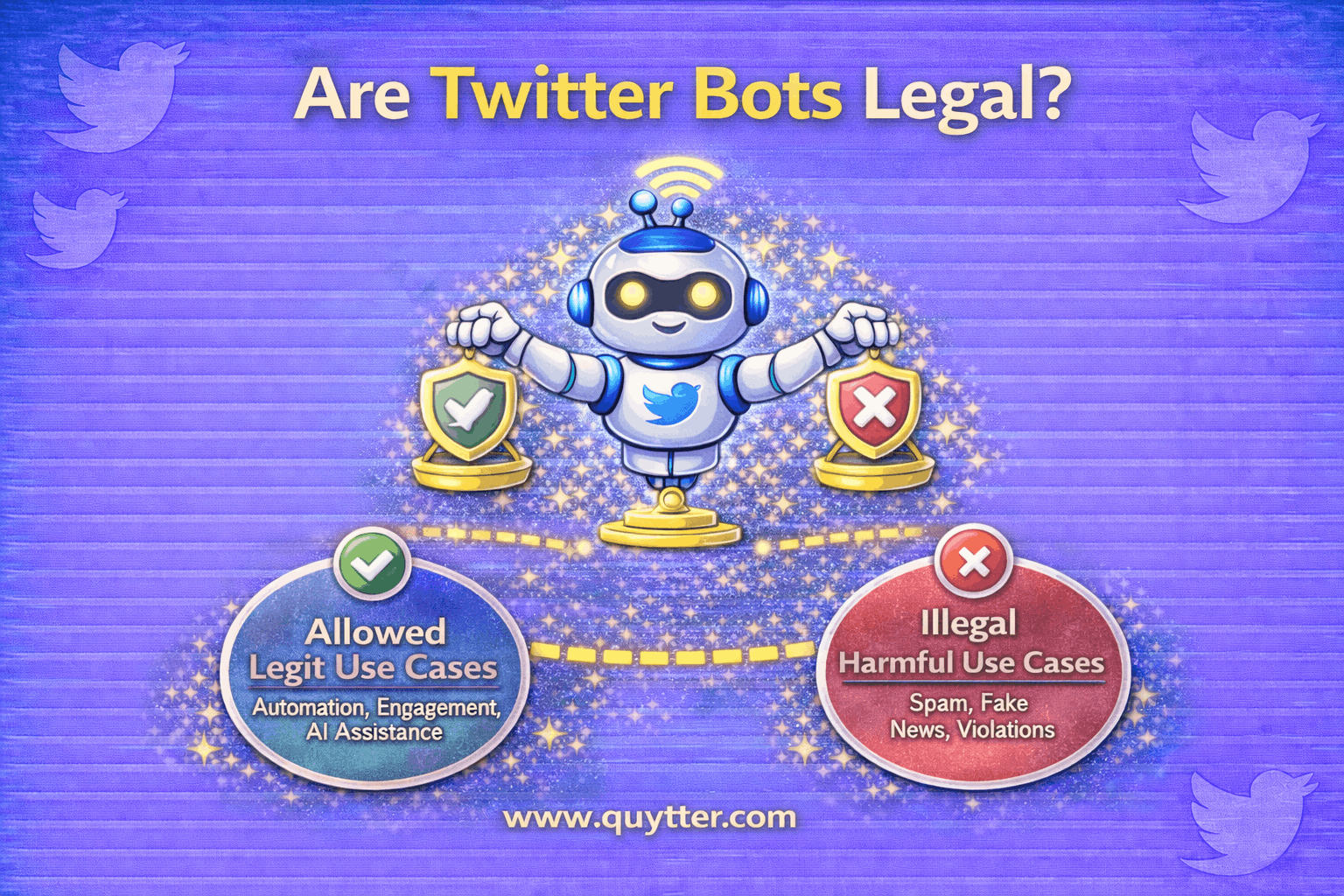
One of the most important aspects of determining Are Twitter Bots Legal involves understanding official platform guidelines. Social media platforms encourage responsible automation but strictly regulate harmful activity. Compliance with Twitter automation rules ensures that automation supports user experience rather than exploiting engagement systems.
Official Twitter Automation Rules
Platform policies allow automation when it provides legitimate value and maintains transparency. Developers can use automation tools through approved APIs, enabling businesses to manage content scheduling, customer service, and audience engagement.
Legal automation typically includes:
- Publishing scheduled posts
- Responding to customer inquiries
- Monitoring brand mentions
- Distributing informational updates
Automation becomes problematic when bots mislead users, manipulate engagement metrics, or imitate real individuals. Platforms monitor accounts using machine learning algorithms designed to detect unusual behavior patterns, including mass following, repeated messaging, or coordinated spam campaigns.
Approved automation tools must follow rate limits, account authenticity guidelines, and user protection policies. Violating these requirements can result in restrictions or permanent suspension, reinforcing the importance of understanding Twitter terms of service bots.
Differences Between Legal Bots and Policy Violations
The difference between legal and illegal automation often depends on transparency and intent. Ethical automation focuses on delivering useful content and enhancing communication efficiency. Risky automation attempts to deceive users or artificially inflate engagement metrics.
Legal bots generally:
- Provide real informational value
- Operate under verified brand identities
- Follow API usage limitations
- Maintain realistic interaction patterns
Policy violating bots often:
- Create fake followers or fake comments
- Send repetitive promotional messages
- Impersonate individuals or brands
- Manipulate trending topics artificially
Understanding these differences helps businesses maintain compliance with Twitter API automation policy while avoiding risks associated with aggressive growth tactics.
Are Twitter Bots Legal Under Government Laws?
Beyond platform rules, the legality of automation can also be influenced by national and international regulations. Governments have introduced laws addressing spam, consumer protection, and advertising transparency, all of which affect Twitter bots legality.
Legal Status of Social Media Bots Globally
In many regions, automation itself is not illegal. However, using bots to spread misleading information, impersonate individuals, or manipulate political discussions can violate advertising and fraud regulations.
Consumer protection laws require businesses to communicate honestly with customers. Bots that misrepresent identity or provide deceptive promotions may violate these regulations. Additionally, anti spam legislation in multiple countries restricts mass messaging practices, especially when users have not consented to receive marketing content.
Businesses must ensure that automated campaigns align with both platform rules and local legal standards when implementing Twitter automation tools legality strategies.
Countries With Bot Disclosure Requirements
Some governments require companies to disclose when users interact with automated systems. These disclosure requirements aim to maintain transparency and protect consumers from manipulation.
Political campaigns often face strict rules regarding automated messaging. Using bots to influence elections or public opinion without disclosure can result in significant legal consequences. Marketing campaigns must also comply with advertising regulations, ensuring automated content does not mislead consumers.
Organizations using automation across international markets should carefully evaluate compliance requirements to maintain legal and ethical marketing practices.
Are Marketing Bots Allowed on Twitter?
Marketing automation represents one of the most common reasons businesses explore Are Twitter Bots Legal. Automation tools can increase efficiency, improve customer interaction, and support content distribution. However, certain marketing practices carry higher compliance risks.
Legal Use Cases for Marketing Automation
Marketing bots can operate safely when they prioritize user experience and follow platform policies. Businesses frequently use automation to schedule posts, manage customer support, and track campaign performance.
Common safe marketing bot applications include:
- Scheduling promotional tweets
- Sending automated customer support responses
- Monitoring brand mentions
- Analyzing audience engagement metrics
These use cases enhance productivity while maintaining compliance with Are marketing bots legal on Twitter guidelines. When automation supports genuine communication rather than engagement manipulation, it is generally accepted under platform policies.
Marketing automation also enables businesses to maintain consistent communication across time zones. Companies can deliver product updates, event announcements, and educational content without requiring constant manual management.
High Risk Marketing Bot Practices
Certain marketing automation tactics increase the risk of violating Twitter spam bot rules and platform policies. These high risk practices often focus on artificially boosting engagement rather than building authentic relationships.
Risky marketing bot behaviors include:
- Purchasing fake engagement through automated networks
- Mass sending promotional replies or direct messages
- Creating fake accounts to simulate popularity
- Automatically posting identical content across multiple accounts
These tactics may generate short term visibility but often result in account penalties, reduced reach, and reputation damage. Platforms continuously update moderation technology to detect unnatural interaction patterns.
Businesses focusing on long term growth should prioritize ethical engagement strategies rather than relying on automation shortcuts that violate platform standards.
Can Twitter Bots Get Accounts Banned?
Automation misuse remains one of the leading causes of account restrictions, making it essential to understand how moderation systems detect bot activity. Many users exploring Do Twitter bots violate platform rules underestimate how advanced detection technology has become.
How Twitter Detects Automation Abuse?
Modern moderation systems analyze behavioral patterns, engagement frequency, and interaction consistency to identify suspicious activity. AI powered monitoring tools track unusual behavior such as rapid following patterns, repetitive comments, or synchronized posting across multiple accounts.
User reporting also plays a significant role in enforcement. When users report accounts for spam or misleading activity, moderation teams review automation behavior and apply penalties when necessary.
Automation tools must operate within realistic interaction limits to maintain compliance with Twitter bot policy.
Penalties for Illegal Bot Use
Violating automation policies can result in various penalties depending on the severity of misuse. These penalties may include temporary posting restrictions, limited account visibility, or permanent suspension.
Shadow banning represents a common penalty where accounts remain active but experience reduced visibility. This can significantly impact marketing campaigns by limiting audience reach and engagement potential.
Permanent account suspension is typically applied to accounts repeatedly violating automation rules or participating in coordinated spam campaigns. Businesses relying heavily on social media marketing risk losing valuable brand presence if automation practices violate platform guidelines.
Legal vs Illegal Twitter Bot Examples
Understanding theoretical policies is helpful, but real world examples make it easier to determine whether automation fits within acceptable guidelines. When analyzing Are Twitter Bots Legal, examining practical use cases helps businesses avoid risky automation and implement safe growth strategies.
Examples of Legal Twitter Bot Usage
Legal automation typically focuses on delivering value, improving user experience, and maintaining transparency. Many organizations use bots responsibly to support communication efficiency without manipulating engagement.
For example, airline companies frequently use automated accounts to provide flight updates, delay notifications, and customer service responses. These bots improve communication speed while providing meaningful information to travelers.
News organizations also rely on automation to publish breaking news alerts and distribute articles instantly. These bots help audiences receive timely updates without overwhelming users with spam.
Brands commonly use scheduling automation to publish promotional posts across multiple time zones. This ensures consistent content delivery while maintaining compliance with Twitter automation rules.
Educational accounts also use bots to share daily learning tips, industry insights, or research summaries. These accounts provide consistent informational value and are generally accepted under platform guidelines.
Another legal example involves automated giveaway selection tools. Brands hosting contests often use bots to randomly select winners from comment sections, ensuring fairness and transparency during promotional campaigns.
Examples of Illegal or Risky Bot Usage
Illegal or policy violating bots usually attempt to manipulate platform engagement metrics or deceive users. These bots rarely provide real value and often lead to penalties or account bans.
Spam comment bots automatically post promotional links under trending posts. These bots create cluttered comment sections and frequently violate Twitter spam bot rules.
Fake engagement networks operate by creating thousands of automated accounts designed to like, repost, or comment on specific content. These networks attempt to artificially inflate popularity but often result in account suspension.
Impersonation bots represent another high risk category. These bots mimic public figures or brands to spread misleading information or scams. Many countries classify impersonation as fraudulent activity, increasing legal consequences beyond platform penalties.
Political manipulation bots can also violate regulations. Automated accounts that spread misinformation or coordinate messaging campaigns without disclosure may violate advertising transparency laws and election integrity regulations.
Recognizing these differences helps businesses operate automation safely while maintaining ethical marketing practices.
How Businesses Can Use Automation Safely and Legally?
Organizations continue to explore automation as part of digital marketing strategies. Understanding legal use of Twitter bots helps companies balance efficiency with compliance, ensuring long term account stability and brand credibility.
Best Practices for Legal Automation
Responsible automation requires thoughtful implementation and monitoring. Businesses should prioritize user value, authenticity, and transparency when deploying automated tools.
Automation should focus on assisting customer service operations rather than replacing human interaction entirely. Hybrid automation allows bots to answer basic questions while escalating complex issues to human support teams.
Companies should also maintain clear brand identity. Automated accounts should clearly represent official business profiles rather than disguising automation as personal interaction.
Another important factor involves content personalization. Bots should avoid posting identical messages across multiple conversations. Personalized responses reduce spam risk and improve user trust.
Businesses must also respect platform rate limits. Posting too frequently or interacting aggressively increases detection risks and reduces account credibility.
Compliance Checklist for Safe Bot Usage
Businesses evaluating automation tools should review compliance requirements carefully:
- Use approved API integrations instead of unauthorized automation software
- Maintain realistic posting and engagement frequency
- Avoid creating fake accounts or engagement networks
- Provide transparency when users interact with automated systems
- Monitor bot performance regularly
- Adjust automation settings based on platform policy updates
Following these guidelines supports sustainable growth while maintaining compliance with Twitter bot account regulations.
Risks of Using Twitter Bots for Engagement Growth
Although automation can improve efficiency, businesses must evaluate potential risks before implementing automated engagement strategies. Understanding these risks helps brands protect their reputation and marketing investments.
Account Suspension and Algorithm Penalties
One of the most common risks involves account restrictions. Platforms continuously update moderation algorithms to detect automation abuse. Accounts that rely heavily on aggressive automation may experience reduced visibility or suspension.
Shadow banning remains a frequent consequence. This occurs when accounts remain active but experience significant engagement decline. Businesses may mistakenly believe content performance is declining without realizing automation penalties are limiting reach.
Algorithm penalties also affect brand credibility. When automation generates low quality interactions, engagement metrics become unreliable, making it difficult to measure genuine audience interest.
Brand Reputation and Customer Trust Risks
Consumers increasingly value authenticity and transparency. Excessive automation may create negative brand perception if users feel interactions lack sincerity.
Spam like comments or repetitive promotional replies can damage brand image. Customers may associate automated behavior with low quality service or deceptive marketing.
Automation misuse also increases vulnerability to public criticism. Viral discussions exposing fake engagement tactics can significantly harm brand reputation and customer loyalty.
Businesses focusing on long term marketing success should prioritize ethical engagement strategies rather than relying solely on automated growth tactics.
The Future of Twitter Automation Regulations
The future of Twitter bots legality continues to evolve as governments and social media platforms introduce new policies addressing transparency, misinformation, and digital consumer protection.
Emerging Platform Policy Trends
Social platforms increasingly prioritize authentic engagement and user protection. Future automation policies are likely to emphasize transparency requirements and stricter moderation technology.
AI driven moderation systems continue to improve detection accuracy. These systems analyze interaction patterns, linguistic consistency, and network behavior to identify suspicious automation activity.
Platforms are also expected to strengthen developer API guidelines, limiting automation capabilities that can manipulate engagement metrics.
Government Regulation and Transparency Laws
Governments worldwide are introducing legislation addressing digital advertising transparency and automated communication disclosure. Agencies such as the Federal Trade Commission enforce advertising honesty regulations requiring businesses to clearly disclose sponsored or automated content.
The European Union has introduced digital service regulations targeting misinformation, data privacy, and automated political messaging. These regulations influence global marketing standards, requiring companies operating internationally to adapt compliance strategies.
Future laws may require clearer bot identification labels and stricter enforcement against deceptive automation practices. Businesses investing in ethical automation today are more likely to remain compliant as regulations evolve.
Why Strategic Comment Engagement Still Matters for Growth?
Despite automation risks, comment engagement remains one of the most powerful signals for social visibility and audience interaction. Platforms prioritize conversations because comments indicate deeper audience interest compared to passive engagement metrics.
High quality comment sections encourage community discussion, increase content visibility, and improve algorithm ranking. Brands using authentic engagement strategies often experience stronger audience loyalty and improved campaign performance.
Automation can support engagement growth when implemented responsibly. Hybrid strategies combining automated moderation with human interaction create balanced communication experiences while maintaining authenticity.
Businesses should view automation as a productivity tool rather than a replacement for genuine audience relationships. This approach supports sustainable marketing performance while reducing compliance risks.
Boost Engagement Safely With Professional Comment Services
Building strong engagement requires time, consistency, and audience trust. Many brands struggle to generate active discussions despite producing high quality content. Professional engagement support can help accelerate visibility while maintaining authenticity and compliance.
At Qytter, businesses can access tailored comment engagement services designed to enhance brand credibility and increase conversation activity. Unlike automated spam networks, professional engagement services focus on realistic interaction strategies aligned with platform guidelines.
Brands using structured comment growth strategies often experience improved algorithm visibility, stronger audience participation, and increased campaign performance. Professional engagement services can support product launches, marketing campaigns, influencer promotions, and brand awareness initiatives.
Strategic comment engagement offers several advantages:
- Enhances perceived popularity and credibility
- Encourages organic audience participation
- Improves content discoverability
- Supports social proof development
- Strengthens marketing campaign performance
Businesses seeking sustainable engagement growth benefit from combining organic strategies with carefully managed professional support. This balanced approach protects brand reputation while improving marketing results.
Conclusion
Understanding Are Twitter Bots Legal requires evaluating platform policies, government regulations, and ethical marketing practices. Automation itself is not inherently illegal, but misuse can violate platform guidelines, advertising laws, and consumer protection regulations. Businesses must carefully distinguish between responsible automation and manipulative engagement tactics.
Legal automation focuses on transparency, customer value, and realistic interaction patterns. Risky automation prioritizes short term engagement manipulation, often resulting in penalties and reputation damage. Companies seeking sustainable growth should prioritize compliance, authenticity, and audience trust when implementing automation strategies.
Strategic engagement remains one of the most powerful drivers of social media visibility. Brands combining ethical automation with professional engagement support often achieve stronger marketing performance and long term audience growth. Businesses looking to accelerate engagement safely should explore trusted solutions like Qytter to enhance conversation activity while maintaining compliance with platform policies and digital marketing standards.