
Marketing on social media is becoming increasingly competitive, and brands constantly search for new ways to scale engagement and audience growth. One of the most discussed strategies today involves using Twitter bots to automate interactions, expand reach, and improve campaign efficiency. Businesses, influencers, and digital marketers often rely on automation tools to manage high posting frequency, handle audience engagement, and support large scale marketing campaigns. However, while Twitter bots can accelerate visibility and interaction, many marketers still struggle to understand whether these tools are effective, safe, or sustainable for long term growth.
This guide explores everything marketers need to know about Twitter bots, including how they function, why businesses use them, and how automation influences marketing performance. This article also explains the benefits, potential risks, and best strategies for using social media automation bots, Twitter growth bots, and Twitter marketing automation tools responsibly. By understanding automation techniques, marketers can develop safer engagement strategies, improve brand credibility, and maintain compliance with platform policies.
What Are Twitter Bots?
Definition of Twitter Bots
Twitter bots are automated software programs designed to perform actions on Twitter without requiring continuous manual input. These bots simulate user behavior by performing actions such as posting replies, liking tweets, following accounts, retweeting content, or sending automated direct messages.
Unlike traditional manual marketing, social media automation bots allow brands to scale communication and engagement more efficiently. Instead of interacting with users one by one, businesses can automate repetitive engagement tasks and focus on strategic marketing planning.
There are two primary categories of automation tools:
- Basic automation bots that follow predefined commands
- Advanced AI Twitter bots that analyze user behavior and generate personalized responses
Modern automation software increasingly integrates artificial intelligence, allowing bots to create dynamic interactions, improve targeting accuracy, and support automated Twitter engagement strategies.
From a marketing perspective, Twitter bots function as growth accelerators when used correctly. They can maintain constant engagement activity, which helps improve brand visibility and algorithm performance. However, marketers must also recognize that automation requires careful management to avoid spam behavior and platform penalties.
How Twitter Bots Work?
The operation of Twitter automation tools relies on application programming interfaces and machine learning technologies. These systems allow software platforms to interact with social media accounts and execute programmed engagement behaviors.
Most Twitter automation software follows a structured workflow:
First, the tool connects to a user account and analyzes account activity.
Second, the automation system applies targeting filters such as hashtags, keywords, or audience demographics.
Third, the bot performs engagement actions such as liking tweets, replying to conversations, or following accounts.
Advanced AI Twitter automation tools enhance this process by analyzing conversation context and generating personalized interactions. This allows brands to maintain more natural engagement patterns, which can improve authenticity and algorithm recognition.
Automation can also operate using scheduling mechanisms. These features allow marketers to distribute engagement actions throughout the day, creating consistent activity signals. Consistency is important because social media algorithms often reward accounts that maintain regular interaction patterns.
Despite these advantages, automation tools must operate within safe limits. Excessive activity or repetitive behavior can trigger spam detection systems, leading to reduced visibility or account restrictions.
Why Marketers Use Twitter Growth Bots?
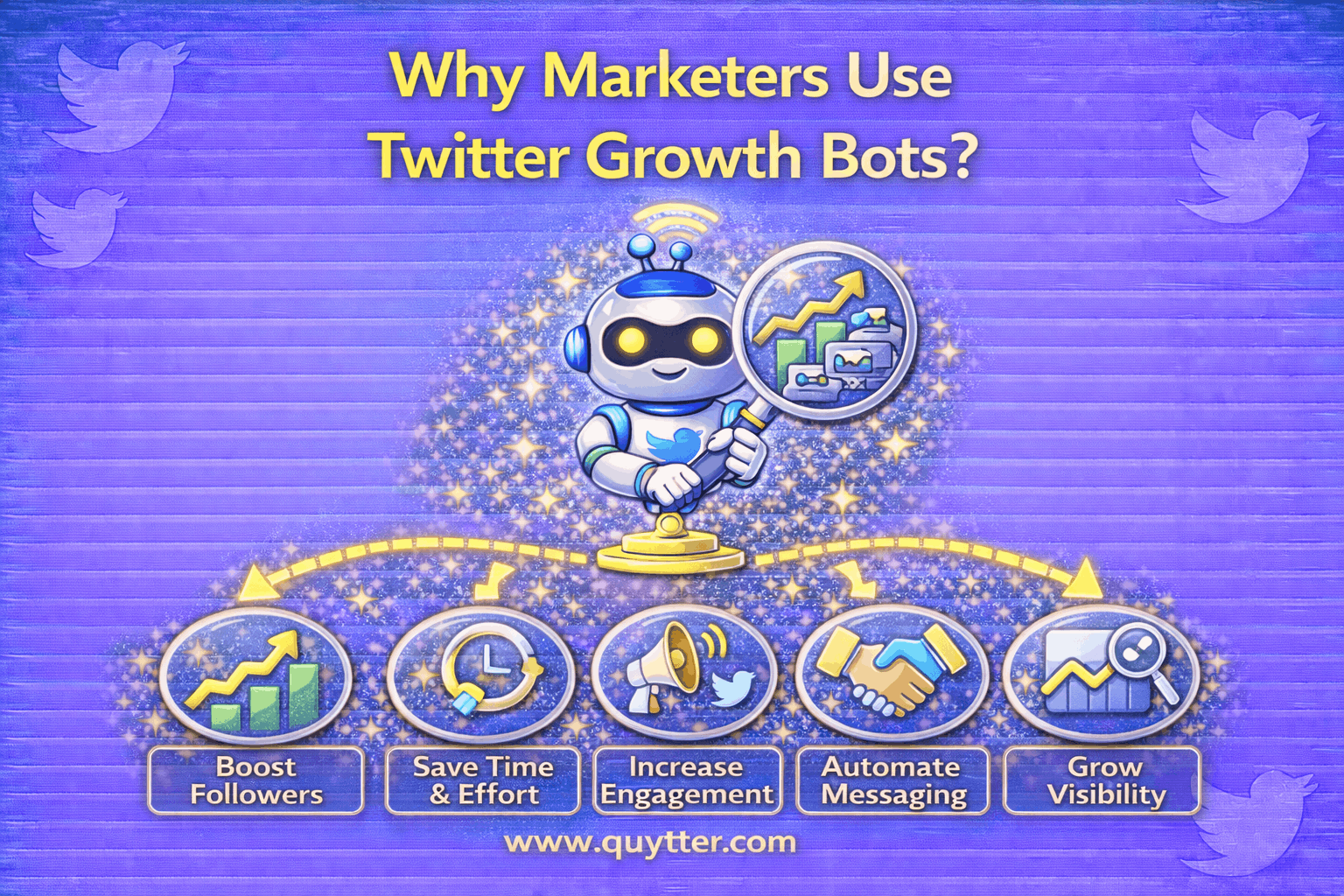
Businesses rely on Twitter growth bots because manual engagement is difficult to scale. Managing thousands of interactions daily requires significant time and resources. Automation tools solve this problem by performing repetitive tasks efficiently.
Marketers use automation primarily for the following reasons:
• Increasing audience reach
• Improving engagement consistency
• Supporting lead generation campaigns
• Automating content distribution
• Strengthening brand visibility
Automation also supports marketing funnels. For example, automated Twitter marketing can guide users from initial engagement to direct messaging and ultimately to sales conversion.
From an operational standpoint, automation allows marketing teams to focus on creative strategy rather than routine interaction tasks. This shift improves productivity and campaign scalability.
However, the effectiveness of Twitter marketing automation depends on responsible usage. Marketers must balance automation with human interaction to maintain brand authenticity and audience trust.
See more: How Much Do Twitter Bots Cost?
Types of Twitter Bots Marketers Use
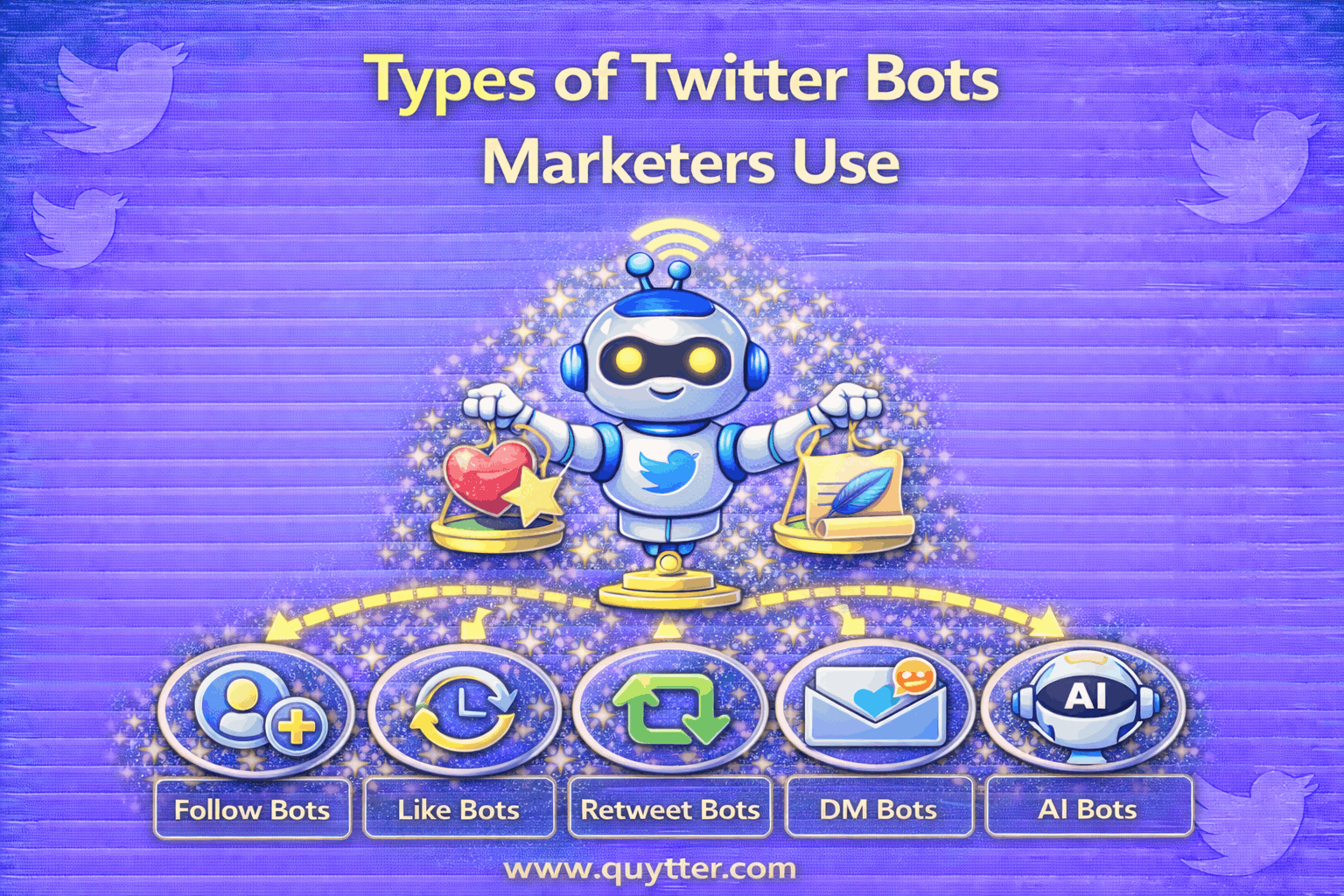
Before exploring specific tools, it is important to understand that different types of Twitter bots serve distinct roles in a marketing strategy. From audience growth to engagement and content distribution, each automation type supports a specific objective, and choosing the right combination determines both performance and long term sustainability.
Follow and Unfollow Bots
Follow and unfollow automation tools represent one of the earliest forms of automated follower growth. These bots automatically follow targeted users based on selected keywords, interests, or competitor audiences.
The goal of this automation is to attract reciprocal follows and expand brand visibility. By targeting relevant users, marketers can increase audience size more efficiently than manual outreach.
Follow automation is particularly useful for new accounts attempting to establish credibility. Growing follower numbers often enhances social proof, making brands appear more trustworthy to potential customers.
However, marketers must use follow automation cautiously. Aggressive follow and unfollow activity can create unnatural engagement patterns. Platforms monitor account behavior to detect suspicious growth tactics.
To maintain safe automation:
• Limit daily follow activity
• Target relevant audiences instead of random accounts
• Combine automated growth with organic engagement
• Monitor follower retention rates
Responsible automation allows marketers to scale audience growth while maintaining algorithm compliance.
Like and Engagement Bots
Twitter engagement bots focus on increasing interaction signals through automated likes and reactions. These bots help amplify tweet visibility by boosting initial engagement metrics.
Social media algorithms evaluate engagement signals such as likes, replies, and retweets when determining content visibility. When tweets receive early engagement momentum, they are more likely to appear in recommendation feeds and trending discussions.
Automated liking strategies help marketers maintain continuous engagement activity. This consistency strengthens algorithm recognition and increases content exposure.
However, low quality automation can harm engagement authenticity. Bots that interact with irrelevant content may reduce audience targeting accuracy and weaken brand messaging.
Effective automated Twitter engagement requires strategic targeting. Automation tools should interact with content related to brand topics, industry conversations, or audience interests.
High quality engagement bots can help marketers:
• Maintain active account presence
• Strengthen algorithm visibility signals
• Support content amplification campaigns
• Increase conversation participation
When combined with organic responses, automated engagement creates stronger marketing performance.
Retweet Bots
Retweet automation tools help brands expand content distribution by automatically sharing relevant posts. Twitter retweet bots amplify marketing campaigns by spreading content across multiple audience segments.
Retweet automation supports viral marketing strategies by increasing content reach. When tweets receive multiple retweets, they appear more credible and attractive to new audiences.
Marketers use retweet automation to promote:
• Product launches
• Brand announcements
• Promotional campaigns
• Influencer collaborations
Retweet bots also support community building by sharing user generated content. Highlighting audience posts strengthens brand loyalty and encourages customer participation.
Despite these advantages, retweet automation requires careful content filtering. Sharing irrelevant or low quality posts can damage brand credibility. Marketers must ensure automation tools follow strict content relevance rules.
DM Automation Bots
Direct messaging automation tools support Twitter lead generation and customer communication campaigns. Twitter DM automation allows brands to send personalized messages to users who interact with tweets or follow accounts.
DM automation helps marketers create structured communication funnels. For example, automation tools can welcome new followers, share promotional offers, or provide customer support resources.
These bots play an important role in social selling. By maintaining consistent communication, brands can nurture customer relationships and improve conversion rates.
However, DM automation must avoid spam behavior. Excessive or generic messages often lead to user complaints or account restrictions.
To maintain safe DM automation strategies:
• Personalize message content
• Limit message frequency
• Provide valuable information instead of promotional spam
• Allow users to opt out of automated communication
Properly managed Twitter automation strategy enhances customer engagement and improves marketing results.
Reply and Comment Bots
Reply automation tools are designed to generate responses to tweets based on selected keywords or audience activity. Twitter reply bots help brands participate in conversations and strengthen community engagement.
Reply automation supports social proof development. Active comment sections make brands appear more credible and influential. When audiences see ongoing discussions, they are more likely to interact with content.
Comment bots are particularly useful for:
• Campaign promotion
• Influencer marketing support
• Community engagement growth
• Customer interaction management
Advanced AI Twitter bots can generate contextual replies that mimic natural human conversations. These tools analyze tweet content and respond using personalized messaging patterns.
However, marketers must monitor automated replies carefully. Poorly written or irrelevant responses can reduce brand credibility. Combining automation with manual moderation ensures conversation quality.
AI Powered Twitter Bots
Artificial intelligence is transforming Twitter automation software by introducing advanced personalization capabilities. AI Twitter bots analyze user behavior, conversation topics, and engagement trends to generate highly targeted interactions.
AI powered automation tools can:
• Create personalized reply content
• Predict engagement timing
• Analyze audience sentiment
• Optimize campaign performance
These technologies improve automation efficiency while maintaining natural communication patterns. AI driven automation is becoming a core component of Twitter marketing tools.
AI bots also enhance marketing analytics. By analyzing engagement patterns, automation platforms provide insights that help marketers refine content strategies and targeting techniques.
Despite these benefits, AI automation requires responsible configuration. Marketers must ensure automation tools follow ethical marketing practices and avoid deceptive engagement tactics.
Tips: Buy Twitter Bots: What to Know Before You Pay?
Benefits of Twitter Bots for Marketing Growth
Increasing Engagement Rate
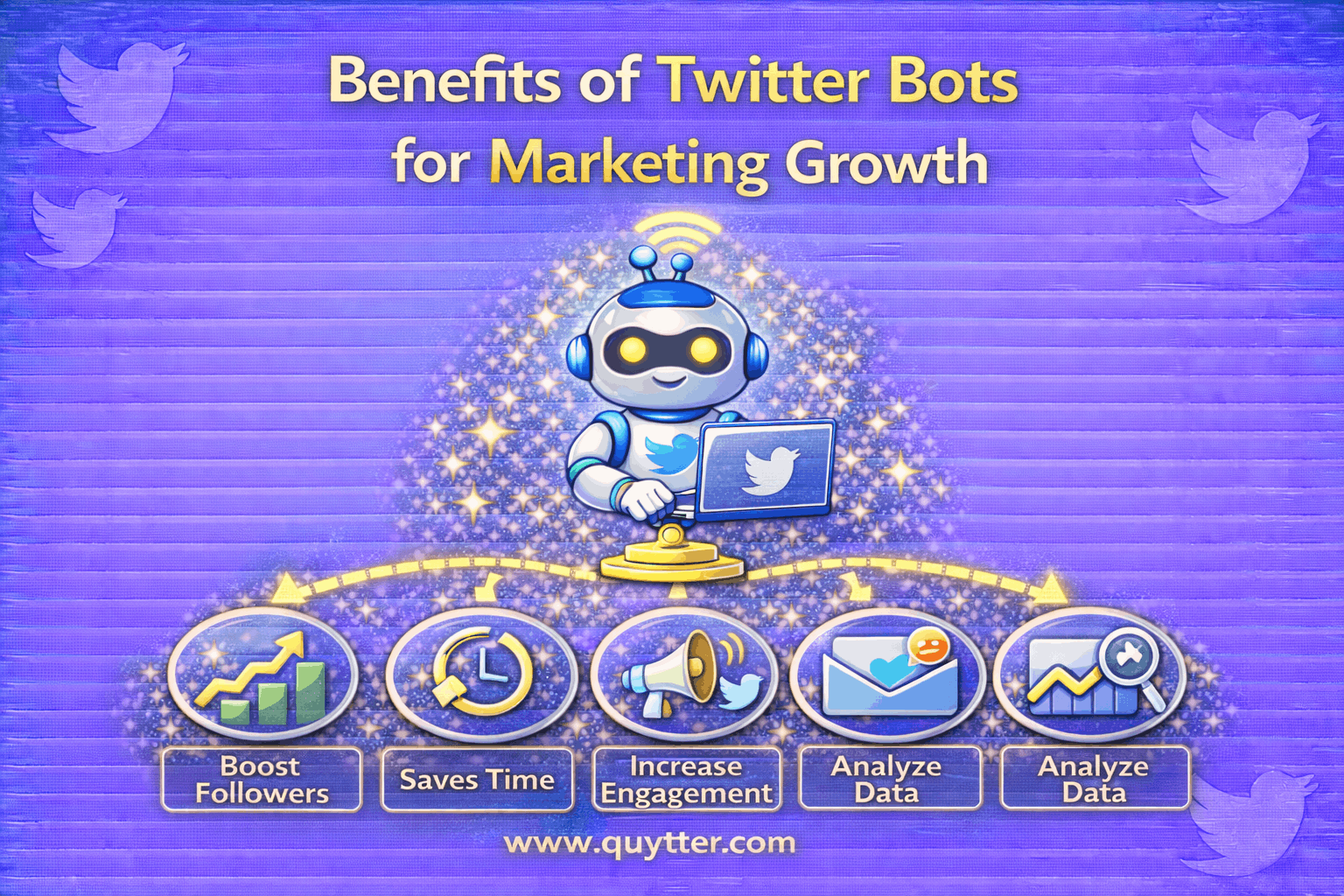
One of the most important advantages of Twitter bots is their ability to increase engagement rates. Engagement metrics such as replies, likes, and retweets influence content visibility across social media platforms.
Automation tools help maintain consistent interaction activity. Regular engagement signals strengthen algorithm performance and increase content exposure. When accounts maintain active conversation patterns, they are more likely to appear in recommendation feeds.
Automated engagement also encourages audience participation. When users see active discussions around posts, they feel more comfortable joining conversations. This creates a positive engagement cycle that improves brand visibility.
Marketers benefit from increased engagement because it strengthens brand credibility. High interaction levels make accounts appear authoritative and trustworthy to potential customers.
Automation can also help maintain engagement momentum during product launches or promotional campaigns. Consistent interaction activity increases campaign reach and improves marketing results.
Automating Lead Generation
Automated Twitter marketing plays a significant role in lead generation strategies. Automation tools allow brands to identify potential customers based on engagement behavior and conversation participation.
Lead generation automation works by targeting users who interact with relevant content. Bots can follow, message, or reply to users who demonstrate interest in specific products or services.
Automation also supports funnel optimization. Marketers can design structured communication workflows that guide users from initial engagement to sales conversion.
Benefits of automation for lead generation include:
• Faster audience identification
• Improved customer targeting accuracy
• Increased conversion efficiency
• Scalable outreach campaigns
By combining automation with personalized messaging, marketers can create more effective lead nurturing strategies.
Scaling Brand Awareness
Brand awareness growth requires consistent content exposure and audience interaction. Twitter growth bots allow businesses to maintain continuous visibility across multiple audience segments.
Automation tools help distribute content more frequently than manual posting. Increased posting and engagement frequency improve brand recognition and audience recall.
Scaling brand awareness also requires participation in trending discussions. Automation tools can monitor hashtags and industry conversations, allowing brands to join relevant discussions quickly.
Strong brand awareness improves marketing performance by increasing audience trust and customer retention rates. Automation supports this growth by maintaining consistent engagement activity.
How Twitter Algorithm Evaluates Automated Engagement?
Understanding how the algorithm values engagement is essential before marketers rely on Twitter bots or Twitter marketing automation. Social media algorithms are designed to prioritize content that generates meaningful interaction. This means the quality of engagement often matters more than the quantity.
Algorithms evaluate several engagement signals including reply depth, conversation continuity, retweet frequency, and interaction timing. When tweets receive fast engagement shortly after posting, they often gain higher visibility across feeds and recommendation sections.
Automated engagement tools can help marketers maintain consistent activity levels, which is beneficial for algorithm performance. However, automation must replicate natural user behavior. Platforms can easily detect repetitive engagement patterns, such as identical comments or unnatural interaction speed.
From a marketing perspective, successful automation strategies focus on engagement diversity. Instead of relying solely on likes or follows, brands should combine replies, retweets, and conversation participation. Balanced interaction signals create stronger algorithm credibility.
Another important factor involves audience relevance. Engagement from targeted audiences carries more value than interaction from unrelated users. Automation tools that support audience targeting improve engagement quality and increase content distribution potential.
Marketers should also consider timing. Engagement received within the first hour after publishing often influences content ranking. Automation scheduling tools allow brands to maintain early engagement momentum, increasing the likelihood of content appearing in trending discussions or recommendation feeds.
While automation can support visibility growth, marketers must avoid over reliance on bots. Human interaction still plays a critical role in maintaining authentic conversation quality and audience trust.
Tips: Are Twitter Bots Legal in 2026?
Risks of Using Twitter Automation Bots
Account Safety Concerns
Although Twitter automation tools offer marketing benefits, they also introduce safety risks when used incorrectly. Platforms continuously monitor account activity to identify suspicious behavior patterns.
Automation can trigger safety alerts if bots perform excessive actions within short timeframes. Rapid follow activity, repetitive comments, or mass direct messaging often raise spam detection flags. These behaviors may lead to temporary account restrictions or long term suspension.
Marketers must understand that automation safety depends on moderation. Responsible automation focuses on gradual engagement growth rather than aggressive scaling.
Some major safety risks include:
• Shadow visibility reduction
• Temporary posting limitations
• Account verification challenges
• Permanent account suspension
Safe automation requires monitoring account performance metrics. Sudden engagement spikes or unusual follower growth patterns often signal risky automation behavior.
Brands should also avoid low quality automation providers. Poorly developed software may operate using outdated systems that violate platform policies. Reliable automation tools prioritize compliance and engagement authenticity.
Reputation and Brand Trust Risks
Marketing automation does not only affect account safety. It also influences brand reputation. Audiences can quickly identify robotic communication patterns. Generic replies or repetitive promotional messages often create negative brand impressions.
Authenticity remains one of the most valuable assets in digital marketing. Brands that rely entirely on automated responses may struggle to build emotional audience connections. Social media users expect personalized interaction and meaningful conversation.
Automation can damage credibility if bots generate irrelevant or inaccurate replies. This is especially risky during customer service conversations or brand announcements.
Maintaining brand trust requires combining automation with manual moderation. Marketers should review automated replies regularly and ensure messaging aligns with brand tone and communication standards.
Balancing automation efficiency with human interaction creates stronger brand relationships and long term marketing success.
Best Practices for Using Twitter Bots Safely
Maintain Natural Engagement Patterns
The most effective automation strategies mimic natural user behavior. Platforms analyze interaction timing, content diversity, and response patterns to detect automation activity.
Marketers should configure automation tools to operate gradually rather than performing high volume engagement immediately. Natural growth patterns reduce detection risk and improve engagement credibility.
Automation scheduling is particularly useful for maintaining safe interaction timing. Distributing engagement throughout the day creates realistic activity behavior.
Marketers should also diversify engagement types. Instead of focusing only on likes or follows, brands should combine replies, retweets, and conversation participation.
Maintaining engagement diversity improves algorithm trust signals and reduces automation detection probability.
Tips: Top Trusted Sites to Buy Twitter Bots (2026 List)
Focus on Targeted Audience Engagement
Automation becomes more effective when targeting relevant audience segments. Random engagement rarely produces meaningful marketing results.
Marketers should configure automation tools to interact with users based on:
• Industry related hashtags
• Competitor audience behavior
• Interest based keywords
• Conversation topics relevant to brand messaging
Targeted engagement improves conversion potential and strengthens audience relationships. It also enhances engagement authenticity, which supports long term algorithm performance.
Automation tools with advanced targeting features allow brands to refine engagement strategies and improve campaign efficiency.
Combine Automation with Human Interaction
Automation should support marketing strategies rather than replace human communication. Human interaction adds emotional connection, brand personality, and customer trust.
Brands that combine automation with manual responses often achieve stronger engagement performance. Automation can handle repetitive tasks while human teams focus on high value conversations and customer relationship development.
For example, automation tools can initiate engagement through replies or follows. Marketing teams can then continue conversations manually, creating personalized communication experiences.
Balanced automation strategies produce more sustainable marketing growth and improve brand credibility.
Choosing the Right Twitter Marketing Automation Tools
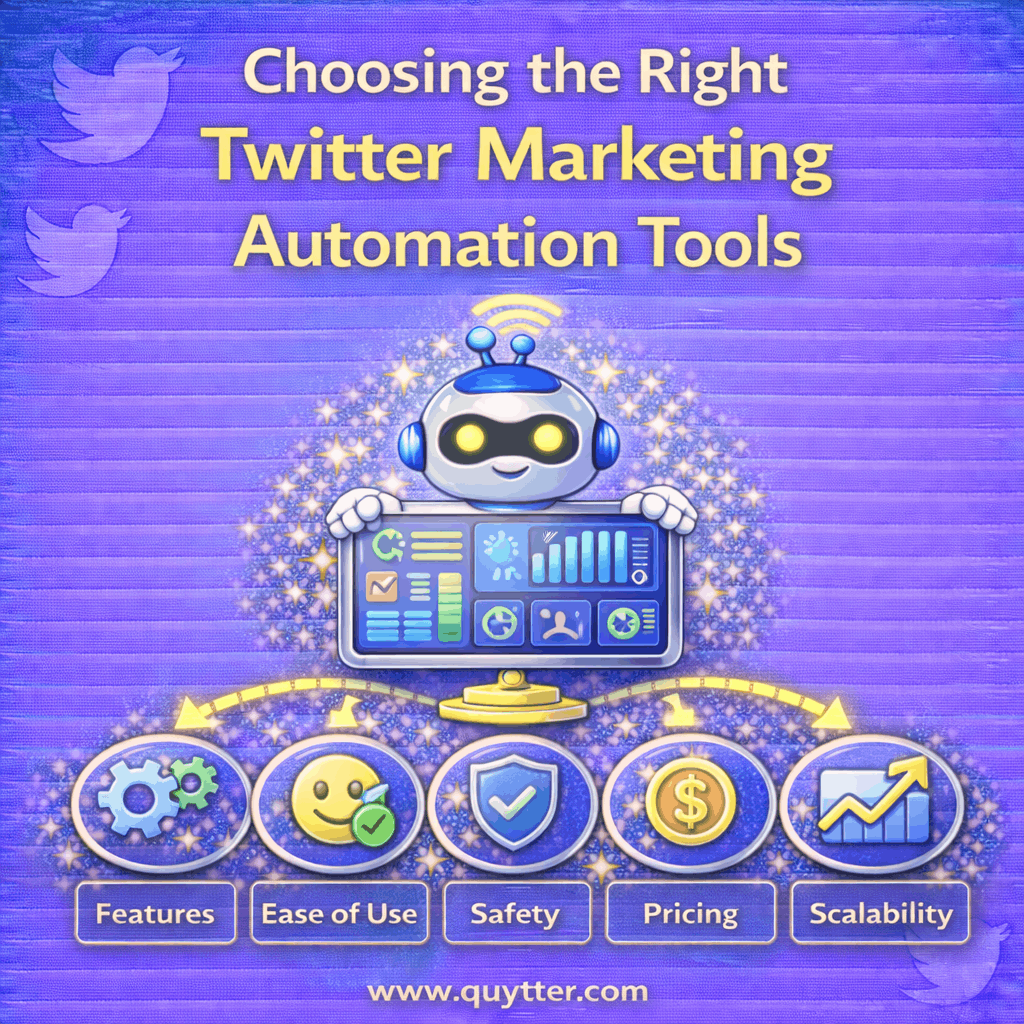
Selecting reliable automation software is essential for marketing success. High quality tools provide advanced targeting, engagement scheduling, and analytics reporting features.
When evaluating automation tools, marketers should prioritize:
- Platform compliance support
- AI powered engagement personalization
- Campaign analytics and performance tracking
- Customizable engagement scheduling
- Audience targeting accuracy
Reliable automation tools also provide safety features that prevent excessive engagement activity. These features help maintain account compliance and reduce suspension risk.
Marketers should also consider software scalability. As brands grow, automation tools must support increasing engagement volume without compromising performance quality.
Testing automation tools through small scale campaigns is recommended before applying them to large marketing strategies. This approach helps marketers evaluate performance reliability and safety standards.
Future Trends in AI Twitter Bots and Marketing Automation
Artificial intelligence continues to transform Twitter marketing automation strategies. AI powered automation tools provide deeper audience analysis and more personalized engagement capabilities.
Future automation trends include:
Predictive engagement algorithms that identify optimal interaction timing
Sentiment analysis tools that monitor audience reaction patterns
Advanced personalization features that generate context aware replies
Cross platform automation integration supporting multi channel marketing campaigns
AI automation will also improve marketing analytics by providing detailed performance insights. These insights allow marketers to refine engagement strategies and optimize campaign results.
Despite technological advancements, ethical automation remains important. Marketers must ensure automation supports authentic communication rather than deceptive engagement tactics.
The future of automation lies in combining AI efficiency with human creativity. Brands that maintain this balance will achieve stronger marketing performance and audience trust.
How Strategic Comment Growth Services Can Strengthen Marketing Campaigns?
While automation tools help manage engagement tasks, many marketers struggle to maintain conversation quality and authenticity. This is where professional engagement services can support marketing strategies.
High quality comment growth services focus on delivering realistic audience interaction rather than generic automation. These services help brands maintain natural engagement patterns while strengthening social proof.
Strategic comment services support marketing campaigns by:
- Increasing conversation activity around promotional posts
- Improving audience perception through authentic engagement
- Supporting product launch visibility
- Strengthening influencer marketing collaboration
- Enhancing algorithm engagement signals
Professional engagement services are particularly valuable for brands launching new campaigns or entering competitive industries. Authentic interaction helps establish credibility and improves audience trust.
Marketers who combine automation tools with high quality engagement services often achieve stronger visibility and conversion results. This approach supports scalable marketing growth while maintaining communication authenticity.
Conclusion
Twitter bots remain powerful tools for marketers seeking scalable engagement growth and automated campaign management. When used responsibly, Twitter marketing automation can improve visibility, strengthen audience interaction, and support lead generation strategies.
However, automation must follow safe engagement practices to avoid platform penalties and reputation risks. Successful marketers understand that automation works best when combined with targeted audience strategies and human communication.
As AI technology continues to evolve, automation tools will become more sophisticated and personalized. Brands that adapt to these changes while maintaining ethical engagement standards will achieve long term marketing success.
Businesses looking to accelerate engagement growth should focus on balanced automation strategies that combine technology efficiency with authentic audience interaction. This approach ensures sustainable brand development and stronger social media performance.
See more: Buy Twitter Accounts Safely in 2026: A Complete Guide for Marketers & Crypto Builders