
The question how much do twitter bots cost seems simple, yet the answer varies wildly depending on what you are actually paying for. Some tools promise automation for a few dollars per month, while others charge hundreds for advanced features. The wide pricing gap creates confusion for marketers, creators, and businesses who want to understand real twitter bots cost versus hidden risks. Price tags alone do not tell the full story because automation cost is directly tied to functionality, scale, safety, and long term account stability.
This guide explains twitter bot pricing, breaks down common models, compares cheap and premium automation tools, and analyzes the real cost of twitter bots beyond subscription fees. Instead of focusing only on numbers, this article explores value, risk, and return on investment so you can evaluate whether paying for automation aligns with sustainable Twitter growth. By the end, you will understand not only the visible twitter automation cost, but also the indirect costs that many users overlook.
What Determines the Cost of a Twitter Bot?
Understanding twitter bot pricing starts with identifying what influences the price. Not all bots are built the same. Some tools only schedule posts, while others automate likes, follows, retweets, replies, and even direct messages. The broader the feature set, the higher the typical cost of twitter bots.
One primary factor is functionality. A basic scheduling tool that queues tweets requires minimal automation logic and often operates within platform guidelines. These tools typically fall into the lower pricing tier. In contrast, an advanced auto follow bot cost or auto retweet bot pricing structure often increases because it involves interaction automation, pattern randomization, and activity scaling.
Another pricing determinant is infrastructure. Bots that rely on shared servers and generic scripts tend to be cheaper. Premium automation systems use more complex behavioral simulation and proxy management, which increases operational costs. This is why two tools offering “engagement automation” can have dramatically different monthly rates.
Safety features also impact price. Tools that include action limits, randomized timing, and account warm up logic may charge more because they invest in risk mitigation. However, paying more does not guarantee safety. Many high priced tools still expose users to shadowban risk or account suspension.
Target audience matters as well. Individual creators often access lower cost plans, while agencies or enterprise users face higher monthly twitter bot pricing due to multi account support and reporting features.
Finally, branding and marketing inflate cost. Some companies charge premium rates simply because they position themselves as advanced growth solutions. Evaluating whether that premium reflects real value is critical when calculating twitter automation cost.
Common Pricing Models for Twitter Bots
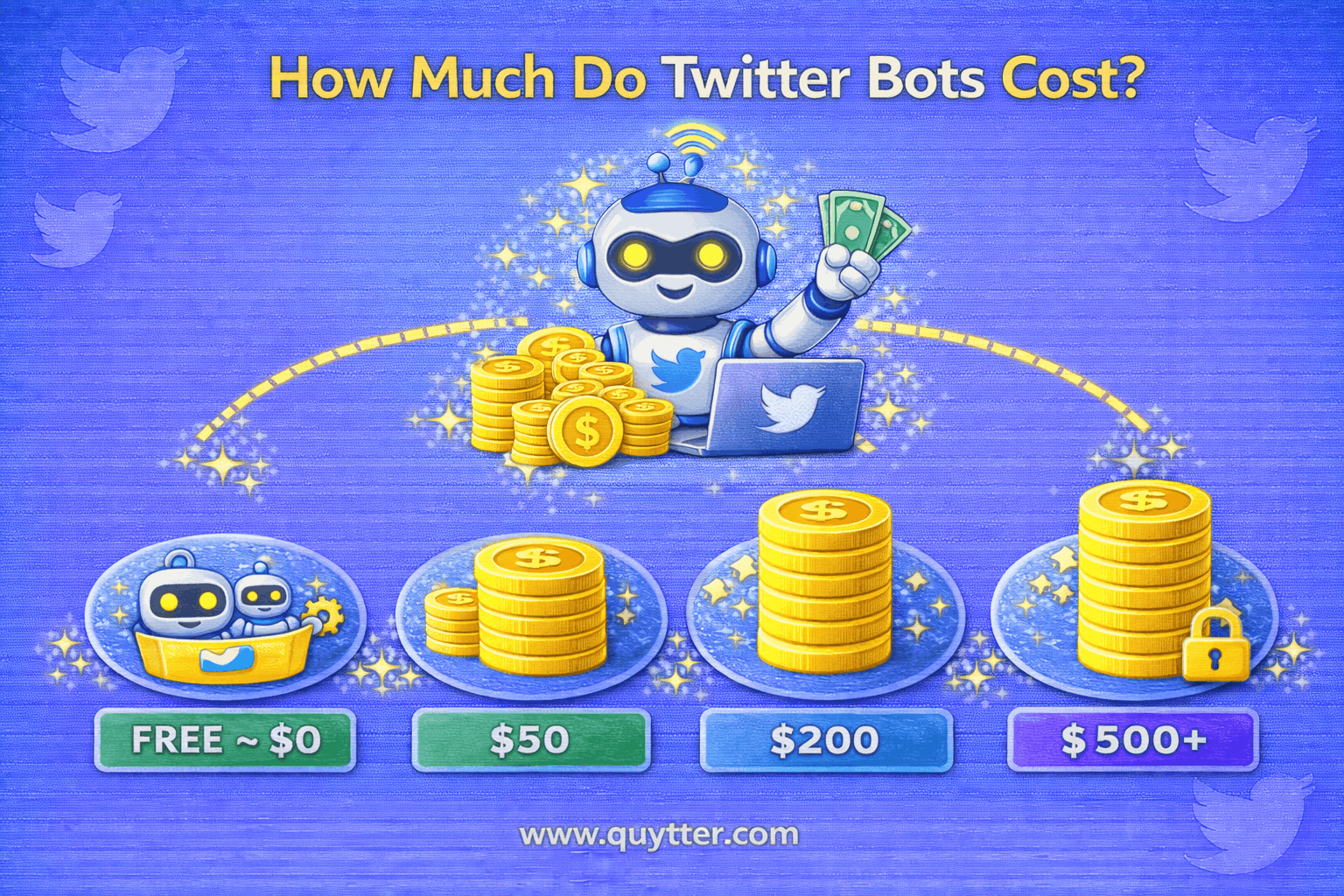
The most visible difference in twitter bot price comes from the pricing model itself. Bots are rarely sold under a single structure. Instead, providers use different models to appeal to varied user segments.
Free bots are the entry point. Many platforms offer limited free twitter bots with restricted daily actions. These versions usually cap automation volume or remove advanced features. While free access reduces upfront twitter bots cost, it often limits scalability and may lack safety controls.
Subscription based tools dominate the market. Subscription based twitter bots typically charge monthly fees that range from low double digits to several hundred dollars depending on action volume and account quantity. Tiered plans are common, allowing users to upgrade as their needs grow. This creates predictable monthly twitter bot pricing, which appeals to marketers managing budgets.
Some providers offer one time payment bots. These tools promise lifetime access for a single upfront cost. While attractive, they often lack updates or compliance adjustments when platform policies change. Over time, outdated automation increases risk exposure.
Another variation involves usage based pricing. Instead of flat monthly fees, certain bots charge based on actions performed. More likes, follows, or retweets translate into higher charges. This directly ties engagement bot cost to volume, which can escalate quickly if automation is aggressive.
Each model has tradeoffs. Lower upfront costs may increase long term risk, while higher subscription fees may not always deliver proportional value. Understanding pricing structure helps contextualize total twitter automation cost.
How Much Do Cheap Twitter Bots Really Cost?
At first glance, cheap twitter bots seem like an easy solution. Paying a small monthly fee for automated likes or follows appears cost effective compared to manual growth. However, evaluating only subscription price ignores hidden variables.
Cheap bots often rely on basic scripts without advanced behavior simulation. This increases the likelihood of repetitive action patterns. Repetition is one of the primary signals used in automation detection systems. As a result, lower pricing may correspond with higher account risk.
Another hidden cost is engagement quality. Low cost bots frequently interact with irrelevant accounts. Automated likes on unrelated content reduce perceived authenticity. Over time, this leads to fake engagement, which weakens trust signals.
Analytics distortion is another overlooked expense. If automation inflates follower numbers without real interest, engagement rates decline. Poor metrics affect brand partnerships and campaign performance. The financial impact of reduced credibility can exceed initial savings on twitter bot pricing.
There is also opportunity cost. Time spent troubleshooting automation issues or recovering from penalties adds indirect expenses. In severe cases, suspension forces users to rebuild accounts from scratch, effectively resetting growth progress.
When evaluating cheap automation, consider:
- Does the tool provide action limits?
- Are behaviors randomized?
- Is there clear documentation on safety?
- How does it manage compliance with platform rules?
Without these safeguards, low subscription cost may translate into high long term expense. The visible cost of twitter bots rarely reflects total economic impact.
Mid Range Twitter Bots Pricing Explained
Mid tier pricing often attracts serious creators and small businesses. These tools usually fall within moderate monthly twitter bot pricing ranges and offer expanded features compared to entry level options.
Mid range bots typically include scheduling, limited engagement automation, and basic analytics. Their auto like bot cost and auto retweet bot pricing components are bundled into subscription tiers. This integrated approach simplifies budgeting.
The appeal of this segment lies in perceived balance. Users assume they receive better safety controls than cheap bots without paying enterprise rates. In many cases, mid tier providers invest more in infrastructure stability and user support.
However, risk still exists. Even moderate automation volume can trigger suppression if behavior patterns appear unnatural. Users must manage activity carefully regardless of subscription level.
Value evaluation in this tier depends on usage. If automation supports consistent posting and limited engagement amplification, cost may justify convenience. If users push limits aggressively, mid range pricing does not shield against penalties.
Understanding your growth objectives is critical before selecting this pricing segment. Automation that complements content strategy offers more sustainable value than automation that replaces genuine interaction.
High End Twitter Bots and Enterprise Automation Costs
At the top end of the market, twitter bots cost increases dramatically. These tools are often marketed as enterprise grade automation solutions, designed for agencies, large brands, or accounts managing multiple profiles at scale. Pricing in this segment reflects infrastructure complexity rather than guaranteed safety.
High end bots usually rely on API access, advanced scheduling systems, proxy rotation, and behavioral simulation layers. This level of automation requires continuous maintenance, which explains higher twitter bot pricing. Monthly costs can easily exceed what individual creators expect, especially when managing several accounts simultaneously.
However, enterprise pricing does not eliminate risk. Even sophisticated automation leaves detectable patterns when scaled aggressively. The difference lies in how risk is managed rather than removed. Advanced tools aim to reduce footprint, not erase it.
Another cost factor is support. High end providers often include onboarding, dashboards, reporting, and customer service. These services inflate price but do not directly contribute to growth performance. Buyers must assess whether these extras justify the expense.
In practice, enterprise automation suits organizations with dedicated compliance oversight. For solo users, paying premium rates rarely delivers proportional benefit. Understanding this prevents overspending based on brand positioning alone.
Cost Breakdown by Bot Function
Breaking down cost of twitter bots by function reveals why pricing varies so widely across tools. Not all automation actions carry the same technical complexity or risk profile.
Scheduling bots are typically the most affordable. They focus on publishing content at predetermined times without interacting with other accounts. Because they operate within predictable parameters, twitter scheduling bot pricing remains relatively low.
Engagement bots introduce higher cost. Auto like bot cost, auto retweet bot pricing, and auto follow bot cost increase because these actions require behavioral variability to avoid detection. The more interactions automated, the higher the technical and compliance burden.
Reply bots are often priced separately or included only in premium tiers. Automated replies require language generation or templating, increasing operational complexity and risk exposure.
Follow unfollow bots fall into a controversial category. While technically simple, they carry high shadowban risk, which some providers offset by charging more for advanced controls.
From a value perspective, function based pricing highlights an important insight. Paying more often reflects higher risk mitigation efforts rather than better growth outcomes.
The Hidden Costs of Twitter Automation
Visible subscription fees represent only part of twitter automation cost. Hidden costs emerge over time and often outweigh initial savings.
One major hidden cost is reduced reach. Accounts flagged for suspicious behavior may not be suspended, but their content distribution becomes limited. This suppression is difficult to measure but directly impacts growth potential.
Another cost involves credibility loss. Fake engagement distorts metrics and reduces trust from both audiences and potential partners. Rebuilding credibility requires time, content investment, and sometimes a complete account reset.
Recovery cost is another overlooked factor. When automation causes penalties, users often spend weeks scaling back activity, deleting automated interactions, or abandoning accounts entirely. Lost momentum translates into lost opportunity.
Finally, there is strategic cost. Automation dependence can discourage skill development in content creation and community building. Long term growth suffers when strategy is replaced by shortcuts.
These hidden factors explain why low twitter bots cost can be deceptively expensive over time.
Is Paying for Twitter Bots Worth the Cost?
Determining whether twitter bot pricing is worth it depends on objectives, risk tolerance, and time horizon. Short term visibility gains may justify limited automation, but long term brand building requires caution.
Bots can reduce workload for repetitive tasks. Scheduling and light engagement support efficiency. However, using bots as primary growth drivers introduces instability.
From an ROI perspective, automation delivers diminishing returns. Initial gains may appear promising, but sustained growth often plateaus as algorithms adapt. Meanwhile, risk compounds.
Users seeking rapid numerical growth may find value in bots temporarily. Those prioritizing authority, trust, and sustainable reach often discover that automation alone cannot deliver desired outcomes.
Evaluating worth means comparing not just cost versus likes, but cost versus long term account health.
Twitter Bots Cost vs Alternative Growth Methods
Comparing twitter bots vs growth services reframes the pricing conversation. Bots automate actions directly, while alternative methods focus on exposure, distribution, or strategic engagement.
Manual growth requires time but builds authentic relationships. Hybrid strategies combine manual effort with limited automation for efficiency. Professional growth services operate externally, reducing behavioral risk on the account itself.
While bots often appear cheaper upfront, services may deliver better value by avoiding penalties. This shifts cost from short term expense to long term investment.
Understanding alternatives helps users contextualize twitter bots cost beyond subscription fees.
Choosing the Right Growth Investment
The smartest growth investment aligns with goals rather than price. Instead of asking how much automation costs, ask what kind of growth you want to sustain.
Low cost bots may fit experimentation. Mid range tools suit efficiency. Enterprise automation requires governance. Alternatives emphasize safety and credibility.
The right choice depends on risk appetite and growth timeline. Awareness of hidden costs empowers informed decisions.
Grow Without Automation Risk Using Smart Engagement Support from Quytter
For users concerned about twitter automation cost and associated risks, Quytter offers a different model. Instead of automating actions on your account, Quytter focuses on controlled engagement delivery that enhances visibility without direct behavioral automation.
This approach reduces exposure to detection systems while still supporting growth goals. By separating engagement amplification from account activity, users avoid common pitfalls associated with twitter bots cost, such as suppression or credibility damage.
Quytter’s services are designed for creators and brands who value sustainability. Rather than chasing the lowest twitter bot price, users invest in engagement quality, consistency, and long term reach.
This model reframes growth spending from automation expense to strategic visibility investment. For many users, that distinction matters more than the sticker price.
Conclusion
Understanding how much do twitter bots cost requires looking beyond subscription fees. Pricing reflects features, risk mitigation, and operational complexity, but hidden costs often define real value.
Automation can support efficiency, but unchecked use introduces long term penalties. Sustainable growth depends on credibility, relevance, and trust. Whether through careful automation, manual strategy, or alternative services like Quytter, the most cost effective investment is one that protects account health while supporting consistent engagement growth.