
A twitter bot has become one of the most misunderstood elements of the Twitter ecosystem. For some users, bots are useful tools that automate posting, news updates, or customer support. For others, bots are associated with spam, fake engagement, and platform manipulation. As Twitter continues to evolve, bot activity plays a growing role in how information spreads, how engagement is measured, and how trust is assigned to accounts. Understanding what a twitter bot actually is and how it functions is no longer optional for marketers, creators, or businesses that rely on visibility and reach.
This guide explains the topic from the ground up. This article breaks down what is a twitter bot, how twitter bots work, the different types of bot accounts you encounter every day, and the real risks involved when bots are used for growth. Instead of myths or shortcuts, the focus is on clear explanations, technical accuracy, and practical insight so you can make informed decisions about automation, engagement, and account safety.
What Is a Twitter Bot?
A twitter bot is an automated or semi automated account that performs actions on Twitter without continuous human input. These actions are executed based on predefined rules, triggers, or algorithms. In simple terms, a bot account on Twitter is designed to behave according to instructions rather than human judgment in real time.
The twitter bot meaning does not imply malicious intent by default. Bots can be used for legitimate purposes such as sharing weather updates, publishing news headlines, or responding to customer inquiries. However, bots can also be used to manipulate engagement metrics, amplify content artificially, or flood the platform with spam. The difference lies in how the bot is designed and how it is deployed.
Most bots rely on automation frameworks connected to the Twitter API. This allows the bot to post tweets, like content, retweet posts, follow accounts, or reply to mentions. Depending on complexity, a bot may be rule based or enhanced with machine learning. A twitter automation bot can be fully autonomous or require occasional human supervision.
From a platform perspective, bots are evaluated by behavior rather than intent. A bot that behaves like a normal user and adds value can remain active. A bot that creates fake engagement or repetitive patterns quickly becomes a liability. This distinction is critical for understanding why some bots survive while others are suppressed or removed.
How Twitter Bots Actually Work Behind the Scenes?
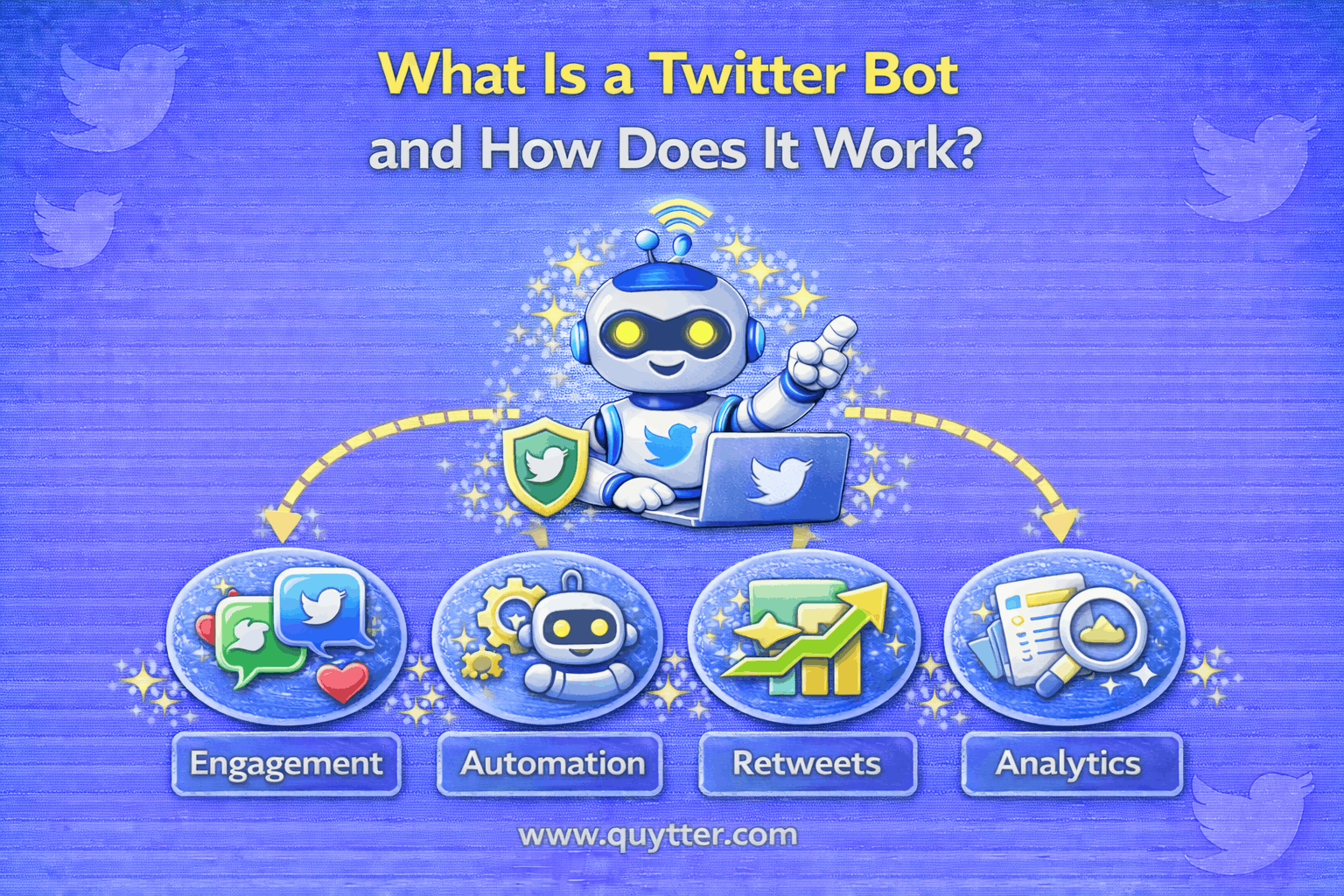
To understand how twitter bots work, it helps to look at the technical foundation. Most bots interact with Twitter through the official Twitter API or approved developer endpoints. The API acts as a bridge between the bot software and the platform, allowing automated requests to perform actions like posting tweets or retrieving timelines.
At the core, bots operate on triggers and actions. A trigger might be a keyword, a hashtag, a mention, or a scheduled time. When the trigger condition is met, the bot executes a predefined action. For example, a posting bot may publish a tweet every morning, while a reply bot may respond when mentioned with a specific phrase.
There are two primary categories of bots. Rule based bots follow strict instructions such as if this happens then do that. Machine learning bots analyze patterns and adapt responses over time. While AI powered bots can appear more natural, they still rely on underlying automation scripts and are subject to the same platform scrutiny.
Rate limits play a major role in bot design. Twitter restricts how many actions an account can perform within a certain time frame. Bots that ignore these limits generate bot activity signals that contribute to detection. Sophisticated bots attempt to mimic human pauses and irregularity, but perfect simulation is extremely difficult.
Behind the scenes, Twitter evaluates not just what actions occur but how they occur. Timing, frequency, relevance, and network interaction all influence whether a bot appears acceptable or suspicious.
Common Types of Twitter Bots You See Every Day
Not all bots serve the same purpose. Understanding the common types of automated twitter accounts helps separate legitimate automation from harmful behavior.
Posting bots are among the most common. These bots publish content automatically, such as blog updates, alerts, or announcements. When used responsibly, they save time and maintain consistency.
News and aggregation bots collect content from external sources and share headlines or summaries. These bots can add value by curating information, but low quality versions often flood feeds with repetitive links.
Customer support bots are used by brands to answer frequently asked questions or acknowledge support requests. These bots typically operate within narrow scopes and are closely monitored.
Engagement bots are more controversial. These bots like tweets, retweet content, or follow users automatically. When abused, they create suspicious behavior patterns that damage platform trust.
Spam bots represent the most harmful category. These bots promote scams, malicious links, or misleading content. They are aggressively targeted by twitter bot detection systems.
Legitimate Uses of Twitter Bots
Bots are not inherently bad. There are legitimate scenarios where automation improves efficiency and user experience. Many organizations rely on bots to maintain timely communication or provide basic information.
Legitimate bots often share these characteristics:
- Clear purpose aligned with user expectations
- Limited scope of actions
- Transparent behavior patterns
- Human oversight
For example, a weather bot that posts updates at set intervals does not attempt to manipulate engagement. A support bot that acknowledges tickets improves responsiveness without pretending to be human. These bots respect twitter automation rules and avoid deceptive practices.
The key factor is value creation. Bots that serve users rather than exploit the system are more likely to remain compliant. Problems arise when bots attempt to simulate popularity or influence rather than provide utility.
Harmful and Abusive Twitter Bots
Abusive bots are designed to exploit platform mechanics. These bots focus on volume rather than value and often operate in coordinated networks.
Spam bots flood replies and mentions with promotional messages. Fake engagement bots artificially inflate likes and retweets to create false social proof. Follow unfollow bots attempt to grow follower counts through aggressive cycling behavior.
These activities create fake engagement that distorts analytics and degrades user experience. From the platform perspective, they threaten integrity and trust. As a result, they are a primary target of enforcement and suppression.
Abusive bots often share patterns such as repetitive timing, irrelevant interaction, and connection to other low quality accounts. Even when individual bots avoid bans, network level analysis exposes them over time.
How Twitter Detects Bot Accounts?
Twitter bot detection relies on behavioral analysis rather than simple identifiers. The platform evaluates how an account behaves compared to expected human patterns.
Key detection factors include engagement consistency, timing regularity, content relevance, and network relationships. Bots tend to operate with predictable rhythms, while humans exhibit randomness.
Another important signal is interaction diversity. Human users engage with a mix of content types and accounts. Bots often interact narrowly or excessively within certain patterns. Over time, these signals accumulate and reduce account trust.
Detection does not always result in bans. More often, it leads to twitter shadowban effects such as reduced reach or limited visibility. This makes detection difficult for users who assume their content is underperforming for other reasons.
Twitter Automation Rules and What They Mean for Bots
Twitter automation rules define what types of automated behavior are acceptable. Automation that deceives users, manipulates engagement, or disrupts conversations violates these rules.
Acceptable automation includes scheduling posts, sharing informational updates, and limited support responses. Prohibited automation includes aggressive following, bulk liking, and repetitive replies.
Many users misunderstand enforcement. Violations do not always trigger immediate penalties. Instead, trust scores are adjusted gradually. This is why some bots appear to work until they suddenly stop delivering results.
Understanding these rules is essential for anyone considering automation. Compliance is not about avoiding punishment once but about maintaining long term visibility.
Risks of Using Twitter Bots for Growth
Using bots for growth carries structural risks. Automation creates patterns that are difficult to disguise indefinitely. Even sophisticated bots leave traces that affect account trust.
Common risks include twitter shadowban, reach suppression, engagement decay, and loss of credibility. Analytics become unreliable because engagement no longer reflects real interest.
Another overlooked risk is brand perception. Audiences are increasingly aware of bot activity. Being associated with automation abuse can damage reputation even if penalties are not immediately visible.
For sustainable growth, these risks often outweigh short term gains.
Bots vs Real Engagement Which One Is Safer?
The debate between bots and real users centers on trust. Bots generate actions. Humans generate relationships. Platforms prioritize the latter.
Real users vs bots is not just an ethical distinction. It directly impacts algorithmic evaluation. Real engagement reinforces relevance and discovery. Bot driven engagement introduces noise.
While bots may create temporary spikes, real engagement compounds over time. For creators and businesses focused on longevity, authenticity remains the safest strategy.
A Safer Alternative to Twitter Bots for Growth
Instead of relying on twitter automation bots, many users choose growth methods that deliver real twitter engagement without violating platform expectations. This approach avoids automation abuse while still supporting visibility.
This is where Quytter becomes relevant. Quytter provides real likes, real retweets, real followers, views, and comments from active users rather than scripts. Engagement is delivered gradually to mirror organic growth patterns.
By avoiding bots entirely, Quytter eliminates common detection signals such as repetitive timing and artificial behavior. This helps protect accounts from twitter shadowban and long term suppression. For customers, this means growth without the technical complexity or risk associated with automation.
Quytter is designed for creators, brands, and marketers who want results without sacrificing account safety or credibility.
Conclusion
A twitter bot is a powerful tool when used responsibly, but a dangerous shortcut when abused. Understanding how twitter bots work, where risks originate, and how detection systems operate is essential for anyone serious about growth.
Automation can save time, but it cannot replace trust. For long term success, prioritizing real engagement over bots protects visibility and reputation. If growth matters, choosing safer alternatives that align with platform rules is the smartest path forward.