
Building visibility and engagement on X has become significantly more competitive as brands, influencers, and marketers fight for audience attention. Many accounts struggle to scale interaction manually because posting consistently, replying to users, and maintaining conversation momentum requires massive time investment. This challenge has pushed businesses toward automation, especially Twitter bots for growth, as a potential solution to accelerate engagement. While automation promises faster results, marketers also face concerns regarding safety, platform policy compliance, and long term brand credibility.
This guide explores the real impact of Twitter bots for growth, analyzing both benefits and risks from a professional marketing perspective. This article explains how Twitter automation tools, automated engagement, and social media automation strategies influence audience growth, engagement performance, and brand authority. By understanding the advantages and disadvantages of automation, businesses can determine whether Twitter growth bots fit into their marketing strategy and how to implement them safely while protecting account stability and brand trust.
What Are Twitter Bots and How Do They Work?
Twitter bots for growth are automated software programs designed to perform specific actions on social media accounts without continuous manual input. These bots operate through scripts, artificial intelligence systems, or integrated automation tools that interact with users by liking posts, posting replies, following accounts, or retweeting content. The main objective of these systems is to increase visibility, stimulate engagement, and accelerate audience expansion.
From a technical standpoint, most Twitter automation tools operate by connecting to platform infrastructure through developer integrations or automation dashboards. These tools allow marketers to define engagement rules, audience targeting criteria, and posting schedules. Instead of requiring marketing teams to interact manually with thousands of users, bots replicate repetitive engagement patterns at scale.
There are several categories of bots used in marketing campaigns. Engagement bots focus on liking and replying to content to improve visibility signals. Follower bots are designed to increase follower counts by automatically following relevant users. Auto comment bots respond to tweets using pre configured messaging or AI generated responses. Retweet bots amplify content distribution by automatically sharing selected posts. Some advanced AI conversational bots use natural language processing to create contextual replies, simulating human conversation patterns.
The operational structure of engagement automation relies heavily on behavioral simulation. Instead of performing bulk actions simultaneously, advanced automation tools distribute engagement activity across time intervals. This method helps create more natural interaction flow while reducing detection risk. Artificial intelligence powered automation can analyze user behavior patterns, trending topics, and engagement timing to optimize interaction performance.
Businesses use automation to streamline marketing automation workflow and scale audience interaction across multiple campaigns simultaneously. However, the effectiveness of these tools depends heavily on configuration quality, targeting accuracy, and compliance with platform engagement policies.
Why Businesses Use Twitter Bots for Growth?
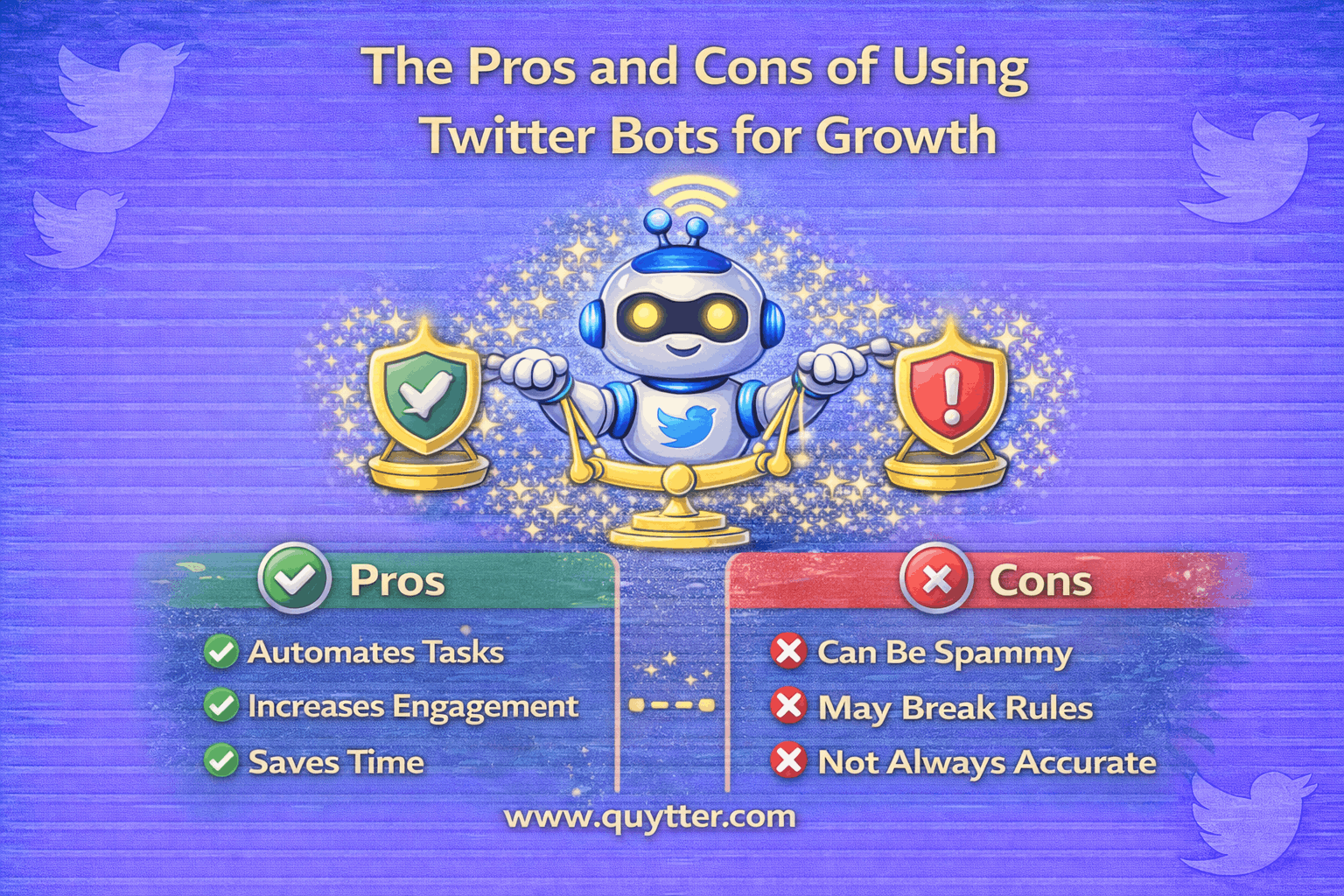
Marketing teams adopt Twitter bots for growth because manual engagement becomes difficult to maintain at scale. As social media competition intensifies, brands seek tools that allow them to expand reach, increase content visibility, and maintain consistent interaction with followers.
One primary reason businesses rely on automation is scalability. Posting content alone rarely guarantees visibility. Platforms prioritize content that generates engagement quickly, meaning marketers must interact with audiences continuously to boost content distribution. Automate Twitter engagement tools help marketers respond to users, interact with trending discussions, and maintain consistent visibility without requiring large social media teams.
Another important factor is efficiency. Running manual outreach campaigns can require dedicated staff to monitor conversations, reply to comments, and maintain audience relationships. Twitter marketing automation significantly reduces operational workload while enabling teams to manage multiple campaigns simultaneously. Automation allows brands to maintain consistent interaction schedules, improving overall content performance metrics.
Automation also supports large scale promotional campaigns such as product launches, influencer marketing collaborations, and brand awareness initiatives. For example, brands launching new products often need rapid engagement to build credibility and social proof. Automation tools help generate initial engagement momentum that can encourage organic audience interaction.
Additionally, businesses use automation to improve marketing cost efficiency. Hiring full time social media teams can be expensive, especially for startups and small businesses. Automation tools provide cost effective alternatives that allow brands to execute large scale engagement strategies without significantly increasing marketing budgets.
However, while automation offers significant operational advantages, businesses must carefully balance efficiency with authenticity. Excessive automation can reduce brand personality and create engagement patterns that appear artificial, which can negatively impact audience trust and platform credibility.
Major Advantages of Using Twitter Bots
One of the strongest advantages of Twitter bots for growth is the ability to accelerate audience expansion. Social media algorithms often prioritize posts that receive immediate engagement after publication. Automation tools help increase interaction volume quickly, improving content visibility and expanding reach. By generating likes, replies, and retweets, bots contribute to stronger engagement signals that help content appear in recommended feeds and trending discussions.
Another major benefit is enhanced social proof. High engagement numbers create perception of credibility and popularity. Users are more likely to interact with posts that already demonstrate strong engagement performance. Twitter growth bots help create early momentum, encouraging organic interaction and improving overall engagement rate metrics.
Automation also provides continuous engagement availability. Unlike human marketing teams, bots can operate 24 hours per day, allowing brands to interact with audiences across multiple time zones. This capability is particularly valuable for global brands targeting international audiences. Continuous interaction helps maintain brand visibility and improves customer engagement consistency.
Cost efficiency represents another important advantage. Running manual engagement campaigns requires significant staffing resources, training, and operational management. Automation tools reduce workload and allow marketing teams to focus on creative strategy, content development, and performance analysis instead of repetitive interaction tasks.
From a workflow perspective, social media automation improves campaign consistency. Automated scheduling tools allow marketers to maintain regular posting frequency and engagement patterns. Consistent activity improves brand visibility and supports long term audience growth strategies.
Automation also supports data driven marketing decisions. Many AI social media tools include performance analytics dashboards that track engagement metrics, audience response patterns, and campaign ROI. These insights help marketers refine targeting strategies and improve engagement optimization techniques.
Despite these benefits, businesses must understand that automation works best when combined with authentic human interaction. Over reliance on automated engagement can reduce audience authenticity and weaken brand trust if engagement patterns appear artificial.
Key Disadvantages and Risks of Twitter Bots
While Twitter bots for growth offer significant advantages, they also introduce important risks that businesses must consider before implementing automation strategies. The most significant concern is potential violation of platform policies. Social media platforms continuously update automation guidelines to prevent spam activity and maintain content quality standards. Businesses that use aggressive automation techniques risk account restrictions or penalties.
Account suspension and shadow restriction represent major threats associated with automation misuse. Platforms monitor engagement patterns to detect abnormal behavior such as excessive posting frequency, repetitive messaging, or unnatural interaction timing. Accounts flagged for suspicious activity may experience reduced visibility, limited engagement reach, or permanent suspension.
Another disadvantage involves low quality engagement. Many automation tools generate interactions from accounts that do not represent genuine audience interest. This type of engagement can inflate performance metrics temporarily but often results in poor audience retention and limited conversion effectiveness. Organic vs automated growth remains a critical consideration for marketers evaluating long term marketing sustainability.
Brand reputation risk is another serious concern. Audiences increasingly value authenticity and transparency in digital communication. If users detect automated or generic responses, they may perceive the brand as untrustworthy or manipulative. Negative audience perception can damage brand credibility and reduce customer loyalty over time.
Automation can also create targeting challenges. Poorly configured bots may engage with irrelevant audiences, reducing campaign effectiveness and wasting marketing resources. Effective engagement automation requires accurate audience segmentation and personalized interaction strategies to maintain marketing efficiency.
Security risks may also arise when businesses use unreliable automation providers. Some low quality automation services require account credentials or violate platform security guidelines, potentially exposing accounts to hacking or unauthorized access.
Ultimately, the risks of automation highlight the importance of strategic implementation. Businesses must balance automation efficiency with compliance, authenticity, and audience targeting precision to maintain sustainable social media growth.
How Twitter Detects Automated Bot Activity?
Understanding how platforms identify automation helps businesses implement safer Twitter automation strategy practices. Platforms use advanced artificial intelligence systems to monitor account behavior, engagement patterns, and content interaction quality.
Behavioral pattern analysis represents one of the most common detection methods. Platforms analyze interaction timing, engagement frequency, and response repetition. Accounts that perform identical actions repeatedly within short time frames may trigger spam detection algorithms. Automation tools that fail to simulate natural engagement patterns increase detection risk significantly.
AI moderation systems also analyze content relevance and conversation authenticity. Automated responses that appear generic or unrelated to conversation context can signal bot activity. Advanced spam detection systems evaluate user interaction quality to determine whether engagement represents genuine communication or automated messaging.
Another detection method involves account network analysis. Platforms monitor clusters of accounts interacting with identical content simultaneously. Groups of accounts performing synchronized engagement actions may indicate bot networks designed to manipulate content visibility.
Engagement authenticity scoring systems evaluate audience interaction quality over time. Platforms analyze whether users continue engaging with content after initial interaction. Accounts receiving high volumes of engagement but low audience retention may be flagged for suspicious activity.
Platforms also monitor account growth velocity. Rapid follower increases combined with abnormal engagement patterns can trigger manual or automated moderation reviews. Businesses using Twitter growth bots must carefully regulate automation volume to maintain natural growth progression.
By understanding these detection mechanisms, marketers can design automation strategies that prioritize behavioral realism, engagement quality, and compliance with platform guidelines. Safe automation requires continuous monitoring, data analysis, and optimization to maintain account stability and long term marketing effectiveness.
When Twitter Bots Can Be Beneficial for Marketing Growth?
Despite the risks, Twitter bots for growth can provide measurable marketing benefits when implemented strategically. Automation works particularly well during early stage account development when brands struggle to generate initial visibility and audience awareness. New accounts often face limited engagement opportunities because algorithms prioritize content with established interaction history. Automation tools help generate early engagement momentum, increasing the probability of organic audience discovery.
Customer support automation represents another valuable use case. Many brands receive repetitive questions regarding product features, pricing details, or service availability. AI powered bots can provide instant responses to frequently asked questions, improving response speed and customer satisfaction. Fast customer support enhances brand professionalism and strengthens audience relationships.
Promotional campaigns such as giveaways and contest marketing also benefit from automation support. Managing large numbers of participant interactions manually can be extremely time consuming. Automation tools help track participant engagement, respond to user interactions, and maintain campaign organization efficiency. Automated interaction also increases campaign visibility by stimulating continuous audience conversation.
Automation can support influencer marketing initiatives by assisting brands in managing communication with multiple creators simultaneously. Engagement bots help maintain interaction consistency across influencer collaborations, improving campaign coordination efficiency.
Another scenario where automation becomes beneficial is content distribution scaling. Brands that publish large volumes of content can use automation tools to schedule posts, retweet high performing content, and maintain consistent audience interaction. Consistent posting frequency improves brand visibility and supports long term audience retention strategies.
When implemented responsibly, automation functions as a support system rather than a replacement for human interaction. Businesses that combine automated engagement with authentic communication often achieve stronger marketing performance while maintaining audience trust.
When Twitter Bots Can Harm Brand Reputation?
While Twitter bots for growth can accelerate engagement metrics, misuse can quickly damage brand reputation. Social media audiences have become highly skilled at identifying automated interaction patterns. When engagement appears artificial, users often question brand authenticity, which can significantly reduce trust and credibility.
One major issue occurs when bots generate repetitive or irrelevant responses. Automated replies that fail to match conversation context can make a brand appear careless or manipulative. Poorly configured automated engagement tools often post generic comments that fail to reflect audience sentiment or conversation tone. Over time, these mistakes can create negative user perception and discourage organic interaction.
Another common problem involves spam like behavior. Excessive liking, mass following, or rapid commenting may trigger negative audience reactions. Users may view these behaviors as aggressive marketing rather than genuine community interaction. Social media users often prefer brands that demonstrate authentic communication rather than automated promotional messaging.
Brand reputation risk also increases when businesses rely on low quality automation providers. Some automation services use fake or inactive accounts to generate engagement. While these accounts may inflate engagement numbers temporarily, they rarely produce meaningful marketing results. Low quality engagement reduces conversion potential and may signal suspicious activity to moderation systems.
Businesses must also consider public backlash risks. Social media communities frequently expose brands that rely heavily on automation or artificial engagement. Negative publicity spreads rapidly and can undermine marketing campaigns, especially when transparency and authenticity are core brand values.
To protect brand reputation while using Twitter automation strategy, marketers should:
- Prioritize quality interaction instead of engagement quantity
- Combine automated interaction with manual community management
- Monitor audience feedback regularly
- Avoid excessive repetitive engagement patterns
- Use AI personalization instead of generic messaging
Responsible automation implementation allows businesses to maintain engagement efficiency while preserving audience trust and long term brand authority.
Organic Growth vs Automated Growth: Which Is More Sustainable?
One of the most important marketing debates involves comparing organic Twitter growth with automated Twitter growth. Both approaches offer advantages and limitations depending on marketing objectives, brand identity, and audience targeting strategies.
Organic growth focuses on authentic audience interaction. Brands build relationships through original content, meaningful conversations, and genuine engagement. Organic growth typically produces higher audience loyalty, stronger brand credibility, and improved conversion quality. However, organic growth requires significant time investment and consistent content strategy development.
Automated growth provides scalability and efficiency. Twitter growth bots help brands accelerate engagement momentum by performing repetitive interaction tasks automatically. Automation supports campaign expansion and increases visibility quickly. However, automated engagement often lacks emotional connection and authentic audience interaction.
Sustainability often depends on combining both strategies. Fully automated marketing campaigns rarely produce long term audience loyalty. Similarly, relying solely on organic growth can slow marketing expansion and limit brand exposure. Hybrid marketing models allow businesses to scale engagement while maintaining authentic communication.
Businesses evaluating automation sustainability should analyze several performance factors:
- Audience retention rate
- Engagement authenticity level
- Conversion performance metrics
- Brand sentiment analysis
- Account stability risk
Long term marketing success usually comes from balancing automation efficiency with human interaction quality. Marketers who integrate AI social media automation with personalized engagement often achieve stronger performance outcomes.
Safe Strategies for Using Twitter Bots Without Getting Banned
Implementing Twitter bots for growth safely requires structured strategy and platform compliance awareness. Businesses that ignore moderation guidelines increase the risk of account penalties and visibility restrictions.
The most effective safety strategy involves gradual automation implementation. Sudden spikes in engagement activity often trigger detection algorithms. Automation tools should increase interaction volume slowly to simulate natural account growth patterns.
Personalization is another critical safety factor. Advanced AI engagement tools allow marketers to generate context relevant replies rather than generic automated responses. Personalized engagement improves interaction quality and reduces spam detection risks.
Businesses should also diversify engagement behavior. Accounts that only perform one type of interaction may appear suspicious. Combining content posting, replying, liking, and retweeting helps create natural engagement activity distribution.
Monitoring performance analytics is essential for maintaining safe automation strategy. Marketers should track engagement response quality, audience interaction depth, and growth velocity metrics. Early detection of abnormal engagement patterns allows businesses to adjust automation settings before moderation penalties occur.
Safe automation checklist:
- Limit daily interaction volume
- Randomize engagement timing
- Use AI contextual reply systems
- Avoid mass following or mass commenting
- Monitor account analytics continuously
- Use trusted automation providers
Responsible automation planning allows marketers to leverage engagement tools without compromising account stability or marketing campaign performance.
Choosing Reliable Twitter Bot Services
Selecting high quality Twitter automation tools significantly impacts marketing success and account safety. Businesses should carefully evaluate automation providers before integrating them into marketing campaigns.
Reliable providers typically offer AI driven personalization technology that generates realistic engagement responses. These systems help create natural conversation flow while improving audience interaction quality. Providers that rely solely on pre programmed responses often produce repetitive and detectable engagement patterns.
Transparency represents another important selection factor. Trustworthy automation providers clearly explain engagement methods, safety guidelines, and compliance policies. Businesses should avoid services that guarantee unrealistic engagement results or request direct account credentials.
Customer support quality also indicates provider reliability. Marketing teams often require assistance when configuring automation workflows or troubleshooting campaign performance. Providers offering responsive technical support improve implementation efficiency and reduce operational risk.
Performance analytics availability is essential for measuring automation success. High quality services provide engagement tracking dashboards, audience behavior insights, and conversion analytics that help marketers optimize campaign performance.
Before choosing automation providers, businesses should evaluate:
- AI personalization capabilities
- Compliance with platform engagement policies
- Customer support availability
- Performance analytics reporting
- Security protection standards
- Real user engagement simulation
Selecting reliable Twitter growth automation services helps businesses maximize engagement results while maintaining long term account safety and marketing effectiveness.
Ethical Considerations of Using Twitter Bots
Marketing automation introduces important ethical concerns regarding transparency, authenticity, and user trust. Businesses must carefully evaluate whether automated interaction aligns with brand identity and communication values.
Transparency represents one of the most debated ethical factors in social media automation marketing. Some audiences expect brands to disclose automation usage, especially when AI bots participate in conversation or customer support communication. Transparent communication strengthens brand credibility and prevents audience mistrust.
Another ethical concern involves engagement manipulation. Excessive automated engagement designed solely to influence visibility algorithms may reduce content authenticity. Ethical marketing focuses on delivering valuable content and meaningful audience interaction rather than artificially inflating engagement metrics.
Businesses should also consider user experience impact. Automation tools that generate spam like behavior can reduce platform communication quality and disrupt authentic conversation environments. Ethical marketers prioritize engagement quality over interaction quantity.
Responsible automation principles include:
- Maintaining authentic brand communication tone
- Using automation primarily for support and efficiency
- Avoiding misleading engagement manipulation
- Respecting audience conversation experience
- Combining automation with genuine human interaction
Ethical automation implementation helps brands maintain audience trust while leveraging technology to improve marketing workflow efficiency.
Future Trends of Twitter Automation and AI Engagement
The evolution of AI social media automation continues to reshape marketing strategies. Future automation technology is expected to focus on advanced personalization, behavioral analysis, and real time conversational AI capabilities.
Machine learning driven engagement tools are becoming increasingly sophisticated. These systems analyze audience sentiment, conversation context, and behavioral patterns to generate highly personalized responses. Improved AI interaction quality helps reduce detection risk while enhancing engagement authenticity.
Predictive marketing automation represents another emerging trend. Advanced Twitter marketing automation platforms analyze historical engagement data to predict optimal posting schedules, content formats, and audience targeting strategies. Predictive analytics allows marketers to optimize engagement performance more efficiently.
Integration between automation tools and multi platform marketing ecosystems is also expanding. Future automation solutions may synchronize engagement across multiple social media channels, improving marketing workflow efficiency and campaign consistency.
Privacy compliance and ethical automation transparency are expected to become stronger industry priorities. As audiences become more aware of AI communication tools, brands may adopt transparency strategies that disclose automation usage while maintaining user trust.
Automation technology will likely continue improving marketing efficiency. However, human creativity and authentic storytelling will remain essential components of successful social media marketing strategy.
Boost Safe Engagement with Professional Comment Services
Businesses seeking engagement growth without automation risks often choose professional engagement providers such as Qytter. Instead of relying solely on automated interaction tools, brands can leverage managed engagement services that focus on realistic audience interaction and compliance safe growth strategies.
Professional services provide manually curated engagement designed to match audience behavior patterns. This approach helps businesses maintain authentic engagement quality while accelerating marketing performance. Unlike risky automation networks, professional engagement providers prioritize targeted interaction and brand safe marketing techniques.
Qytter specializes in delivering real Twitter comments, targeted engagement services, and safe Twitter growth solutions tailored for marketing campaigns, influencer promotion, and brand visibility expansion. The service focuses on realistic interaction delivery, helping businesses generate social proof while maintaining platform compliance and audience authenticity.
Key benefits of professional engagement services include:
- Realistic human style comment delivery
- Targeted audience interaction options
- Gradual engagement distribution for safety
- Brand reputation protection strategies
- Campaign specific customization support
By combining professional engagement services with organic marketing strategies, businesses can accelerate growth while maintaining long term brand credibility and account stability.
Conclusion
Using Twitter bots for growth offers both significant advantages and serious risks. Automation tools provide scalability, efficiency, and rapid engagement expansion, making them attractive for businesses aiming to increase visibility and audience interaction. However, excessive or poorly configured automation can damage brand credibility, reduce engagement authenticity, and increase account moderation risks.
The most effective marketing strategies balance automation efficiency with authentic communication. Businesses should focus on personalization, gradual engagement scaling, and compliance safe automation practices to protect long term account stability. Combining organic growth strategies with carefully managed engagement solutions often produces the strongest marketing performance outcomes.
For brands seeking reliable engagement growth without automation risks, professional services such as Qytter provide a safer alternative. By delivering realistic audience interaction and compliance focused engagement strategies, businesses can strengthen social proof, improve content visibility, and maintain sustainable marketing growth on X.