
The rise of automation on social media has changed how brands, marketers, and creators grow online. However, alongside legitimate automation, bot abuse has become a serious concern. Many users wonder How Twitter Detects and Bans Bots and why accounts suddenly face restrictions, shadow bans, or permanent suspension. As automation tools become more advanced, platforms invest heavily in Twitter bot detection, Twitter automation detection, and Twitter spam detection algorithm systems to maintain authentic engagement and protect user trust.
This article explores the complete ecosystem behind How Twitter Detects and Bans Bots and explains the real risks of fake engagement strategies. This guide provides a deep breakdown of Twitter anti bot system, detection signals, suspension triggers, and compliance strategies businesses can follow to grow safely. By understanding how Twitter identifies fake accounts and filters automation abuse, users can build long term engagement while avoiding penalties.
Why Twitter Actively Detects and Removes Bots?
Social platforms rely on authentic interaction to maintain credibility. When automation abuse spreads, it damages user trust and advertising value. The platform invests heavily in Twitter bot detection to ensure conversations remain organic and safe for users.
The Role of Bot Detection in Platform Safety
Bot detection is not just about removing spam accounts. It supports the entire platform ecosystem. Automation abuse often creates fake conversations, spreads misinformation, and manipulates public perception. Platforms combat this by strengthening Twitter security detection methods and improving Twitter automation abuse detection technology.
Bot activity disrupts community safety in several ways. Spam bots frequently post malicious links, phishing campaigns, or misleading promotions. These actions threaten user privacy and financial safety. When users encounter frequent spam, platform credibility declines. This is why Twitter bot removal process continuously evolves.
Another important factor involves advertiser protection. Brands invest significant marketing budgets into social media campaigns. If bots inflate engagement metrics, advertisers lose trust in platform performance data. Strong Twitter bot ban policy ensures marketing data remains reliable and prevents artificial engagement manipulation.
How Bot Activity Impacts Platform Trust?
When automation floods discussions, users struggle to identify real conversations. Fake engagement makes trending topics unreliable and distorts social sentiment analysis. Platforms monitor suspicious activity through Twitter spam detection algorithm to preserve authentic interaction patterns.
Bots also damage influencer ecosystems. Creators rely on audience credibility to secure partnerships. When automated engagement inflates follower counts or comments, brand deals become unreliable. Businesses depend on genuine social proof, which is why How Twitter Detects Bots Using AI and Behavioral Analysis remains a major investment area.
How Bots Work on X?
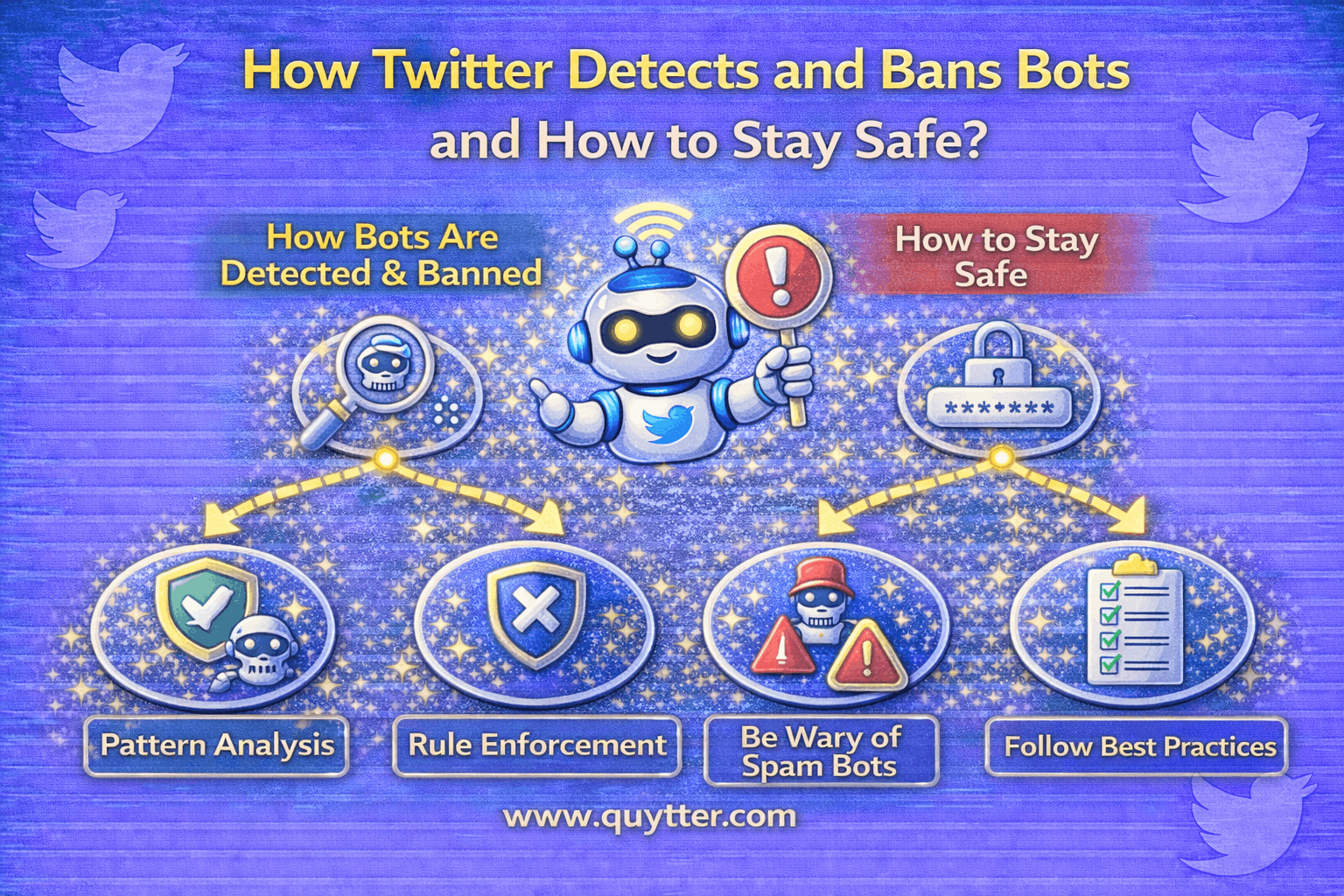
Understanding automation begins with defining what qualifies as a bot. Not every automated tool violates platform rules. The distinction between helpful automation and abuse plays a critical role in Twitter automation detection systems.
What Is Considered a Twitter Bot?
Bots typically refer to accounts or software programs designed to perform automated tasks. These tasks may include posting content, replying to tweets, following users, or generating engagement. While some automation helps businesses manage customer service or scheduled posting, aggressive automation often violates platform policies.
Fully automated accounts operate without human supervision. These accounts use scripts to generate content and interactions continuously. They often trigger How Twitter detects bot accounts mechanisms due to unnatural activity patterns.
AI powered automation introduces more advanced interaction capabilities. Some bots generate responses using natural language models. While these systems appear humanlike, detection algorithms still analyze engagement authenticity and behavioral signals.
Semi automated marketing tools combine manual control with automated features. These tools are often safer but still require careful usage to avoid triggering Twitter automation abuse detection systems.
Types of Bots Twitter Targets
Platforms classify bots based on behavioral risks. Each category receives different detection scrutiny.
Spam comment bots flood conversations with promotional messages or malicious links. These bots create large volumes of identical comments. They commonly trigger How Twitter detects fake engagement signals.
Fake follower bots inflate audience numbers artificially. These accounts rarely interact authentically and often exist solely to boost perceived influence.
Engagement farming bots coordinate likes, retweets, and comments across networks. These systems attempt to manipulate algorithmic ranking signals.
Scam and impersonation bots pretend to represent trusted brands or public figures. These bots often distribute fraudulent promotions or phishing attempts.
Political manipulation bots spread coordinated narratives or misinformation. Platforms aggressively track these networks through behavioral clustering and network analysis.
Understanding these categories helps explain Why Twitter bans bot accounts and how automation abuse threatens platform integrity.
How Twitter Detects Bots Using AI and Behavioral Analysis?
Modern bot detection relies heavily on machine learning and behavioral tracking. Instead of analyzing single posts, platforms evaluate long term activity patterns and engagement quality.
Behavioral Pattern Detection
Behavioral analysis forms the foundation of Twitter bot detection. Algorithms track how accounts behave rather than focusing only on content. Several behavioral indicators play a major role.
Posting frequency monitoring detects accounts that publish content at unrealistic speeds. Human users rarely maintain continuous posting schedules across multiple time zones. Automated accounts often operate without rest periods, which raises detection flags.
Engagement speed analysis evaluates how quickly accounts respond to posts. Bots frequently reply within seconds of content publication. While rapid engagement is not always suspicious, repeated instant responses across multiple posts often indicate automation.
Repetitive content detection identifies accounts posting identical or slightly modified messages repeatedly. Bots often rely on templates or scripted replies, which become detectable through language pattern recognition.
Interaction pattern tracking analyzes how accounts interact with others. Human users typically engage with varied audiences, while bots frequently interact with specific networks or coordinated clusters.
These detection signals help platforms develop advanced Twitter automation detection strategies that reduce spam and protect authentic conversations.
Machine Learning Bot Detection Systems
Artificial intelligence plays a crucial role in identifying automation abuse. Machine learning models analyze massive datasets to recognize patterns associated with fake accounts.
Natural language pattern recognition evaluates writing style consistency. Bots often generate responses using repetitive sentence structures or unnatural phrasing. AI systems compare these patterns across multiple accounts to identify automation networks.
Account activity fingerprinting tracks behavior signatures unique to automated tools. These signatures include login timing patterns, device consistency, and session activity intervals. Automated tools often create recognizable activity fingerprints.
Suspicious network clustering identifies groups of accounts interacting primarily with each other. Bot networks often amplify engagement artificially by coordinating likes, retweets, and comments within closed ecosystems.
Automation signature detection analyzes software behaviors linked to specific automation tools. Platforms maintain internal databases identifying known bot software patterns, improving Twitter anti bot system accuracy.
How Twitter Detects Fake Engagement and Automation Abuse?
Fake engagement detection represents a major component of How Twitter Detects and Bans Bots. Engagement signals heavily influence content ranking and algorithm visibility. Protecting these signals ensures fair exposure for authentic creators.
Fake Comment Detection Methods
Fake comment detection begins with duplicate content filtering. When multiple accounts post identical comments, algorithms flag suspicious patterns. These patterns often indicate engagement farming services or automated comment networks.
Low quality engagement filtering evaluates comment relevance and interaction depth. Bots often generate generic responses that lack contextual connection to original posts. These low value interactions trigger How Twitter detects fake engagement mechanisms.
Engagement burst pattern analysis tracks sudden spikes in comment volume. Authentic engagement typically grows gradually. When accounts receive hundreds of comments within short periods, detection algorithms investigate authenticity signals.
Platforms also analyze comment diversity. Authentic discussions involve varied perspectives and language styles. Bot generated comments frequently share similar phrasing patterns, making detection easier through language modeling.
Fake Follower and Like Detection
Fake follower detection relies heavily on account authenticity scoring. Platforms evaluate profile completeness, activity history, and interaction behavior. Accounts with minimal content and repetitive engagement patterns often receive lower authenticity scores.
Bot network identification analyzes relationships between suspicious accounts. When multiple accounts follow each other and engage simultaneously, clustering algorithms identify coordinated activity networks.
Suspicious growth pattern detection monitors follower increases. Rapid spikes in followers or likes often indicate purchased engagement or bot amplification campaigns. These signals activate Twitter bot ban policy enforcement processes.
Platforms also analyze account longevity and behavioral consistency. Real users gradually build engagement history. Newly created accounts generating high interaction volumes often trigger automation detection systems.
Signs Twitter Uses to Flag Bot Accounts
Recognizing warning signals helps users understand How to avoid Twitter bot detection. Detection systems analyze multiple behavioral indicators simultaneously rather than relying on single signals.
Accounts demonstrating unnatural activity spikes often trigger detection alerts. Sudden increases in posting frequency or engagement volume rarely reflect organic growth patterns.
Mass following and unfollowing represent common automation strategies. Bots frequently follow thousands of accounts to attract reciprocal engagement. Platforms track aggressive follow patterns through behavior monitoring.
Repetitive messaging strongly indicates automation abuse. Accounts posting identical promotional messages across multiple conversations frequently trigger Twitter spam detection algorithm responses.
Identical comment posting remains one of the most visible bot signals. Coordinated networks often reuse comment templates, making detection easier through language pattern analysis.
Abnormal login behavior also plays a significant role. Accounts accessing the platform from multiple geographic locations within short timeframes raise authenticity concerns. These signals contribute to Twitter security detection methods used to identify compromised or automated accounts.
Twitter Bot Ban Process: What Happens After Detection?
Once suspicious behavior is detected, enforcement does not always happen instantly. The Twitter bot ban process follows a layered system designed to confirm automation abuse while minimizing false suspensions. Understanding how this enforcement works helps users learn How Twitter Detects and Bans Bots and how accounts can remain compliant.
Stage 1: Risk Scoring and Monitoring
When automation signals appear, the platform does not immediately suspend the account. Instead, detection systems assign risk scores based on behavioral signals. These scores analyze posting patterns, engagement authenticity, and account history.
Accounts showing minor suspicious behavior usually enter monitoring mode. During this stage, activity remains visible but is closely analyzed. The platform collects additional behavioral data to confirm whether automation is involved.
Risk scoring includes several evaluation factors:
• Frequency of posting and engagement
• Content duplication patterns
• Interaction authenticity signals
• Account creation history
• Device and login consistency
Monitoring often results in reduced algorithm visibility. Many users experience this as a shadow restriction, where content receives significantly lower engagement. This stage acts as an early warning signal within Twitter automation detection systems.
Stage 2: Temporary Restrictions and Verification Requests
If suspicious behavior continues, enforcement escalates. Accounts may face temporary limitations designed to confirm human ownership and reduce automation risk.
Temporary restrictions can include posting limits, engagement restrictions, or visibility reduction. Users may also receive verification requests such as phone confirmation or identity authentication. These measures help differentiate real users from automated scripts.
Temporary enforcement acts as a preventative measure within Twitter anti bot system frameworks. Many accounts recover from this stage if behavior returns to normal activity patterns.
Stage 3: Permanent Suspension and Bot Removal
When automation abuse becomes severe or repeated, permanent suspension becomes likely. At this stage, platforms determine the account violates Twitter bot ban policy through confirmed automation behavior.
Permanent bans usually occur when accounts engage in coordinated spam campaigns, impersonation, or mass engagement manipulation. Suspended accounts lose access permanently and often face network wide removal if connected to bot clusters.
Bot networks frequently disappear in waves when detection systems identify coordinated automation patterns. These enforcement waves demonstrate how Twitter bot removal process operates at scale to maintain platform integrity.
Real Consequences of Bot Violations for Businesses and Creators
Many marketers underestimate the long term risks of automation abuse. Violating platform rules can damage brand credibility and eliminate growth opportunities.
Loss of Account Authority and Audience Trust
When accounts face suspension or shadow restrictions, their authority declines quickly. Followers often notice reduced posting consistency or engagement irregularities. This creates credibility concerns, especially for businesses and influencers relying on audience loyalty.
Suspended accounts lose historical engagement data and brand equity built over time. Rebuilding authority from scratch requires significant effort and marketing investment.
Automation abuse also damages professional reputation. Brands associated with fake engagement lose trust among advertisers and partnership networks. This risk highlights why understanding How Twitter detects fake engagement remains critical for marketing strategies.
Advertising and Revenue Risks
Automation violations can lead to advertising account restrictions. Platforms prioritize advertiser safety, and accounts flagged for suspicious activity may lose access to advertising tools.
Revenue losses can occur through:
• Restricted monetization features
• Lost sponsorship opportunities
• Reduced organic reach
• Declining audience retention
Businesses using automation without compliance strategies risk long term financial consequences. Understanding Twitter spam detection algorithm rules helps prevent revenue disruption and protects brand authority.
How to Stay Safe and Avoid Twitter Bot Detection?
Building safe automation strategies requires balancing efficiency with authenticity. Users must understand How to avoid Twitter bot detection by following compliant growth methods.
Maintain Human Like Engagement Patterns
Human engagement rarely follows predictable schedules. Automated tools often post or interact at consistent intervals, making detection easier. Introducing variability into posting schedules improves authenticity signals.
Users should avoid continuous activity without breaks. Natural usage includes pauses, irregular engagement timing, and varied interaction patterns. These behaviors reduce automation risk and support long term account stability.
Engaging with diverse audiences also strengthens authenticity. Bots frequently interact with limited networks, while real users participate in varied conversations across communities.
Avoid Mass Automation Campaigns
Mass following strategies represent one of the most common automation triggers. Aggressive follow and unfollow behavior signals engagement manipulation attempts. Platforms monitor these patterns closely through Twitter automation abuse detection algorithms.
Posting duplicate promotional messages also increases detection risk. Automated comment campaigns using identical templates often trigger spam detection systems.
Instead, users should focus on content personalization and authentic conversation building. Quality engagement consistently performs better than mass automated interaction strategies.
Use Automation Tools Responsibly
Not all automation violates platform rules. Scheduling tools, analytics platforms, and customer service automation can support legitimate growth when used responsibly.
Users should review tool compliance policies carefully. Choosing automation tools that follow platform guidelines reduces risk significantly. Responsible automation includes human oversight, content variation, and realistic engagement pacing.
Risks of Ignoring Twitter Bot Detection Rules
Ignoring automation compliance can lead to serious consequences beyond account suspension. Businesses relying heavily on social media growth face long term operational risks.
Automation abuse can distort marketing analytics. Fake engagement data creates misleading campaign performance insights, leading to ineffective marketing decisions. Businesses often waste advertising budgets based on inaccurate engagement metrics.
Brand reputation damage represents another major risk. Audiences increasingly recognize artificial engagement patterns. Trust declines when users suspect manipulated conversations or inflated popularity metrics.
Ignoring How Twitter Detects and Bans Bots also increases security vulnerabilities. Many automation services operate without strong data protection policies. Users risk account breaches, credential theft, or unauthorized content posting.
These risks highlight why authentic engagement strategies provide stronger long term growth compared to automation shortcuts.
Future Trends in Twitter Bot Detection Technology
Automation detection technology continues evolving rapidly. Platforms invest heavily in artificial intelligence and behavioral analysis to improve enforcement accuracy.
Advanced AI Conversation Analysis
Future detection systems increasingly analyze conversation depth and contextual relevance. AI models evaluate whether responses contribute meaningful interaction or mimic automated templates. This approach improves Twitter automation detection precision while reducing false positives.
Language modeling improvements allow platforms to detect AI generated engagement patterns more effectively. These systems analyze writing style variations, sentiment consistency, and conversation flow authenticity.
Cross Network Behavior Tracking
Platforms increasingly monitor coordinated automation across multiple accounts simultaneously. Cross network analysis identifies bot clusters and engagement farming networks more efficiently.
Behavioral fingerprinting technology allows platforms to track automation software signatures across multiple accounts. This advancement strengthens Twitter anti bot system enforcement by identifying automation infrastructure rather than individual accounts.
Real Time Detection Improvements
Real time monitoring systems reduce detection delays significantly. Advanced machine learning models analyze engagement authenticity instantly, preventing automation campaigns from gaining momentum.
These improvements strengthen platform trust and support authentic community growth. Understanding detection trends helps marketers adapt strategies and remain compliant with evolving platform rules.
Ethical Automation vs Authentic Engagement Growth
Automation exists within a gray area between efficiency and abuse. Ethical automation focuses on enhancing productivity without replacing human interaction. Responsible automation supports scheduling, analytics tracking, and customer support without generating artificial engagement.
Authentic engagement growth emphasizes relationship building and conversation quality. Platforms reward genuine discussion, meaningful feedback, and consistent community interaction. These strategies improve algorithm visibility naturally while reducing detection risks.
Balancing automation efficiency with authenticity ensures sustainable marketing growth. Businesses that prioritize community trust often achieve stronger brand loyalty and audience retention.
Want Safe and Authentic Twitter Comment Growth?
If you want engagement growth without risking automation penalties, using professional services focused on authentic interaction strategies is essential. Many brands struggle to balance visibility and compliance, especially when scaling marketing campaigns.
Professional engagement services focus on real audience interaction, contextual comment creation, and safe growth pacing. These services avoid spam patterns and follow platform guidelines, helping businesses improve visibility without triggering Twitter bot detection systems.
Quality engagement providers emphasize:
• Real user interaction instead of automated spam
• Context relevant comment creation
• Gradual engagement growth strategies
• Compliance with platform policies
• Reputation focused brand development
Businesses aiming for sustainable marketing results benefit from choosing safe engagement solutions instead of automation shortcuts. Authentic comment strategies support algorithm ranking and improve community trust simultaneously.
Conclusion
Understanding How Twitter Detects and Bans Bots helps users protect their accounts, maintain credibility, and build sustainable engagement strategies. Platforms continuously improve Twitter automation detection, Twitter spam detection algorithm, and behavioral monitoring systems to preserve authentic conversation quality.
Automation abuse can lead to shadow restrictions, permanent bans, and reputation damage. However, safe growth strategies focused on authentic interaction provide stronger long term results. Businesses and creators who prioritize real audience relationships consistently outperform accounts relying on artificial engagement tactics.
Choosing compliance driven engagement solutions allows users to scale safely while maintaining visibility and trust. Investing in authentic comment growth ensures algorithm stability, protects brand authority, and supports long term marketing success.