
Twitter auto DM & reply bots have become one of the most controversial forms of twitter engagement automation, mainly because they operate in the most sensitive interaction zones of the platform. Unlike likes or retweets, direct messages and replies create conversational signals that look deeply human. For marketers and creators, this makes automation extremely attractive. A single reply can spark a thread. A single DM can open a sales conversation. However, the same mechanisms that boost engagement can also trigger spam detection, trust decay, and long term reach suppression when misused.
As competition for attention intensifies on Twitter, users are under pressure to respond faster, engage more often, and maintain constant presence. This has led to the rapid adoption of twitter auto dm bot and twitter auto reply bot tools. While these bots promise efficiency and scale, they also operate dangerously close to platform enforcement thresholds. Understanding how they actually work is the difference between sustainable growth and silent account decline.
This guide explains how twitter auto DM & reply bots boost engagement, why they often appear effective at first, and where most automation strategies quietly fail. This article also explores the behavioral signals behind automated messages and replies, helping you understand when automation supports engagement and when it undermines trust.
What Are Twitter Auto DM & Reply Bots?
Twitter auto DM & reply bots are automation tools designed to send direct messages or post replies without manual input, based on predefined triggers. These triggers may include follows, mentions, keywords, hashtags, or user actions. While both fall under twitter automation tools, they operate in distinct interaction layers and are evaluated differently by the platform.
A twitter auto dm bot focuses on private communication. It sends automated direct messages when specific conditions are met, such as a new follower, profile visit, or keyword mention. These messages are often used for welcome sequences, outreach, lead generation, or content promotion. Because DMs feel personal, they create the illusion of one to one interaction even when delivered at scale.
A twitter auto reply bot, on the other hand, operates publicly. It automatically responds to tweets that match certain criteria. Replies are visible to others, contribute to conversation threads, and directly influence engagement metrics such as replies count and interaction velocity.
From a technical standpoint, both bots rely on:
- Trigger detection based on keywords or actions
- Message templates with variable placeholders
- Timing rules to control frequency
- API or browser based execution layers
The reason these bots are so appealing lies in how Twitter evaluates engagement depth. Replies and DMs signal stronger intent than passive actions like likes. They suggest conversation, interest, and relevance. This is why many marketers consider DM and reply automation more powerful than twitter marketing bots that focus on surface engagement.
However, this same power introduces risk. Twitter treats conversational spaces as high trust zones. Automation that behaves unnaturally in these zones is far more likely to be flagged than automation used for likes or follows.
Understanding this foundation is essential before evaluating how these bots boost engagement.
How Auto DM Bots Increase Engagement?
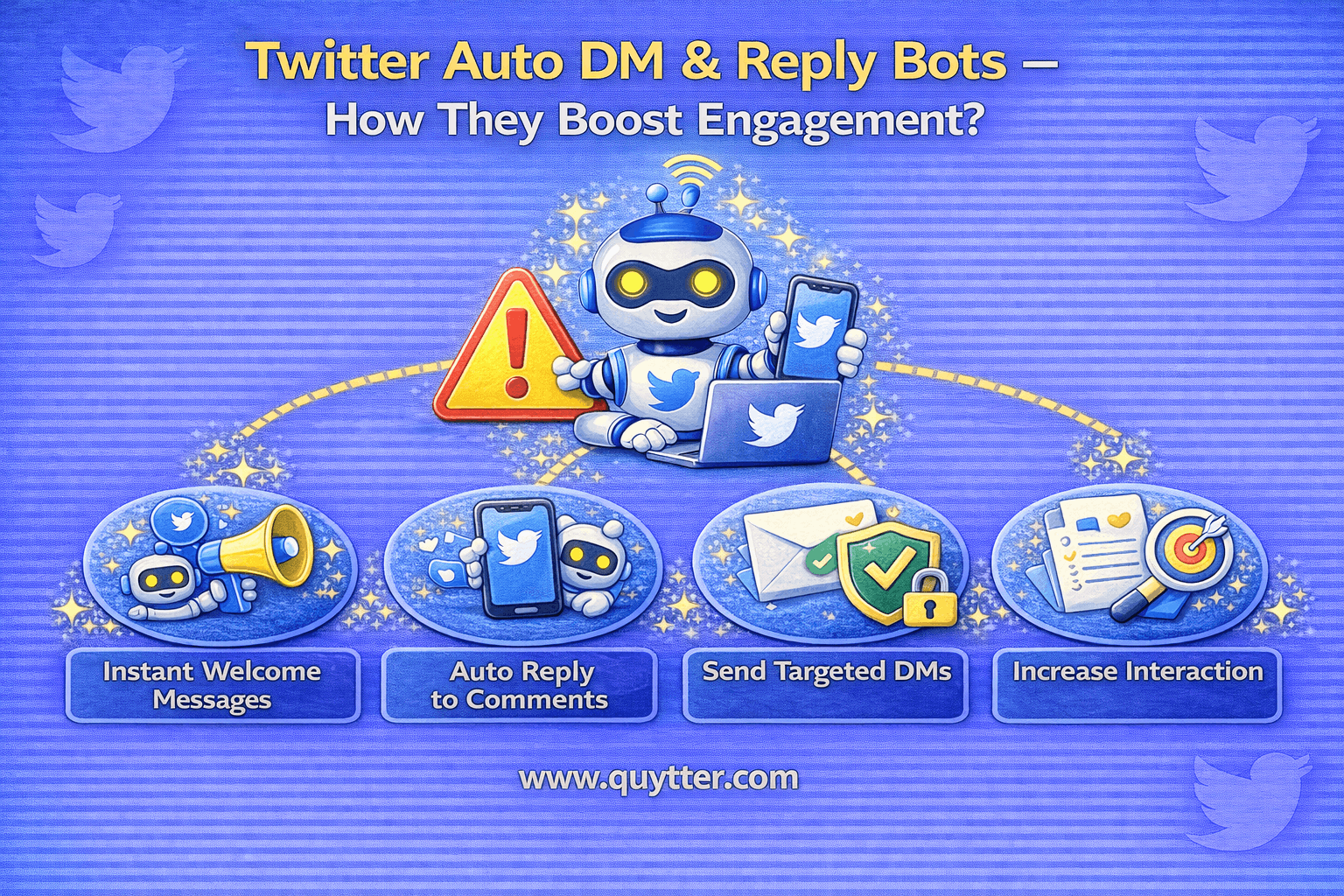
A twitter auto dm bot boosts engagement by initiating private conversations at scale. Unlike public interactions, DMs bypass timeline competition and reach users directly. When executed carefully, this can increase response rates, clicks, and conversions far more effectively than passive engagement.
One key reason auto DM bots appear effective is contextual timing. For example, sending a welcome message immediately after a follow capitalizes on peak attention. At that moment, users are most receptive, curious, and likely to respond. This timing advantage explains why many outreach campaigns rely heavily on automated twitter messages.
Auto DM bots also reduce friction. Instead of waiting for users to reply publicly or click a profile link, the conversation starts privately. This makes them popular for:
- Lead magnet delivery
- Content distribution
- Event invitations
- Soft sales introductions
Another engagement boost comes from perceived personalization. Even when messages are templated, direct delivery creates a sense of exclusivity. This can lead to higher reply rates compared to public calls to action.
However, effectiveness depends on relevance and restraint. Auto DM bots work best when:
- Messages are short and conversational
- Links are delayed until trust is established
- Targeting is narrow and niche specific
Problems arise when bots treat DMs as broadcast channels. Sending identical messages to large volumes of users triggers negative signals. Users ignore, mute, or report the messages, feeding directly into twitter spam detection systems.
There is also a diminishing returns effect. As inboxes fill with automated messages, response rates drop. What once felt personal becomes noise. At that point, automation no longer boosts engagement but erodes it.
From an experience standpoint, auto DM bots can open doors, but they cannot sustain relationships. Without follow up, human context, and restraint, engagement gains remain shallow and short lived.
How Auto Reply Bots Trigger Public Engagement Signals?
A twitter auto reply bot boosts engagement by increasing visible conversation activity on tweets. Replies are one of the strongest public engagement signals because they create interaction loops. A single reply can push a tweet back into timelines, attract additional responses, and extend its lifespan.
From an algorithmic perspective, replies indicate that content is discussion worthy. This is why twitter engagement automation strategies often prioritize reply bots over likes. Replies increase:
- Reply count metrics
- Thread activity
- Visibility in reply ranking
- Perceived popularity of a tweet
Auto reply bots are commonly used to:
- Respond to mentions instantly
- Insert replies into trending conversations
- Maintain presence across multiple threads
Speed is a major advantage. Automated replies ensure no mention goes unanswered. This responsiveness can improve perceived professionalism and attentiveness, especially for brands and support accounts.
However, reply automation is far more sensitive than likes. The algorithm evaluates reply content, not just frequency. Generic replies such as “Great post” or “Thanks for sharing” repeated across threads are easy to detect. They add little value and signal automation.
Another challenge is context mismatch. Replies that do not align with the original tweet content create friction. Users recognize irrelevant replies quickly and respond negatively, either by ignoring or reporting them.
Auto reply bots also influence brand perception. Because replies are public, low quality automation damages credibility. Followers notice patterns. Once trust erodes, future replies receive less engagement even when posted manually.
Used carefully, reply automation can maintain activity and responsiveness. Used aggressively, it becomes one of the fastest ways to trigger twitter shadowban risk and long term reach decline.
The Hidden Risks of Twitter Auto DM & Reply Bots
The biggest risk of twitter auto DM & reply bots is not immediate suspension. It is trust decay. Trust decay happens when an account’s behavior gradually shifts from human to mechanical in the eyes of the algorithm.
Twitter evaluates conversational behavior using multiple signals:
- Message similarity
- Timing patterns
- User responses
- Report and mute rates
Auto DM bots fail when they reuse templates too often. Even minor variations do not fully mask repetitive structure. Over time, inbox behavior looks artificial.
Auto reply bots fail when replies lack semantic depth. Repeating short, generic responses across different topics creates clear automation fingerprints.
Another major risk is negative feedback loops. When users mute, ignore, or report automated messages, the algorithm records dissatisfaction. Even without formal penalties, future messages and replies receive lower visibility.
There is also the issue of intent mismatch. Automation executes rules, not understanding. Bots cannot interpret sarcasm, emotion, or nuance. Replies that feel off tone damage both engagement and reputation.
Most importantly, these risks compound. An account that uses DM bots, reply bots, like bots, and follow bots simultaneously builds a dense automation profile. Even if each tool stays under limits, the combined behavior looks unnatural.
This is why many accounts experience sudden reach collapse without explanation. The platform has not punished them. It has simply stopped trusting them.
Why Most DM and Reply Automation Strategies Fail Long Term?
Most twitter auto DM & reply bots fail not because they are poorly coded, but because they misunderstand how trust is built on Twitter. Engagement on Twitter is not purely transactional. It is behavioral and cumulative. Every interaction contributes to an evolving trust profile that determines how future content is treated.
A major reason for failure is message repetition. Even when bots rotate templates, the underlying structure often remains the same. Over time, the platform recognizes these patterns. Users recognize them even faster. Once users stop responding or begin muting conversations, negative engagement signals accumulate. This reduces inbox deliverability and reply visibility without any visible warning.
Another long term issue is context blindness. Automation cannot understand nuance. A reply that seems appropriate in one thread can feel awkward or even offensive in another. When bots respond without understanding tone, sarcasm, or emotional context, engagement quality drops sharply. This leads to lower reply depth and weaker conversation signals.
There is also the problem of scaling without segmentation. Many automation strategies treat all users equally. In reality, engagement effectiveness depends on relevance. A generic DM sent to a highly targeted niche may perform well. The same message sent broadly becomes spam. As scale increases, relevance usually decreases, accelerating failure.
Finally, automation often replaces human interaction instead of supporting it. Accounts that rely entirely on bots stop developing real conversational skills. When automation is paused, engagement collapses because no genuine audience relationship exists. This is why many automation driven accounts plateau quickly and struggle to recover.
When Twitter Auto DM and Reply Bots Actually Make Sense?
Despite the risks, twitter auto dm bot and twitter auto reply bot tools are not inherently useless. They make sense in very specific, controlled scenarios where intent, timing, and restraint align.
Auto DM bots can be useful for limited welcome messages. A short, non promotional welcome DM that sets expectations or thanks a follower can feel natural when sent sparingly. The key is that the message does not demand action. It simply opens a door.
Auto reply bots can make sense for mention acknowledgment. Responding to mentions quickly signals responsiveness. When replies are clearly branded, polite, and neutral, automation can support customer service or community management without harming trust.
However, these use cases share strict conditions:
- Low frequency
- High relevance
- Minimal templating
- No immediate links or sales intent
Automation works best when it augments human behavior, not replaces it. The moment bots are used for aggressive outreach, mass replies, or link distribution, risk increases exponentially.
Understanding these boundaries separates sustainable automation from strategies that quietly self destruct.
Bot Automation vs Strategic Engagement Systems
The core flaw of bots lies in their execution model. Bots perform actions. Platforms evaluate behavior. This mismatch explains why twitter engagement automation often underperforms in the long run.
Bot automation relies on rigid rules. Strategic engagement systems rely on controlled variability. Bots focus on volume. Strategic systems focus on signal quality.
For example, a bot might send 100 identical DMs per day. A strategic system might deliver fewer interactions, but each one aligned with timing, relevance, and pacing that mimics natural behavior. Over time, the latter builds trust while the former erodes it.
Another key difference is risk distribution. Bots concentrate risk on the account itself. Strategic systems distribute engagement across safe patterns that reduce detection. This is why many professional marketers avoid raw bots and instead use services that understand platform dynamics.
In modern Twitter growth, safety is not about avoiding bans. It is about maintaining algorithmic trust. Systems designed around trust outperform bots designed around shortcuts.
How Quytter Boosts Engagement Without DM and Reply Bot Risks?
This is where Quytter fundamentally differs from traditional twitter automation tools. Instead of automating private messages or public replies, Quytter focuses on strategic engagement amplification that strengthens visibility without invading sensitive interaction zones.
Direct messages and replies are the fastest ways to trigger spam detection when automated. Quytter intentionally avoids these high risk areas. Instead, it helps users:
- Increase tweet visibility through controlled engagement
- Build social proof without spamming inboxes
- Improve perceived popularity without fake conversations
- Maintain a clean behavioral profile
By boosting engagement on your content rather than forcing conversations, Quytter aligns with how Twitter evaluates relevance. Engagement arrives where it matters, on your tweets, not in unsolicited DMs or generic replies.
This approach reduces twitter shadowban risk while still supporting growth. It is especially effective for creators and brands who want attention without compromising trust.
Quytter acts as a buffer between growth ambition and platform enforcement. It allows users to scale reach responsibly, avoiding the pitfalls that cause most DM and reply automation strategies to fail.
Conclusion
Twitter auto DM & reply bots can boost engagement in the short term, but they operate in the most sensitive areas of the platform. While they may create the appearance of activity, they often undermine trust when used aggressively or without context.
Long term growth depends on relevance, restraint, and authenticity. Automation that ignores these principles leads to declining reach and engagement quality. The safest path forward is not eliminating automation entirely, but choosing methods that align with platform behavior.
By focusing on strategic engagement instead of automated conversations, solutions like Quytter offer a more sustainable way to grow visibility, protect trust, and build real momentum on Twitter.