
Automation has become one of the most debated topics in modern social media marketing. Many people hear the word “bot” and immediately associate it with spam, fake accounts, or risky shortcuts that can destroy a Twitter account overnight. At the same time, brands, creators, and marketers are under constant pressure to stay active, respond quickly, and publish consistently. This is where using bots for scheduling posting and auto replies becomes both attractive and controversial. The challenge is not whether automation exists, but whether it is being used responsibly or abused in ways that harm trust and long term growth.
For Twitter users who want to scale their presence, automation can feel like a necessary tool rather than a luxury. Posting manually every day, replying instantly to every mention, and maintaining a global presence across time zones is not always realistic. However, misuse of twitter automation bots, twitter posting bots, or auto reply bots on twitter can quickly cross the line into manipulation. That is why understanding how automation actually works, where the risks lie, and how platforms evaluate automated behavior is critical before making any decision.
This guide is designed to break down automation clearly and honestly. This article explains how bots are used for scheduling, posting, and auto replies, what is allowed, what is risky, and how to approach automation without sacrificing account safety or credibility. Instead of promoting shortcuts, the focus is on experience driven insights, platform rules, and sustainable strategies that align with long term Twitter growth.
What Are Twitter Automation Bots?
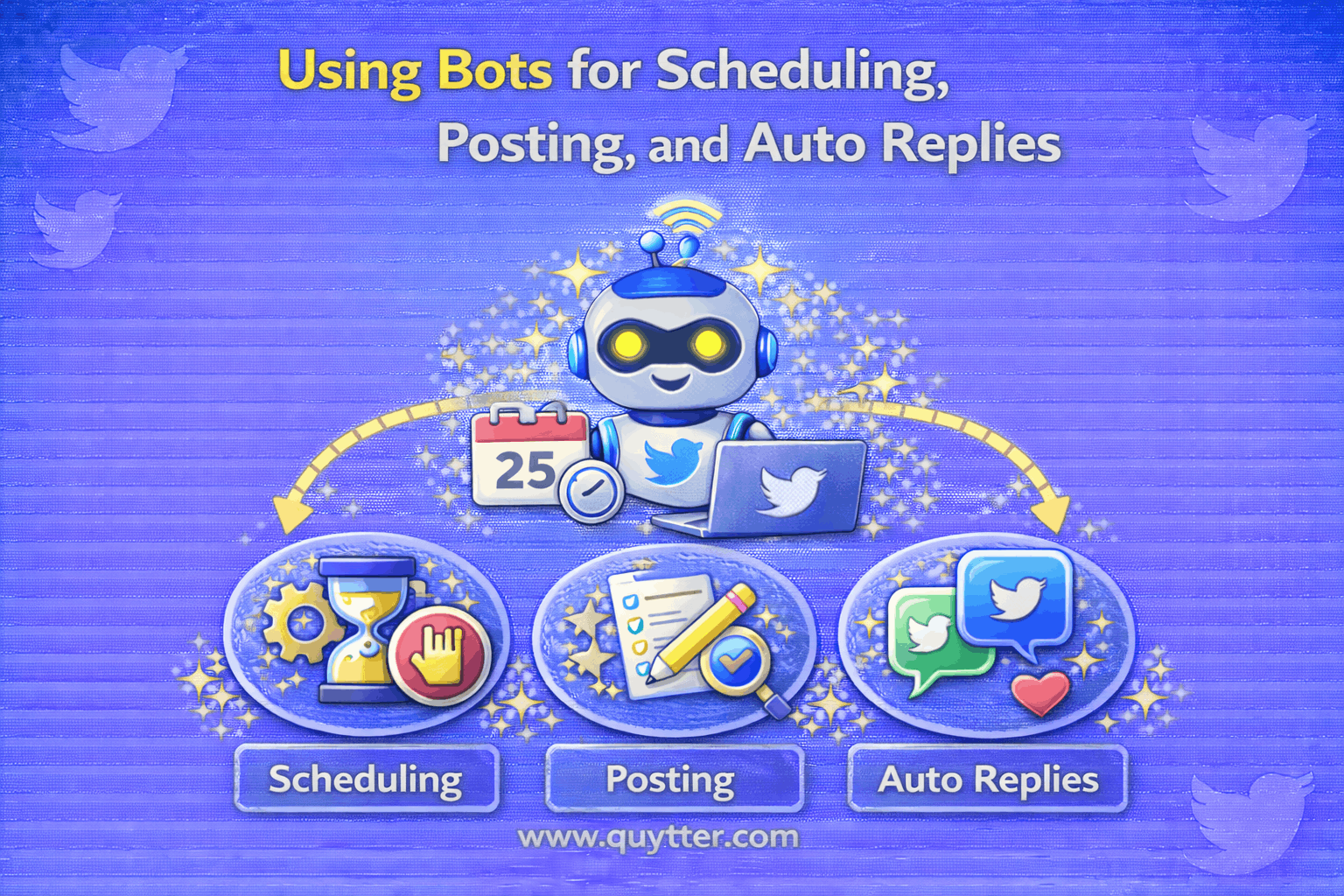
To understand automation properly, it is important to separate emotion from function. Twitter automation bots are software tools or systems designed to perform predefined actions on a Twitter account without continuous manual input. These actions can include publishing scheduled tweets, posting content from external sources, or sending automated replies based on triggers. At their core, these bots are not inherently good or bad. Their impact depends entirely on how they are configured and why they are used.
There are several categories of automated twitter accounts, each serving a different purpose. Scheduling bots are designed to publish tweets at specific times, allowing users to plan content in advance. Posting bots can distribute content automatically, often pulling updates from RSS feeds or content management systems. Auto reply bots respond to mentions, keywords, or direct messages with predefined responses. While all of these fall under automation, they operate at very different levels of risk.
From an expertise perspective, automation becomes problematic when it attempts to simulate human engagement at scale. Bots that automatically like, follow, unfollow, or reply indiscriminately are designed to manipulate engagement metrics rather than support communication. These behaviors are often associated with bot driven engagement and twitter engagement manipulation, which platforms actively discourage. On the other hand, automation that supports publishing and customer response workflows can be legitimate and even encouraged when done transparently.
Experience shows that many account issues arise not from automation itself, but from misunderstanding boundaries. Users assume that if one automated action is acceptable, all automation must be safe. This assumption leads to overuse, pattern repetition, and detectable behavior that triggers moderation systems. Understanding what automation bots are and how they differ is the first step toward using them responsibly.
Using Bots for Scheduling Tweets Efficiently
Scheduling is widely considered the safest and most accepted form of automation on Twitter. Twitter scheduling bots allow users to plan tweets ahead of time, ensuring consistent publishing without requiring constant manual presence. From a practical standpoint, scheduling solves real problems, especially for brands and creators operating across multiple time zones or managing large content calendars.
The value of scheduled tweets lies in consistency. Algorithms tend to reward accounts that post regularly without erratic bursts of activity. Scheduling helps smooth out posting patterns, making an account appear stable and predictable. This is particularly important for campaigns, product launches, or educational threads that need precise timing. Using bots for scheduling also reduces burnout, allowing teams to focus on strategy rather than repetitive tasks.
However, experience based insights show that scheduling alone does not guarantee quality engagement. Scheduled tweets that are posted without monitoring can miss contextual relevance. For example, publishing promotional content during breaking news or sensitive events can harm brand perception. This is why effective scheduling always includes human oversight. Automation should assist planning, not replace judgment.
When used correctly, scheduling bots support content strategy rather than distort it. They do not inflate metrics or simulate interaction. Instead, they ensure that high quality content reaches audiences at optimal times. From a trust perspective, this type of automation aligns with platform expectations and user experience. Problems only arise when scheduling is combined with aggressive automation elsewhere, creating unnatural account behavior patterns.
Automated Posting Bots and Content Distribution
While scheduling focuses on timing, twitter posting bots often focus on content sourcing and distribution. These bots automatically publish tweets based on predefined inputs such as RSS feeds, blog updates, or database triggers. For publishers and media driven accounts, automated posting can significantly reduce manual workload and ensure that new content is shared instantly.
The key difference between scheduling and automated posting lies in control. Scheduling assumes that content is manually curated before publication. Automated posting can run continuously, sometimes without review. This creates both efficiency and risk. If content sources are well maintained, posting bots can keep an account active with minimal effort. If sources are poorly monitored, they can publish irrelevant, repetitive, or low quality tweets that damage credibility.
From an authority standpoint, platforms evaluate posting bots based on patterns. Excessive posting frequency, identical tweet structures, or repeated links can signal automation abuse. This is where bot driven engagement often begins to overlap with spam like behavior. The algorithm does not evaluate intent, only observable behavior. Even well meaning automation can be flagged if it produces unnatural output.
A balanced approach to automated posting includes moderation rules, content filters, and periodic audits. Experienced marketers treat posting bots as assistants rather than replacements. They use automation to distribute content efficiently while maintaining manual checks to ensure relevance and quality. This approach reduces risk while preserving the benefits of automation.
Auto Reply Bots and Conversation Automation
Auto reply bots on twitter are among the most controversial forms of automation. They are designed to send predefined responses when specific conditions are met, such as mentions, keywords, or direct messages. In theory, auto replies can improve response times and support basic communication. In practice, they are often misused and easily detected.
Legitimate use cases for auto replies include customer support acknowledgments, welcome messages, or informational responses to common questions. These scenarios prioritize speed and clarity over personalization. When users understand that a response is automated and temporary, trust is not necessarily harmed. However, problems arise when auto replies attempt to mimic genuine conversation.
Experience shows that auto responses on twitter often fail because they lack context awareness. They may respond to sarcasm, criticism, or unrelated mentions with generic messages. This creates frustration and signals automation to both users and algorithms. Repetitive phrasing, identical emojis, or keyword triggered replies are strong indicators of automation.
From a trust perspective, auto replies should be limited, transparent, and purpose driven. They should never be used to inflate engagement metrics or create the illusion of conversation. Automation in communication should reduce friction, not replace authenticity. This distinction is critical for maintaining account credibility.
Twitter Automation Rules and Platform Policies
Understanding automation requires understanding platform governance. X maintains clear guidelines around automation to protect user experience and prevent manipulation. These rules focus less on tools and more on behavior. Automation itself is not prohibited. Abusive automation is.
Key policy areas include rate limits, repetitive actions, and coordinated behavior. Accounts that perform actions faster than humanly possible or repeat identical interactions across multiple accounts are more likely to be flagged. This applies to likes, follows, replies, and even posting frequency. Twitter automation rules are designed to detect patterns rather than punish individual actions.
From an authority standpoint, platforms also evaluate network behavior. If multiple accounts are controlled by the same automation system and exhibit similar activity, they may be treated as a coordinated network. This is where twitter policy compliance becomes critical. Even legitimate automation tools can cause problems if misconfigured across multiple accounts.
Experienced users align automation with platform expectations rather than testing limits. They treat automation as an extension of human workflow, not a replacement for it. This mindset significantly reduces risk and supports sustainable growth.
Risks of Using Bots for Engagement Growth
The most significant risks arise when automation is used to drive engagement rather than manage content. Bots that like, retweet, or reply automatically are often associated with bot detection systems. These behaviors aim to manipulate visibility signals rather than facilitate communication.
The consequences of automation abuse are not always immediate. Many users assume that if an account is not banned instantly, the automation must be safe. In reality, platforms often apply silent limitations. Reduced reach, suppressed impressions, and limited discoverability are common outcomes. These effects can persist long after automation is stopped.
Another risk is credibility loss. Audiences can often detect automated behavior even if platforms do not act immediately. Generic replies, irrelevant interactions, and unnatural timing erode trust. For brands and creators, this damage can be difficult to reverse.
From an experience based perspective, automation shortcuts rarely produce long term benefits. They create temporary activity spikes followed by declining performance. Sustainable growth requires real interest, real users, and meaningful interaction. Automation that attempts to replace these elements ultimately undermines them.
Bots vs Real Engagement Which One Builds Long Term Growth?
Comparing automation to human engagement reveals a fundamental difference in value. Manual engagement vs bots is not just a technical debate, but a strategic one. Real engagement generates signals that platforms value, such as conversation depth, dwell time, and reciprocal interaction. Bots primarily generate surface level metrics.
Algorithms are increasingly designed to evaluate quality over quantity. A small number of meaningful replies can outperform hundreds of automated likes. Real twitter engagement creates feedback loops that improve content relevance and audience alignment. Bots, on the other hand, operate on rules that cannot adapt to nuance.
From a trust standpoint, real engagement builds relationships. Automation builds activity. While activity can be useful for consistency, it cannot replace human judgment or empathy. Long term growth depends on trust from both users and the platform. This is why experienced marketers prioritize authenticity even when using automation tools.
How to Use Automation Without Hurting Your Twitter Account
Responsible automation starts with restraint. Automation should support workflows, not dominate them. One effective approach is hybrid automation, where bots handle repetitive tasks while humans oversee strategy and interaction. This reduces workload without sacrificing control.
Safe automation practices often include limiting daily actions, varying timing naturally, and avoiding repetitive language. Monitoring analytics is also essential. Sudden drops in reach or engagement can signal automation related issues. Adjustments should be made early rather than ignored.
Another important practice is transparency. Users respond better to automation when expectations are clear. Informational auto replies or scheduled content are less disruptive when they align with audience needs. Automation that respects context and purpose is far less likely to trigger negative outcomes.
A Safer Alternative to Automation Bots for Twitter Growth
Automation is not the only way to scale. For users focused on growth, a safer alternative is leveraging real engagement delivered in a controlled and compliant manner. Instead of relying on twitter automation bots to simulate activity, focusing on genuine visibility and interaction produces stronger results.
Real views, likes, followers, comments, and retweets from authentic users support algorithmic trust signals. This approach avoids the risks associated with bot driven engagement and twitter engagement manipulation. It also preserves account credibility and analytics integrity.
Platforms reward authenticity. Growth strategies that align with this principle are more resilient. Rather than pushing limits with automation, many marketers choose services that emphasize real users, gradual delivery, and policy compliant methods. This path prioritizes sustainability over shortcuts.
Conclusion
Using bots for scheduling posting and auto replies can be a powerful productivity tool when applied with care and understanding. Automation itself is not the enemy. Misuse and overreliance are. Scheduling and limited posting automation can support consistency, while aggressive engagement automation often leads to penalties and trust loss.
Long term Twitter success depends on balance. Automation should enhance human effort, not replace it. Real engagement, authentic interaction, and platform compliant strategies consistently outperform shortcuts. For those seeking growth without risking their accounts, focusing on genuine visibility and interaction remains the safest path forward.
If you want to grow on Twitter without relying on risky automation or fake activity, exploring solutions built around real engagement is the smartest move. Sustainable growth starts with real users, real signals, and strategies designed for trust rather than manipulation.