
Understanding different types of Twitter bots has become essential for marketers, brands, influencers, and growth specialists who want to scale their online presence efficiently. As social media competition continues to increase, businesses are constantly searching for automation tools that help them improve engagement, reach new audiences, and generate leads faster. Many companies now rely on Twitter bot types, Twitter automation bots, and social media bots for Twitter to streamline daily marketing tasks while maintaining consistent visibility.
The rising popularity of automation has created both opportunities and risks. While some Twitter marketing bots help brands grow safely and efficiently, others may trigger spam detection systems or damage brand credibility. This article explores different types of Twitter bots, how they function, their benefits, risks, and how marketers can use them responsibly. This guide explains every major category of Twitter automation software, helping readers understand how Twitter growth automation works and how to apply it strategically.
What Are Twitter Bots and How Do They Work?
Definition of Twitter Bots
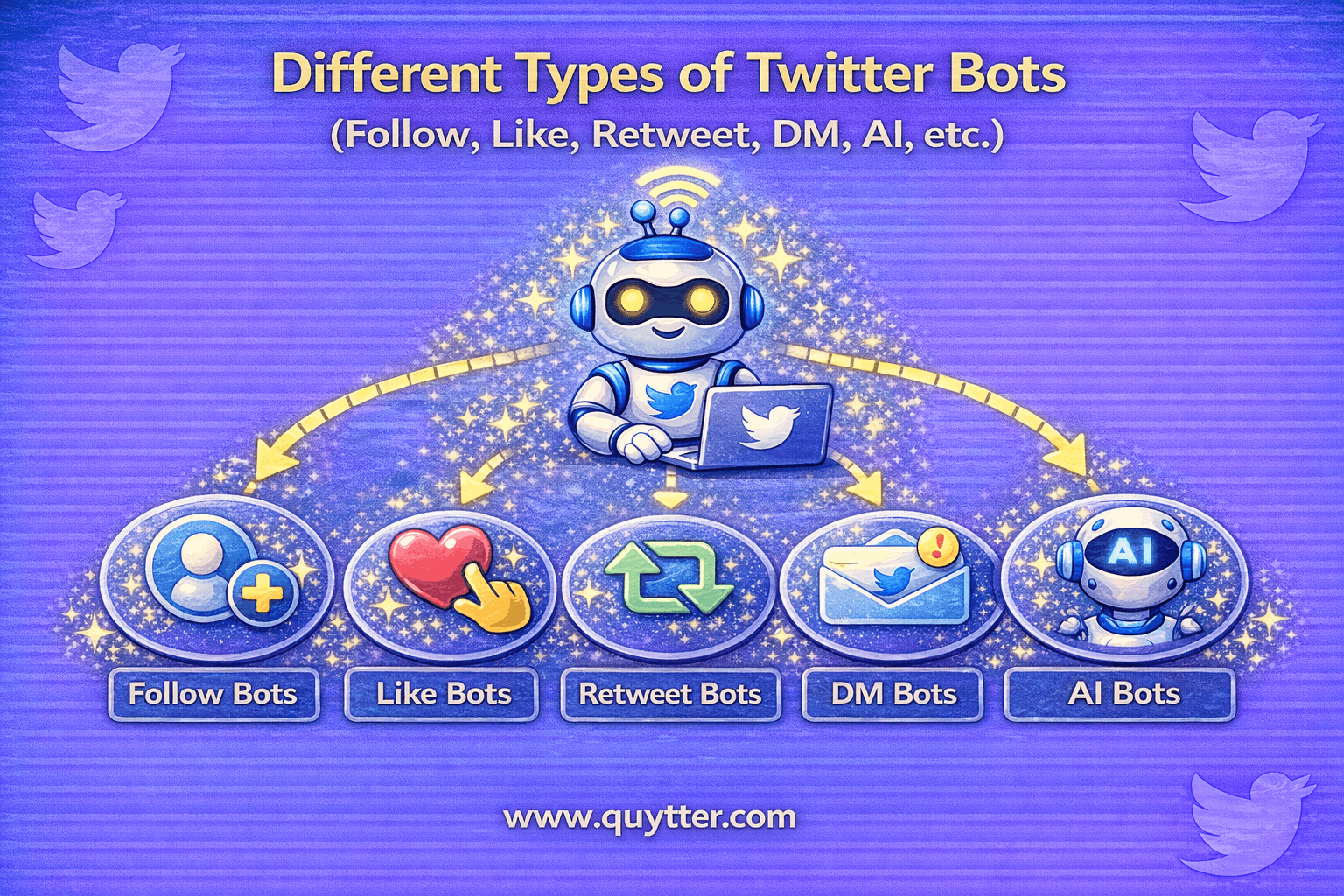
Different types of Twitter bots refer to automated software programs designed to perform actions on Twitter without requiring manual user interaction. These bots rely on algorithms, automation scripts, and sometimes artificial intelligence to perform tasks such as following users, liking tweets, posting content, sending direct messages, and replying to conversations.
Most Twitter bot types operate through official or unofficial application programming interfaces. APIs allow automation tools to interact with platform features while maintaining structured data communication. More advanced social media automation tools integrate machine learning and behavioral analysis, allowing bots to simulate human interactions more realistically.
Bots can be divided into two primary categories. Interaction automation bots perform actions such as likes, retweets, and replies. Content automation bots generate and publish posts or respond dynamically to conversations. Both play important roles in Twitter marketing automation strategies, helping brands maintain activity and engagement consistency.
Automation technology has also evolved significantly. Early bots were basic scripts that performed repetitive tasks without personalization. Modern AI Twitter bots use natural language processing, sentiment detection, and contextual learning to produce human-like responses. These developments have made Twitter automation bots significantly more effective but also increased platform monitoring.
Why Businesses and Marketers Use Bots?
Companies use Twitter engagement bots to solve scalability challenges. Manual engagement requires significant time and effort, especially for businesses managing multiple campaigns or accounts. Automation enables marketers to maintain continuous interaction with followers while focusing on strategic planning.
One major advantage of Twitter growth automation is improved audience targeting. Bots can identify users based on hashtags, interests, location, and engagement patterns. This targeting helps businesses attract audiences more likely to convert into customers.
Another key use involves lead generation. Many lead generation bots interact with potential customers automatically, guiding them through marketing funnels. This approach improves efficiency while maintaining consistent communication with prospects.
Automation also helps influencers and personal brands maintain visibility. Frequent posting and interaction improve algorithm signals. As engagement increases, tweets receive broader distribution across user timelines and discovery feeds.
Evolution of Twitter Bots
The development of different types of Twitter bots reflects broader social media automation trends. Early bots focused mainly on mass following and spam promotion. These tools often produced low quality engagement and triggered platform penalties.
As marketing strategies matured, developers created smarter Twitter automation software that focused on targeted engagement rather than mass interaction. Modern bots prioritize behavioral imitation, content personalization, and engagement analytics.
The introduction of artificial intelligence has further transformed automation. Today, AI content bots can generate contextual replies, produce original posts, and adapt communication styles based on audience behavior. This transformation highlights how automation continues to evolve toward realistic and personalized digital interaction.
Follow Bots
What Follow Bots Do?
Follow bots are among the most widely used Twitter bot types. These bots automatically follow users based on targeting criteria such as hashtags, competitor followers, or industry keywords. Many Twitter automation bots include follow and unfollow functionality, allowing marketers to maintain follower ratios and optimize audience growth.
The primary goal of follow bots is visibility expansion. When users receive new follower notifications, they often visit the profile and potentially follow back. This reciprocal behavior forms the foundation of many Twitter growth automation strategies.
Advanced follow bots can segment audiences by interests, demographics, and engagement behavior. These targeting capabilities allow marketers to attract niche audiences rather than generic followers. As a result, social media bots for Twitter can generate more relevant and valuable audience connections.
Benefits of Using Follow Bots
Using follow bots offers several strategic advantages. The most obvious benefit is faster follower acquisition. Building audiences organically can take months or years. Twitter marketing bots accelerate this process by automating discovery and connection building.
Follow bots also improve brand awareness. Increased follower counts enhance perceived credibility and encourage additional organic followers. Social proof plays a significant role in user decision making, and higher follower numbers often signal trustworthiness.
Another important advantage involves niche audience targeting. By following users interested in specific topics, businesses can attract highly relevant followers who are more likely to engage with content or purchase products.
Risks of Follow Bots
Despite their benefits, follow bots present potential risks. Aggressive following patterns can trigger spam detection systems. Platforms continuously monitor automation behavior to maintain user experience quality.
Another challenge involves follower quality. Mass follow strategies often attract inactive accounts or users with low engagement potential. Poor quality followers reduce engagement rates and limit marketing effectiveness.
Marketers must balance automation with manual interaction. Combining authentic engagement with automation helps reduce detection risks and maintain audience trust.
Like Bots
How Like Bots Operate?
Like bots are another essential category among different types of Twitter bots. These bots automatically like tweets based on keyword triggers, hashtags, or targeted user lists. Twitter engagement bots that perform liking actions help increase account visibility by signaling activity to platform algorithms.
Most Twitter automation software allows users to define engagement rules. For example, bots can like tweets containing industry keywords or interact with posts from competitor audiences. These automated actions encourage users to visit the bot account profile and potentially engage further.
Like bots also help maintain consistent account activity. Regular engagement improves algorithmic signals and increases the likelihood of content appearing in recommendation feeds.
Marketing Advantages of Like Bots
The primary benefit of like bots involves visibility enhancement. Each automated interaction increases the probability of attracting user attention. As more users notice engagement activity, profile visits and follower growth often increase.
Another advantage involves reciprocal interaction. Many users respond to likes by exploring profiles or engaging with future content. This behavioral pattern supports organic audience expansion.
Like bots also improve algorithm signals. Engagement activity indicates account relevance and content popularity. Increased engagement often results in higher distribution across timelines and discovery features.
Limitations and Safety Concerns
While Twitter automation bots provide efficiency, excessive liking activity can trigger spam detection. Platforms monitor interaction patterns to identify automation behavior. Sudden engagement spikes may result in temporary restrictions or reduced visibility.
Another limitation involves engagement quality. Automated likes may not translate into meaningful audience relationships. Users may ignore accounts that rely heavily on automation without providing valuable content.
Marketers should implement gradual automation scaling. Maintaining realistic interaction patterns helps minimize detection risks and improve long term growth stability.
Retweet Bots
Retweet Automation Explained
Retweet bots automate content sharing by reposting selected tweets to expand reach and visibility. These Twitter marketing bots can retweet posts based on hashtags, user lists, or content themes. Many businesses use retweet automation to distribute promotional content and amplify marketing campaigns.
Retweet bots also support scheduled content distribution. Automation tools allow marketers to schedule reposts during peak engagement periods. This scheduling improves content exposure and maximizes audience reach.
Some advanced Twitter automation bots include content curation features. These bots automatically identify trending topics and retweet relevant content, helping brands maintain industry relevance.
When Retweet Bots Are Effective?
Retweet bots are particularly useful for viral marketing campaigns. Reposting high performing content increases visibility and encourages audience interaction. Brands launching new products or announcements often rely on retweet automation to maximize exposure.
Retweet bots also support content distribution scaling. Managing multiple accounts manually can be time consuming. Automation allows marketers to distribute promotional content across several profiles simultaneously.
Another important use involves brand awareness campaigns. Reposting influencer content, customer testimonials, and user generated posts strengthens brand credibility and builds social proof.
Retweet Bot Risks
Retweet automation may create duplicate content concerns if overused. Platforms prioritize original content and may limit distribution for repetitive reposting patterns.
Another risk involves reputation management. Excessive retweeting without original content creation can make accounts appear automated or spam focused. Maintaining a balanced content strategy is essential for long term brand credibility.
Bots must also follow realistic posting intervals. Randomized scheduling and manual interaction help reduce automation detection risks.
DM Bots
What DM Bots Do?
DM bots represent one of the most powerful Twitter automation bots because they focus on direct audience communication. These bots automatically send messages to new followers, prospects, or targeted users. Businesses commonly use DM bots for customer onboarding, promotional campaigns, and customer support.
DM automation helps brands maintain instant communication with followers. Automated welcome messages create positive first impressions and encourage further engagement. Many Twitter marketing automation strategies rely heavily on DM interaction for lead nurturing.
Advanced DM bots can segment audiences based on engagement behavior and send personalized messages accordingly. This segmentation improves marketing relevance and conversion potential.
DM Bots for Lead Generation
Lead generation represents a major application of DM bots. Automated messages can introduce products, offer discounts, or guide users to landing pages. These interactions help businesses build marketing funnels and convert social media audiences into customers.
DM bots can also qualify prospects by asking pre programmed questions. Responses help businesses identify high quality leads and prioritize sales outreach. Many lead generation bots integrate with customer relationship management systems to organize prospect data efficiently.
DM Automation Risks
Despite their effectiveness, DM bots carry significant spam risks. Excessive messaging or irrelevant promotions may trigger user reports. Platforms monitor messaging patterns closely to prevent abuse.
Businesses must prioritize message personalization and audience relevance. Sending generic automated messages often reduces trust and damages brand reputation.
To use DM bots safely, marketers should focus on gradual outreach and meaningful conversation building rather than aggressive promotional messaging.
Reply Bots
How Reply Bots Work?
Reply bots are a crucial category among different types of Twitter bots because they directly interact with conversations happening under tweets. These bots automatically respond to posts, mentions, or keywords using pre programmed scripts or AI generated text. Many brands use Twitter reply automation bots to increase engagement visibility and maintain real time interaction with audiences.
Reply bots can be configured to respond when users mention a brand name, use specific hashtags, or comment under promotional tweets. This allows businesses to maintain active conversations even when marketing teams are offline. The automation helps ensure that customer questions, campaign responses, and promotional interactions receive timely replies.
Advanced reply bots rely on natural language processing to analyze user intent. These AI powered reply bots can adjust tone, provide relevant information, and maintain conversational flow. This technology allows brands to scale customer interaction while maintaining a personalized communication style.
Marketing Benefits of Reply Bots
Reply bots significantly increase engagement depth. Unlike likes or retweets, replies generate conversation threads that boost algorithmic visibility. The more conversations a tweet receives, the more likely it is to appear in discovery feeds.
Businesses also benefit from improved customer support efficiency. Reply bots can instantly respond to frequently asked questions, reducing response delays and improving customer satisfaction.
Reply bots also help brand positioning. Consistent interaction shows audiences that a brand is active, responsive, and engaged with its community. This perception improves trust and strengthens audience relationships.
Potential Risks of Reply Automation
Automation can create unnatural interaction patterns if responses appear repetitive or irrelevant. Users quickly recognize generic automated replies, which may reduce brand credibility.
Overuse of reply bots can also trigger spam detection if responses appear too frequently across multiple conversations. To minimize risks, marketers should combine automation with manual interaction and regularly update response templates.
Comment Bots
What Comment Bots Do?
Comment bots are designed to automatically post replies under tweets to create conversation activity, social proof, or promotional messaging. These bots are often used in influencer campaigns, product promotions, and engagement boosting strategies.
Many marketers use Twitter comment automation bots to simulate audience interest by generating discussion threads. Increased comment activity signals content popularity and improves algorithm ranking.
Comment bots can also support reputation management by posting positive feedback or reinforcing brand messaging. When used strategically, they help establish credibility and encourage organic audience participation.
Strategic Uses of Comment Bots
Comment bots are widely used in campaign launches. Posting relevant and engaging comments under promotional tweets encourages conversation and attracts attention from potential customers.
Another strategic use involves audience education. Brands can use automated comments to provide additional product information, answer common questions, or highlight campaign benefits.
Comment bots are also effective in influencer marketing. Automated engagement under influencer content increases campaign visibility and strengthens promotional reach.
Comment Bot Limitations
While Twitter engagement bots improve visibility, low quality or repetitive comments can reduce trust. Platforms and users are increasingly capable of identifying automated responses.
Maintaining content diversity is essential. Comment bots should use varied language patterns, realistic timing intervals, and audience specific messaging to maintain authenticity.
AI Twitter Bots
How AI Bots Are Changing Automation?
AI Twitter bots represent the most advanced category among different types of Twitter bots. Unlike traditional automation tools, AI bots use machine learning, sentiment analysis, and contextual data to produce human like interaction.
These bots can generate original tweets, personalized replies, and adaptive messaging based on user behavior. AI powered automation allows brands to maintain realistic communication while scaling engagement efforts.
AI bots also analyze conversation trends, helping marketers identify emerging topics and adjust content strategies accordingly. This capability makes AI automation particularly valuable for competitive industries.
Advantages of AI Automation Bots
AI bots provide superior personalization compared to traditional automation tools. They can adjust tone, vocabulary, and messaging style to match audience preferences. This improves interaction authenticity and audience trust.
Another advantage involves dynamic content creation. AI bots can generate promotional posts, engagement replies, and educational content automatically. This reduces content production workload while maintaining consistent posting schedules.
AI bots also support advanced analytics. By analyzing user engagement behavior, they help marketers optimize campaign performance and audience targeting strategies.
AI Bot Challenges
Despite their advanced capabilities, AI bots require careful monitoring. Incorrect interpretation of user intent may produce irrelevant or inappropriate responses.
AI automation also requires ongoing training and optimization. Marketers must continuously review performance data and update content strategies to maintain effectiveness.
Lead Generation Bots
How Lead Bots Work?
Lead generation bots focus on identifying and nurturing potential customers through automated interaction. These bots monitor user behavior, initiate conversations, and guide prospects through marketing funnels.
Lead bots typically interact with users who engage with promotional content, follow brand accounts, or use targeted keywords. Automated messages introduce products, offer discounts, or provide educational content designed to convert prospects into customers.
Many businesses integrate lead bots with CRM systems to organize prospect data and improve sales pipeline efficiency.
Benefits of Lead Automation
Lead bots improve conversion efficiency by maintaining consistent communication with potential customers. Automated outreach ensures that prospects receive immediate engagement, increasing conversion probability.
Lead bots also support audience segmentation. By analyzing engagement behavior, automation tools identify high quality prospects and personalize messaging accordingly.
Another advantage involves scalability. Businesses can manage thousands of potential leads simultaneously without increasing marketing workload.
Content Posting Bots
Role of Content Automation Bots
Content posting bots automate tweet publishing schedules, ensuring consistent brand activity. These bots allow marketers to plan content calendars, schedule posts during peak engagement periods, and maintain regular audience interaction.
Content automation helps businesses maintain visibility without requiring constant manual posting. Scheduled content distribution supports marketing campaigns, product launches, and brand storytelling strategies.
Advanced posting bots also include content recommendation features. These tools analyze trending topics and suggest relevant posting opportunities.
Content Automation Advantages
Posting bots improve marketing consistency. Regular posting signals algorithm activity and increases audience visibility.
Automation also improves productivity. Marketing teams can focus on strategy and creative development while bots handle content distribution.
Content posting bots support global audience engagement by scheduling posts across multiple time zones. This ensures continuous interaction with international followers.
Monitoring and Analytics Bots
What Monitoring Bots Do?
Monitoring bots track engagement performance, analyze audience behavior, and identify conversation trends. These bots collect data related to likes, comments, retweets, and follower growth patterns.
Monitoring automation helps marketers evaluate campaign effectiveness and adjust strategies based on performance insights. Data driven marketing decisions improve long term engagement results.
Strategic Value of Analytics Bots
Analytics bots help identify high performing content types, optimal posting times, and audience engagement patterns. These insights allow marketers to optimize automation strategies and improve campaign results.
Monitoring bots also support competitor analysis. Tracking competitor engagement patterns helps businesses identify new marketing opportunities and content trends.
How to Use Twitter Bots Safely and Effectively?
Using different types of Twitter bots safely requires strategic planning and responsible automation practices. Platforms continuously monitor automation behavior to maintain user experience quality.
Businesses should prioritize gradual automation scaling. Sudden engagement spikes increase detection risk and may result in temporary restrictions.
Maintaining content authenticity is equally important. Automation should support human interaction rather than replace it completely. Combining manual engagement with automation improves audience trust and brand credibility.
Safe Automation Practices
• Use realistic interaction intervals
• Diversify content and messaging patterns
• Avoid excessive daily automation volume
• Monitor engagement performance regularly
• Update automation strategies based on audience response
Following these practices helps businesses maximize automation benefits while minimizing risk exposure.
How to Choose the Right Twitter Bot for Your Marketing Goals?
Selecting the right automation tool depends on campaign objectives, target audience, and marketing budget. Businesses should evaluate bot capabilities carefully before implementation.
Growth focused brands may prioritize follow bots and engagement bots. Lead generation campaigns benefit from DM bots and reply automation tools. Content heavy strategies require posting and monitoring automation.
When choosing automation software, marketers should consider customization options, analytics capabilities, and compliance with platform guidelines. Reliable automation tools offer flexible targeting, realistic behavior simulation, and detailed performance reporting.
Testing automation gradually helps marketers identify optimal configurations and improve campaign performance without risking account safety.
Boost Your Twitter Engagement with Professional Comment Services
Businesses seeking faster engagement growth often combine automation with professional engagement services. Purchasing targeted engagement helps brands establish credibility while maintaining algorithm visibility.
Professional comment services provide customized engagement tailored to campaign goals. High quality comment campaigns create social proof, encourage organic interaction, and strengthen brand authority.
Strategic comment campaigns are particularly effective for product launches, influencer promotions, and viral marketing strategies. Combining organic growth with targeted engagement services helps brands scale visibility efficiently.
Brands that integrate professional engagement services with automation strategies often achieve stronger long term growth results. This balanced approach improves audience trust while maximizing marketing performance.
Conclusion
Understanding different types of Twitter bots allows marketers to build efficient and scalable growth strategies. Automation tools support follower growth, engagement improvement, lead generation, and content distribution when used responsibly.
Businesses should approach automation strategically by selecting tools aligned with marketing goals and maintaining realistic interaction patterns. Combining automation with professional engagement services creates balanced growth strategies that improve credibility and visibility.
Brands that invest in smart automation, personalized interaction, and targeted engagement campaigns are better positioned to maintain long term social media success and audience loyalty.