
How to recognize a Twitter bot account has become a critical skill for anyone who uses Twitter seriously. As the platform continues to shape public conversation, marketing trends, and digital influence, the presence of twitter bot accounts, twitter spam bots, and fake followers on Twitter increasingly affects trust and visibility. Many users assume bots are obvious and easy to spot, but in reality, automation has evolved far beyond simple spam profiles. Today, bots can look convincing, behave intelligently, and blend seamlessly into real conversations.
Failing to recognize bot activity has real consequences. Following or engaging with twitter fake accounts distorts analytics, weakens reach, and undermines credibility. For brands and creators, it can also lead to algorithmic suppression or long term growth stagnation. Understanding how bots operate and how they differ from real users is no longer optional. It is a foundational skill for sustainable Twitter growth.
This guide explains how to recognize a Twitter bot account using behavioral analysis, profile evaluation, and engagement quality signals. Rather than relying on simplistic assumptions, this article walks through practical frameworks used by experienced marketers and platforms themselves to distinguish bots from real users. By the end, you will understand not only how to spot bots, but also how to avoid building growth strategies around fake engagement.
What Is a Twitter Bot Account?
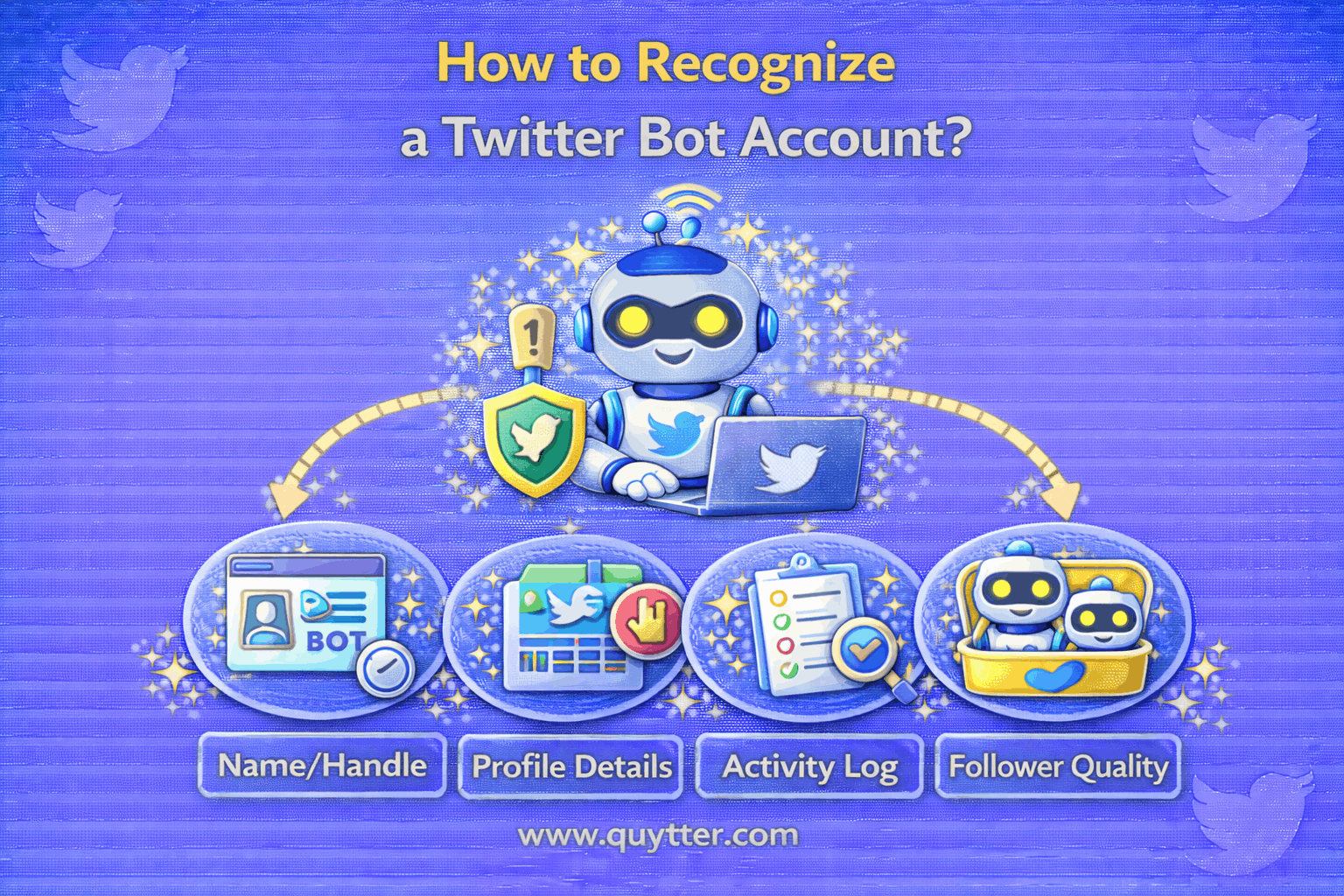
To understand how to recognize a Twitter bot account, it is essential to first define what a bot actually is. The term “bot” is often used loosely, which leads to confusion and misinformation. Not every automated account is harmful, and not every suspicious looking profile is a bot.
A twitter bot account is any account that performs actions automatically through software rather than consistent human control. These actions may include posting tweets, liking content, retweeting, following users, or replying to conversations. Automation itself is not inherently bad. The intent and impact of the automation determine whether an account becomes problematic.
There are utility bots that provide real value. Examples include accounts that post weather updates, news headlines, or system alerts. These bots are typically transparent about their purpose and do not attempt to manipulate engagement metrics.
On the other end of the spectrum are twitter spam bots. These accounts exist to deceive. They inflate likes, retweets, or followers, push scams, or manipulate visibility. Their goal is not participation but exploitation.
Between these extremes lies a grey area. Some accounts are semi automated, where humans use tools to schedule posts or manage engagement at scale. These accounts may appear human but behave unnaturally over time.
The challenge is that surface level automation is no longer a reliable indicator. Modern bots often mimic human language, timing, and interaction patterns. Recognizing them requires looking at behavior in context rather than relying on a single signal.
Why Twitter Bot Accounts Are Harder to Spot Than Ever?
Many people believe they can identify bots instantly, but twitter bot behavior has changed significantly. Early bots were repetitive, obvious, and poorly designed. Modern automated Twitter accounts are far more sophisticated.
One reason bots are harder to spot is the use of AI generated language. Instead of repeating the same phrases, bots can now generate varied responses that appear contextual. This reduces the effectiveness of simple pattern matching.
Another factor is human assisted automation. Some bot networks involve real humans overseeing dozens or hundreds of accounts, intervening when automation fails. This hybrid approach blurs the line between bot and human, making detection more complex.
Engagement patterns have also evolved. Rather than liking or retweeting everything, modern bots act selectively. They may engage with trending topics, niche communities, or specific account types to appear more natural.
Additionally, bots are often designed to age. New accounts behave cautiously, slowly building history before becoming more active. This makes “new account equals bot” an unreliable assumption.
The result is that surface checks such as profile photos or follower counts are no longer sufficient. Recognizing bots requires a holistic view that considers timing, consistency, and interaction depth.
Behavioral Patterns That Reveal a Twitter Bot Account
Behavior remains one of the strongest indicators when learning how to spot Twitter bots. While individual actions may seem normal, patterns over time often reveal automation.
Posting frequency is a common signal. Humans rarely post at perfectly regular intervals across long periods. Accounts that publish content every hour, around the clock, without variation are often automated.
Engagement velocity is another clue. Bots can like, retweet, or follow at speeds that exceed normal human behavior. Even when throttled, their activity often clusters unnaturally around specific times or events.
Repetitive interaction habits also stand out. Some twitter spam bots consistently reply with generic phrases such as “Great post” or “Interesting perspective” regardless of context. Over time, this lack of specificity becomes apparent.
Coordination is perhaps the most revealing pattern. Bot networks often act together. Multiple accounts may retweet the same post within seconds or follow the same profile simultaneously. Individually, these actions seem harmless. Collectively, they reveal automation.
Experienced marketers rarely rely on one behavior alone. They look for combinations that persist over time. Real users are inconsistent, emotional, and unpredictable. Bots strive for efficiency and scale, which eventually exposes them.
Profile Signals That Suggest a Fake Twitter Account
Profile analysis provides additional context when identifying twitter fake accounts and fake followers on Twitter. However, profile signals should always be evaluated alongside behavior.
Many fake accounts have incomplete or generic profiles. Bios may be vague, keyword stuffed, or unrelated to the content they engage with. Profile photos are often stock images or AI generated portraits reused across multiple accounts.
Usernames can also offer clues. Long strings of numbers, random characters, or repeated naming patterns across accounts often indicate automation. That said, some real users also have unconventional usernames, so this signal alone is not decisive.
Follower to following ratios are frequently discussed but often misunderstood. Bots may follow thousands of accounts while gaining few followers. Others are designed to inflate follower counts artificially. Extreme ratios in either direction warrant closer examination.
Account history matters as well. Profiles with years of inactivity followed by sudden bursts of engagement are suspicious. Real users typically show gradual evolution in interests and behavior.
The key is synthesis. A profile with minor red flags may still belong to a real user. A profile that combines multiple suspicious signals with bot like behavior is far more likely to be automated.
Engagement Quality as the Strongest Bot Indicator
When learning how to recognize a Twitter bot account, engagement quality often provides the clearest insight. Real engagement has depth, context, and variability. Bot engagement is shallow, repetitive, and transactional.
Replies from bots often lack specificity. They acknowledge the existence of a tweet without addressing its substance. Over time, this becomes obvious, especially when similar replies appear under unrelated posts.
Like and retweet patterns also matter. Bots frequently engage in clusters, amplifying content rapidly and then disappearing. Real users engage sporadically and often return to conversations.
Conversation depth is a powerful signal. Bots rarely sustain multi step discussions. They may reply once but fail to respond meaningfully when challenged or questioned.
Another indicator is relevance. Twitter engagement manipulation often involves bots interacting with content outside their supposed interests. A profile that comments on finance, gaming, politics, and fashion indiscriminately is unlikely to be human.
For brands, analyzing engagement quality helps filter vanity metrics from meaningful interaction. High engagement numbers mean little if they do not translate into conversation, clicks, or community growth.
How Twitter Detects Bot Accounts Internally?
Understanding how platforms approach detection reinforces why recognizing bots matters. X does not rely on simple heuristics. Detection systems analyze behavior at scale.
Behavioral modeling examines how accounts act over time, not just individual actions. Machine learning systems identify patterns that deviate from human norms, even when those deviations are subtle.
Network analysis is equally important. Accounts rarely exist in isolation. Bots are often part of coordinated groups. When multiple accounts exhibit correlated behavior, they are flagged collectively.
Content analysis adds another layer. Even advanced language models leave statistical fingerprints. Similar phrasing, sentiment patterns, or topical distributions can reveal automation.
User reports and manual review complement automated systems. High impact accounts receive closer scrutiny, especially when their engagement patterns affect broader conversations.
This multi layer approach explains why bot based growth strategies degrade over time. What passes unnoticed initially often becomes detectable as systems learn and adapt.
Common Myths About Twitter Bot Detection
Misconceptions about bots make detection harder. One common myth is that posting frequently always means an account is a bot. Many real users are highly active, especially journalists or community managers.
Another myth is that new accounts are automatically fake. While many bots are newly created, legitimate users join Twitter every day. Context matters.
Some believe verified accounts cannot be bots. Verification confirms identity, not behavior. Verified accounts can still use automation tools in ways that violate platform rules.
There is also the assumption that bots are banned instantly. In reality, detection takes time. Platforms prioritize accuracy over speed, which allows some bots to operate temporarily.
Understanding these myths helps users avoid false positives and focus on patterns that truly matter.
Why Following or Buying Bot Accounts Hurts Growth?
The risks of engaging with twitter bot accounts extend beyond aesthetics. Fake engagement undermines performance at multiple levels.
Analytics become unreliable. When bots inflate likes or followers, it becomes difficult to understand what content resonates with real users. Optimization decisions based on distorted data lead to poor outcomes.
Algorithms penalize suspicious patterns. Accounts associated with twitter engagement manipulation may experience reduced reach, even if penalties are not explicitly communicated.
Credibility also suffers. Audiences and partners increasingly evaluate engagement quality. Profiles with obvious fake followers struggle to build trust.
Most importantly, bot driven growth does not compound. Real engagement leads to referrals, conversations, and long term visibility. Bots provide a temporary illusion that collapses under scrutiny.
How to Grow on Twitter Without Interacting With Bots?
Avoiding bots does not mean avoiding growth. It means choosing methods aligned with how real users and platforms evaluate value.
Safe growth prioritizes real Twitter engagement over raw numbers. Views from real users increase discovery. Likes and comments from genuine accounts signal relevance. Followers gained through authentic exposure contribute to sustainable reach.
Growth should also respect pacing. Sudden spikes attract attention for the wrong reasons. Gradual, consistent engagement mirrors organic behavior and reduces risk.
Tools and services can support this process when they focus on real users rather than automation abuse. Transparency, retention, and account safety are key indicators of legitimate growth support.
The goal is not to outsmart the system, but to work with it. When growth feels natural, it lasts longer.
Grow with Real Engagement Using Quytter
Recognizing how to recognize a Twitter bot account naturally leads to a broader question. How can growth happen without bots at all?
Quytter focuses on helping brands and creators grow with real views, likes, followers, comments, and retweets delivered safely and without automation abuse. No passwords are required, and engagement is designed to reflect genuine user behavior.
Instead of selling inflated numbers, Quytter supports visibility and social proof that aligns with platform expectations. This allows accounts to benefit from increased exposure while maintaining trust and stability.
For marketers who have seen the long term damage caused by fake engagement, real interaction is not just safer. It is more effective.
Conclusion
Learning how to recognize a Twitter bot account is an essential skill in a landscape shaped by automation and manipulation. Bots have become more sophisticated, but they still reveal themselves through behavior, engagement quality, and context.
By focusing on patterns rather than assumptions, users can avoid fake followers, protect their credibility, and build growth strategies that endure. The lesson is consistent across Twitter’s evolution. Real engagement outperforms artificial metrics over time.
If your goal is to grow with real views, real likes, real followers, and meaningful interaction without the risks associated with bots, Quytter provides a practical and safer path forward. Sustainable Twitter growth starts with recognizing what is real and choosing to build on it.