
Going viral on Twitter is not luck. It is the result of how the algorithm interprets early behavior, audience response, and distribution patterns. Most tweets fail not because the content is bad, but because the system never receives strong enough signals to expand their reach.
This article explains how to build a viral tweet strategy step by step — how Twitter tests tweets, which signals matter most, and how to design content and distribution so your tweets have a real chance to spread beyond your follower base.
How Twitter Decides Whether a Tweet Goes Viral?
Twitter does not distribute tweets evenly or instantly. Every tweet enters a structured evaluation process the moment it is published. This process is designed to minimize wasted exposure and maximize user attention, which means virality is earned progressively, not granted upfront.
When you post a tweet, Twitter first shows it to a limited test group. This group is not random. It usually includes a portion of your followers who are most likely to engage, along with a small number of users outside your network whose past behavior suggests interest in similar topics. This is the first quality checkpoint.
Twitter then measures behavioral signals, not surface metrics. It looks at whether users pause while scrolling, read the tweet fully, reply, click profiles, or trigger secondary actions like quote tweets. These signals tell the algorithm whether the content successfully captured attention, not just whether it appeared on screen.
If engagement signals are strong, Twitter expands distribution to a wider audience and repeats the same evaluation process. Each expansion layer becomes slightly harder to pass because the audience is less familiar with the author. If signals weaken at any stage, distribution slows or stops entirely.
A tweet goes viral only if it continues to perform well across multiple testing layers. There is no single moment where Twitter “decides” a tweet is viral. Virality is the result of consistent positive feedback as the tweet moves through increasingly broader audiences.
The Role of Early Engagement Signals
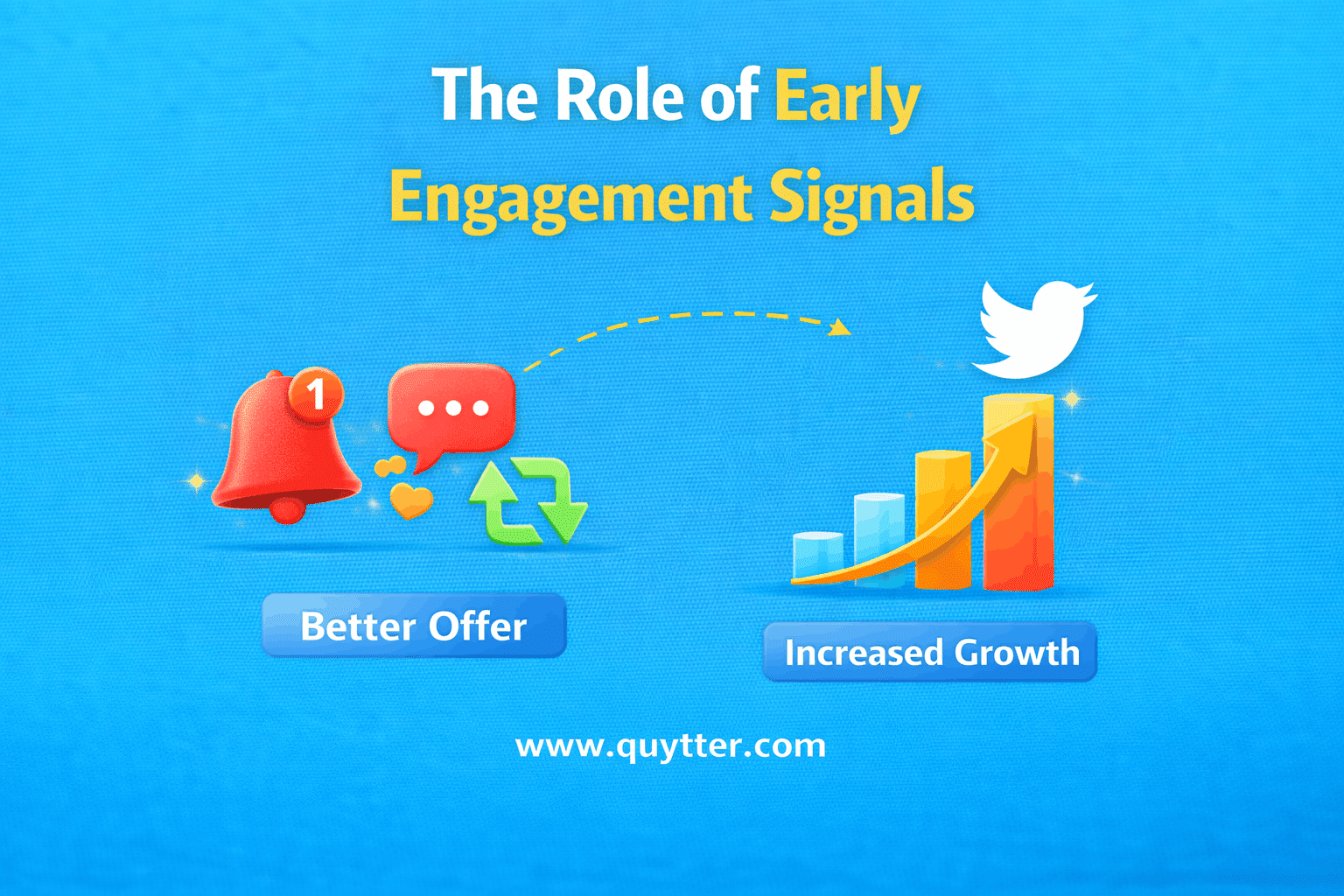
Early engagement is not just important — it is decisive.
Twitter places disproportionate weight on the first moments after a tweet is published because those moments provide the clearest signal of relevance. Replies, profile clicks, dwell time, and conversation depth tell Twitter that users did more than glance at the tweet — they paid attention.
Silence is interpreted as rejection. When a tweet receives little or no interaction early, Twitter learns that even users most likely to care did not respond. Once that conclusion is reached, distribution is reduced aggressively.
This is why many tweets never recover after a weak start. Even if engagement arrives later, the algorithm has already deprioritized the content. Twitter is optimized for immediacy, not delayed appreciation.
Early engagement does not need to be massive. It needs to be real, varied, and contextual. A few meaningful replies and interactions are far more valuable than passive likes that arrive too late.
Crafting Tweets That Trigger Interaction
Viral tweets are engineered for participation, not passive consumption.
The first line functions as a gatekeeper. If it does not stop the scroll, nothing that follows matters. Effective hooks introduce tension, curiosity, or a clear promise of insight within the first few words.
Strong tweets often contain an unresolved idea. Instead of explaining everything fully, they leave room for interpretation or disagreement. This creates a psychological reason for users to reply, question, or add their own perspective.
Tweets that invite interaction usually do one of the following:
- Present a counterintuitive insight
- Challenge a common belief
- Ask an implicit question
- Highlight a contradiction or tradeoff
- Share an incomplete but intriguing observation
Purely informational tweets often underperform because they require no response. When everything is clear and closed, users consume and move on. Interaction happens when users feel compelled to think, react, or participate in shaping the conversation.
If a tweet does not give users a reason to mentally engage, it rarely spreads beyond the initial test group — no matter how accurate or well-written it is.
Why Replies Matter More Than Likes?
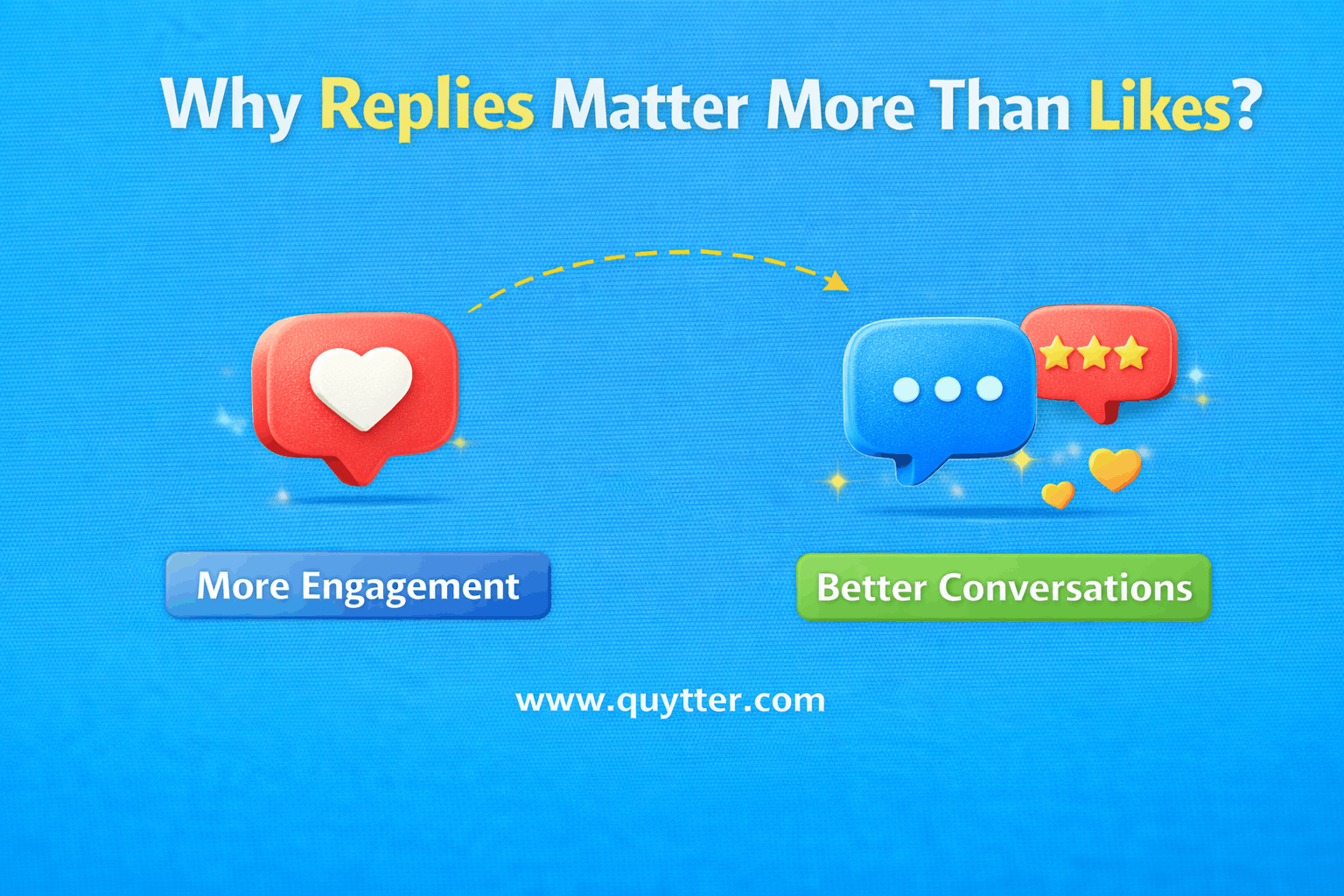
Likes are a low-effort signal. A reply is a high-commitment action.
When someone likes a tweet, they acknowledge it. When someone replies, they actively engage with it. Twitter reads this difference very clearly. Replies signal that the tweet triggered thought, emotion, or disagreement strong enough to pull the user into a conversation.
Replies also generate secondary signals that likes cannot. A reply increases dwell time, creates threaded content, invites additional users into the discussion, and keeps the tweet resurfacing in timelines. Each new reply extends the life of the tweet and gives the algorithm more behavioral data to justify further distribution.
This is why tweets with fewer likes but active reply threads often outperform “clean” tweets with high like counts and no discussion. The algorithm is not optimizing for approval—it is optimizing for interaction density.
A viral strategy that focuses only on likes misunderstands how reach expands. Tweets go viral because conversations keep them alive. Replies are not a bonus signal—they are one of the strongest drivers of continued testing and visibility.
Timing, Context, and Audience Alignment
There is no universal “best time” to post on Twitter because performance is not driven by the clock — it is driven by audience readiness. Timing only works when it aligns with who you want to reach and what mental state they are already in.
A tweet performs best when the audience you care about is actively scrolling, already exposed to the topic, and mentally prepared to react. This could be during market volatility, after breaking news, or when a specific narrative is already circulating. The same tweet posted outside that window can fail completely, even if the content quality is high.
This is why strong content sometimes dies quietly. Posting at the wrong moment produces weak early signals, which causes Twitter to stop testing the tweet. In contrast, average content posted at the right moment can outperform better writing because the audience is primed to engage.
Context amplifies content. When timing and narrative alignment are ignored, even well-crafted tweets stall before they ever get a chance to spread.
Distribution Is the Real Viral Lever
Virality is not created by content alone. It is created by who sees the content first.
Many tweets fail not because they are bad, but because they never reach users who can generate meaningful signals. Without early exposure to relevant timelines, there are no replies, no retweets, and no secondary sharing — which means the algorithm has nothing to build on.
Twitter expands reach only after confidence is earned. That confidence comes from early engagement by users who matter within a topic or network. If a tweet is shown to the wrong audience first, even strong ideas cannot pass the initial testing phase.
This is why serious viral strategies focus on distribution as much as writing. The goal is not to post and hope, but to ensure the tweet enters the right conversation early enough to trigger replies and amplification.
Viral tweets are distributed before they are celebrated. If distribution fails, celebration never happens.
Scaling Reach Without Breaking the Algorithm
Forced amplification kills trust.
Sudden spikes, artificial engagement, or synchronized actions distort behavioral patterns. Twitter does not need to detect manipulation directly — it only needs to see that behavior does not match expectations.
Safe scaling respects pacing, variation, and user choice. The goal is to help tweets reach real users, not to manufacture reactions.
When scaling supports natural behavior, viral potential increases instead of collapsing.
Common Mistakes That Kill Viral Potential
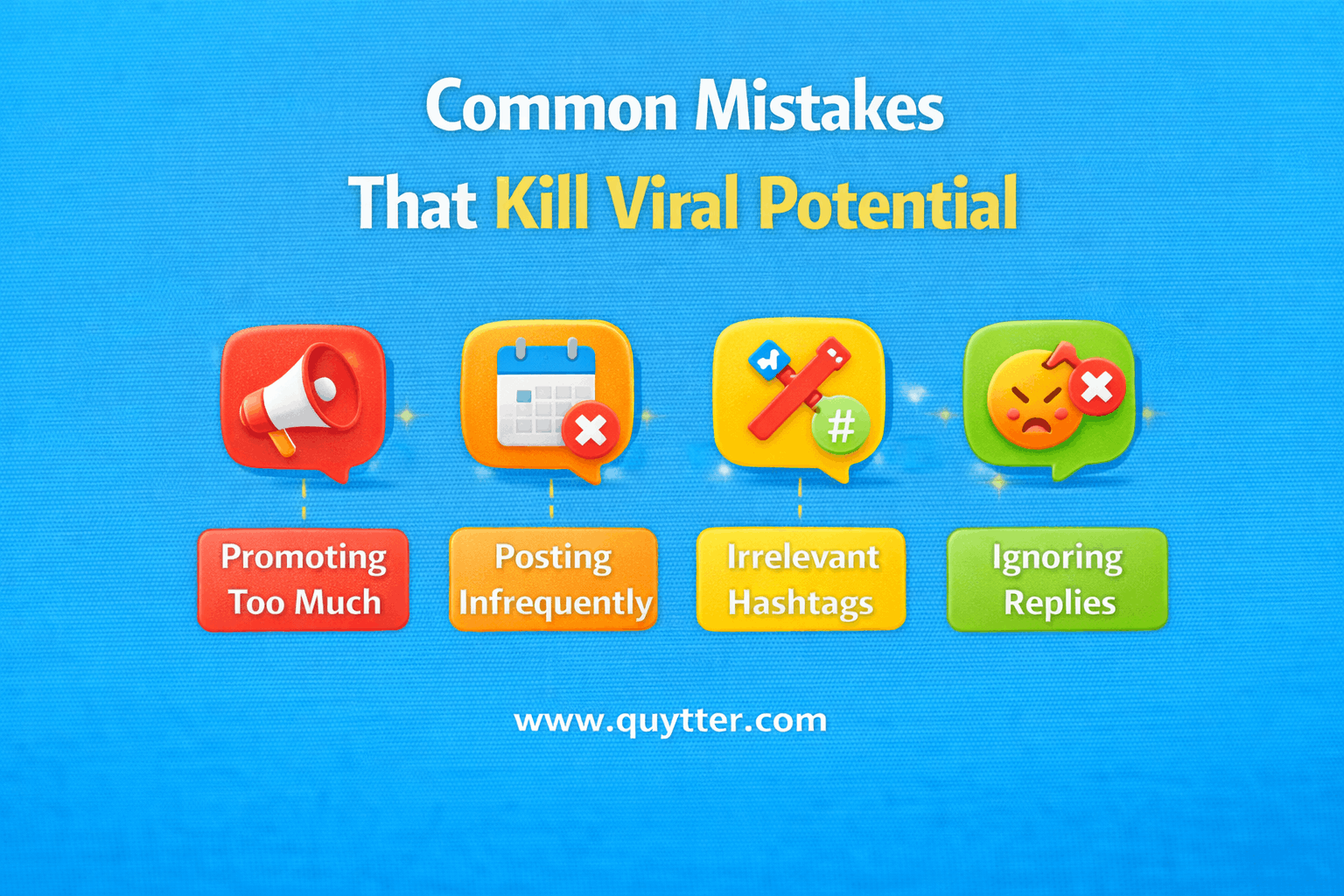
Posting without an active audience
A tweet has almost no chance to go viral if the account itself is inactive. Twitter relies on early testing, and inactive accounts lack a responsive first audience. When followers are dormant or disengaged, tweets fail the initial test regardless of content quality. Consistent posting and baseline interaction are prerequisites for virality.
Writing statements instead of prompts
Tweets that only state opinions or facts give users nothing to do. Viral tweets invite participation. When a tweet doesn’t create tension, curiosity, or a reason to reply, users scroll past. Twitter interprets this as low relevance and stops further distribution.
Optimizing for likes instead of replies
Likes are passive signals. Replies are active signals. Tweets optimized to be “agreeable” may collect likes but fail to spark conversation. Twitter prioritizes replies because they indicate deeper engagement. Tweets without discussion rarely move beyond the initial testing layer.
Forcing engagement instead of earning it
Artificial replies, engagement pods, or forced interaction create unnatural patterns. Twitter detects mismatches between exposure and behavior, which weakens future distribution. Forced engagement may boost numbers temporarily, but it teaches the algorithm that interaction around the account is unreliable.
Ignoring distribution entirely
Many users focus only on writing, not on how tweets spread. Timing, audience readiness, and early visibility matter. A strong tweet posted into an empty or misaligned timeline dies quietly. Distribution is not optional — it is part of content strategy.
These mistakes don’t just limit reach. Repeated over time, they train Twitter’s system to reduce testing for future tweets, making viral growth increasingly difficult even when content improves.
How Quytter Supports Viral Tweet Distribution ? (Without Forcing Signals)
Quytter is designed to support the distribution phase of a tweet, not to fake virality. Instead of forcing likes or scripted replies, Quytter focuses on getting tweets in front of real Twitter users who can choose how to react.
By delivering real views and contextual exposure gradually, Quytter helps tweets pass the early testing phase of Twitter’s algorithm. When real users pause, read, and reply naturally, Twitter receives clean behavioral signals that encourage further expansion.
Quytter does not bundle forced engagement or simulate conversation. Replies, likes, and follows happen only if users are genuinely interested. This protects the integrity of reply-based signals, which are critical for viral reach.
In short, Quytter supports visibility, not manipulation — allowing strong tweets to earn replies, trigger discussion, and scale organically through Twitter’s viral testing layers.
Final Thought
A viral tweet strategy is not about chasing numbers. It is about aligning content, timing, engagement, and distribution so Twitter has no reason to stop expanding reach.
Understanding principles explained in How Twitter’s Algorithm Works and How to Create Content That Encourages Retweets and Comments makes it easier to see why certain tweets spread while others stall early.
Virality is earned through behavior, not luck. When these elements work together inside a consistent Twitter growth strategy, content gains the momentum needed to move beyond the first wave of exposure.
When you understand how tweets are tested and why they spread, going viral stops being mysterious and starts becoming repeatable.