
Automation has become one of the most tempting shortcuts for anyone trying to grow on Twitter. From scheduled posting to auto replies and engagement workflows, bots promise speed, scale, and consistency. But for many users, the real fear is not automation itself. The fear is how to set up a twitter automation bot without getting shadowbanned. Shadowbans are silent, confusing, and often misunderstood. Accounts look active, content is published, but reach quietly disappears. Growth stalls without any clear warning, leaving users unsure whether their automation setup helped or harmed their account.
The problem is that most people approach automation from a tool first mindset instead of a platform behavior mindset. They focus on what a twitter automation bot can do, not how Twitter interprets those actions. Automation does not fail because it exists. It fails because it creates patterns that no human account can naturally maintain. When those patterns appear, twitter shadowban mechanisms are triggered quietly, limiting visibility without explicit notification. Understanding these dynamics is the difference between safe automation and long term suppression.
This guide explains automation from the platform’s point of view. This article breaks down shadowbans, detection signals, setup principles, and safe limits based on real world experience rather than theory. Instead of selling shortcuts, the focus is on safe twitter automation, compliance, and sustainable growth that does not rely on manipulation or fake engagement.
What Is a Twitter Shadowban and Why It Happens?
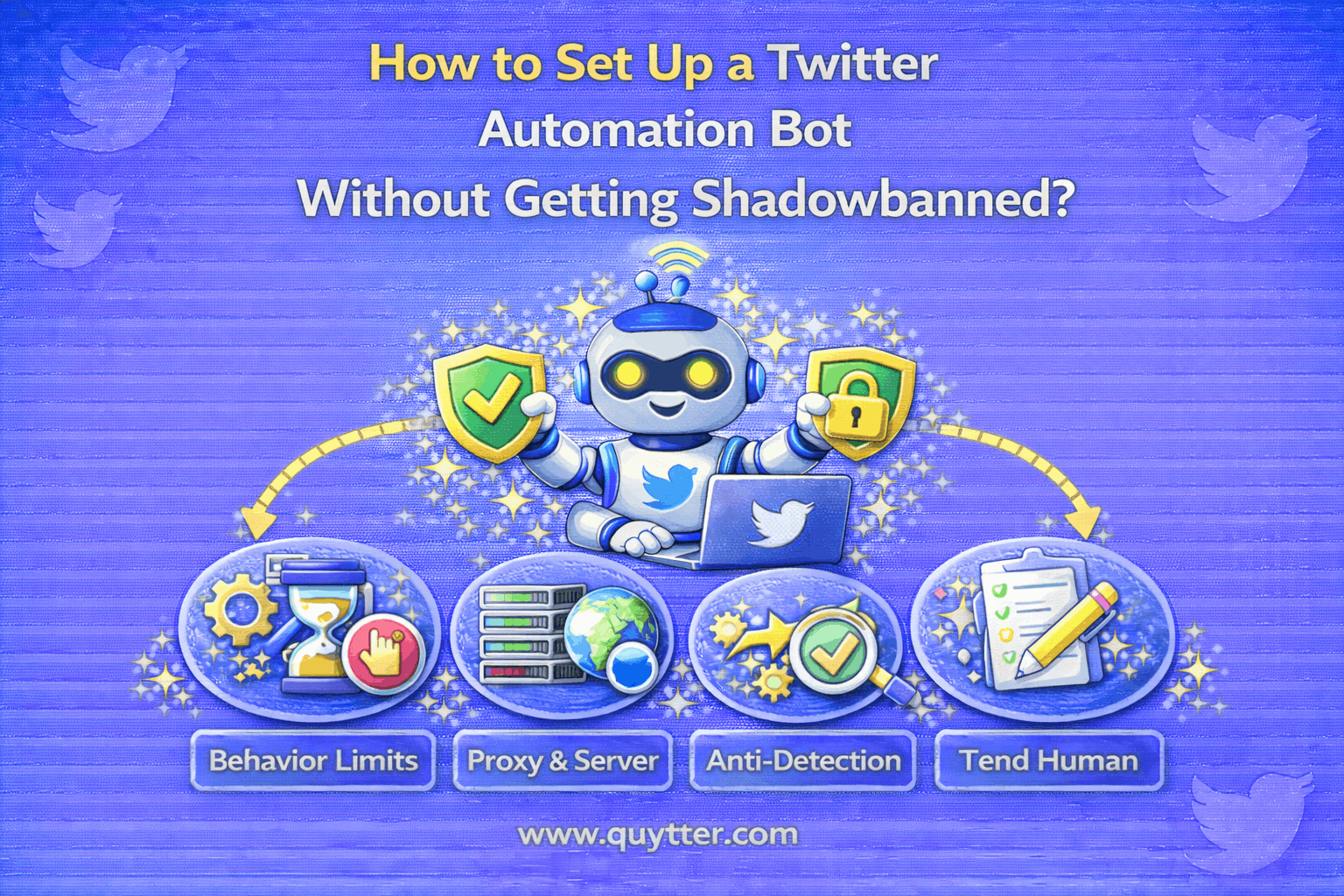
A twitter shadowban is not a single action but a range of visibility limitations applied quietly to an account. Unlike suspensions or locks, shadowbans do not notify the user. Tweets are still published, profiles remain accessible, and the account appears normal from the inside. The limitation happens on the distribution layer. Content stops appearing in search results, replies are hidden behind “show more” prompts, and reach drops sharply without explanation.
Shadowbans exist because platforms prefer frictionless moderation. From a trust and safety perspective, silent enforcement reduces confrontation and discourages users from immediately testing boundaries again. Instead of telling an account it violated rules, Twitter adjusts how content is surfaced. This makes shadowban signals difficult to interpret, especially for users who rely on automation and expect consistent output.
Automation plays a major role in shadowbans because it creates predictable behavior. Humans are inconsistent. They post at irregular times, react emotionally, and change behavior based on context. Automated twitter accounts often do the opposite. They maintain steady pacing, repeat similar actions, and operate without sensitivity to external events. These traits are easy to detect at scale.
Another common misunderstanding is that shadowbans only affect spam or malicious actors. In reality, many well intentioned marketers trigger shadowbans through excessive automation, especially engagement automation. The platform does not evaluate intent. It evaluates behavior. This is why understanding why shadowbans happen is more important than memorizing rules.
How Twitter Detects Automation and Suspicious Activity?
Automation detection is not based on a single metric. X evaluates behavior across time, context, and networks. Bot detection systems look for patterns that deviate from human norms, not isolated actions. This is why many users feel confused when their automation seems moderate but still leads to suppression.
One of the primary detection mechanisms is behavioral modeling. The system learns how humans behave statistically. This includes timing variance, action diversity, and reaction latency. When an account performs actions at consistent intervals for long periods, it signals automation dependency. Even scheduling alone can contribute to this if not balanced with organic interaction.
Another layer is suspicious activity correlation. If an account performs multiple automated actions in parallel, such as posting, replying, and liking within the same narrow time windows, risk compounds. Each action might be allowed individually, but combined patterns raise flags. This is especially true when automation replaces natural idle periods that humans typically have.
Network analysis adds another dimension. When multiple accounts use similar automation rules, timing, or content structures, the platform can detect coordinated behavior. Even compliant tools can become risky if configured identically across accounts. This is why automation setups should never be copy pasted blindly.
Types of Twitter Automation Bots and Their Risk Levels
Not all automation carries the same level of risk. Understanding the differences between bot types is essential for twitter automation setup decisions.
Scheduling bots are generally the lowest risk. They publish content at predefined times and do not interact with other users. Their primary risk comes from over consistency. Posting at the exact same times daily without variation can still signal automation, especially for smaller accounts.
Posting bots that pull content automatically carry moderate risk. They can flood timelines with repetitive links or similar formatting. If content quality drops or frequency spikes, suppression can follow. These bots require regular human review to remain safe.
Auto reply bots introduce higher risk. Auto responses on twitter are easy to detect because they rely on triggers rather than context. Repetitive phrasing, instant replies, and irrelevant responses all signal automation. While limited informational replies can be acceptable, conversational automation is one of the fastest ways to attract scrutiny.
Engagement bots represent the highest risk category. Bots that like, follow, unfollow, or reply for engagement purposes are closely associated with automation abuse. These behaviors aim to manipulate visibility signals directly, which platforms actively discourage. Even low volume engagement automation can accumulate risk over time.
Safe Twitter Automation Setup Principles
Setting up automation safely is less about tools and more about behavior modeling. Safe twitter automation follows human patterns rather than maximizing output. The goal is to reduce workload, not to increase artificial activity.
The first principle is pacing. Automation should respect natural rhythms. Humans do not perform actions evenly throughout the day. They pause, disengage, and return later. Automation that runs continuously without idle periods is more likely to trigger detection. Introducing variability in timing reduces rigidity.
The second principle is action separation. Automated actions should not cluster tightly. Posting, replying, and liking within the same minute repeatedly is unnatural. Spacing actions out creates behavioral noise that better resembles human use.
Another critical principle is manual override. Automation should never operate without monitoring. Humans should be able to pause, adjust, or stop automation quickly in response to contextual changes. This includes breaking news, platform updates, or unexpected engagement patterns.
Finally, automation should avoid imitation of conversation. Publishing content is safer than simulating interaction. The closer automation gets to human communication, the higher the risk. Treat bots as assistants, not personalities.
Rate Limits and Activity Thresholds You Should Respect
Twitter rate limits exist to protect the platform from abuse and to preserve user experience. While exact thresholds are not always public, experienced marketers understand that staying far below theoretical limits is safer than pushing boundaries.
Rate limits should be viewed cumulatively rather than per action. Posting ten tweets per day might be fine. Posting ten tweets plus dozens of automated replies and likes compounds risk. Automation abuse often happens when users consider actions in isolation instead of as a behavioral profile.
Another important factor is account age and trust history. New accounts have lower tolerance for automation. Applying aggressive automation early is one of the most common causes of shadowbans. Established accounts with consistent organic history have more flexibility, but that does not mean unlimited freedom.
Slow growth is safer growth. Gradual increases in activity allow systems to adapt to new patterns. Sudden spikes, even if temporary, can trigger long term suppression. This is why many automation failures appear delayed. The system waits to confirm patterns before acting.
Common Automation Mistakes That Trigger Shadowbans
Most shadowbans are caused by predictable mistakes. Over automating engagement is the most common. Users assume that likes and replies are harmless, but at scale they become clear manipulation signals.
Another mistake is repetitive language. Auto replies that reuse the same phrases across different conversations are easy to detect. Even small variations matter. Automation that ignores linguistic diversity signals non human behavior.
New accounts are especially vulnerable. Applying automation before establishing baseline activity is a major risk factor. Without historical data, the system has no reference point for normal behavior.
Finally, ignoring analytics is a mistake. Sudden drops in reach or reply visibility are early shadowban signals. Continuing automation after these signs appear compounds suppression instead of resolving it.
How to Monitor Your Account for Shadowban Symptoms?
Shadowbans require indirect diagnosis. Monitoring search visibility, reply placement, and engagement consistency helps identify issues early. Comparing reach on replies versus original tweets can reveal suppression patterns.
Another indicator is delayed engagement. When tweets receive impressions but minimal interaction from followers, distribution may be limited. Monitoring these trends over time is more reliable than checking individual posts.
Account safety depends on responsiveness. Detecting suppression early and reducing automation immediately improves recovery chances. Ignoring symptoms allows patterns to solidify.
When Automation Is Not the Right Tool?
Automation is not suitable for every account. Personal brands, community leaders, and reputation sensitive niches rely heavily on authentic interaction. Manual engagement vs bots is not a philosophical debate here. It is a practical one.
Early stage accounts benefit more from learning audience behavior than from scaling output. Automation can mask feedback and slow skill development. In these cases, avoiding automation entirely is often safer.
How to Recover If Your Automation Setup Already Caused a Shadowban?
Once a twitter shadowban has been triggered, the biggest mistake users make is panic driven overcorrection. Deleting tweets, switching tools constantly, or dramatically changing behavior overnight often worsens the situation. Shadowbans are pattern based. Recovery requires breaking those patterns gradually and convincingly.
The first step is stopping all non essential automation immediately. This does not mean deleting tools permanently, but pausing activity that contributes to rigid behavior. Engagement automation should be stopped entirely. Posting frequency should be reduced to a level that feels clearly human. Silence for short periods can help reset behavioral signals, especially if the account has been overactive.
Next comes normalization. Human behavior is inconsistent. Posting times should vary. Gaps between tweets should feel natural rather than scheduled. Replies should be selective and thoughtful. During this phase, quality matters more than volume. A few genuine interactions send stronger recovery signals than dozens of automated actions.
Recovery also depends on patience. Shadowbans are rarely lifted instantly. Systems observe behavior over time before adjusting distribution. This is why users who resume automation too quickly often remain suppressed. From experience, gradual normalization followed by cautious reintroduction of low risk automation yields the best results.
Automation vs Real Engagement From a Platform Trust Perspective
From the platform’s point of view, automation and engagement serve different purposes. Automation supports logistics. Engagement reflects user satisfaction. Real twitter engagement is a trust signal because it represents voluntary interaction. Automation generated engagement attempts to manufacture that signal.
Algorithms prioritize outcomes over intent. If engagement appears forced, repetitive, or uncorrelated with content quality, it loses value. Twitter engagement manipulation through automation creates shallow metrics that do not translate into retention or conversation depth. Over time, these signals are discounted.
Human engagement is unpredictable. Users reply differently based on mood, context, and interest. They skip content they do not care about. Automation lacks this selectivity. Even well tuned bots struggle to replicate natural inconsistency. This is why long term growth models favor authenticity.
From an E E A T standpoint, experts recognize that trust is cumulative. Platforms trust accounts that behave like users, not systems. Growth strategies aligned with this reality remain resilient even as detection systems evolve.
Why Safe Automation Is About Reducing Risk, Not Maximizing Output?
Many users approach twitter automation setup with a productivity mindset. They ask how much they can automate without being punished. A safer question is how little automation is needed to achieve consistency. The goal of safe twitter automation is not to push limits but to remove friction.
Reducing output reduces exposure. Fewer automated actions mean fewer data points for detection systems to analyze. This does not mean sacrificing growth. It means prioritizing actions with the highest return. Scheduling high quality content delivers more value than hundreds of automated replies.
Another key insight is that automation risk compounds over time. An action that seems harmless today can contribute to pattern detection weeks later. Conservative setups age better. Accounts that grow slowly but steadily outperform those that spike and collapse.
Safe automation is therefore a defensive strategy. It protects reach, credibility, and analytics integrity. Growth becomes a result of value rather than volume.
When Manual Engagement Outperforms Automation Completely?
There are scenarios where automation provides little to no advantage. Niche communities, thought leadership accounts, and service based brands rely heavily on trust. Manual engagement vs bots becomes a clear choice in these cases.
Manual engagement allows context awareness. Humans adjust tone, recognize nuance, and build rapport. These qualities cannot be automated effectively. For accounts where reputation matters, even small automation mistakes can have outsized consequences.
Manual engagement also provides feedback. Replies, questions, and disagreements reveal audience expectations. Automation masks this feedback, slowing improvement. For creators refining messaging or offers, this insight is invaluable.
This does not mean automation should never be used. It means automation should never replace learning. Accounts that master manual engagement first can later introduce limited automation safely.
Why Most Automation Setups Fail Long Term?
Automation setups often fail because they are designed statically. Rules are created once and left running indefinitely. Platforms, however, are dynamic. Detection models evolve. User behavior changes. What was safe months ago may not be safe today.
Another failure point is tool dependency. Users blame tools when suppression occurs, switching providers instead of adjusting behavior. Tools execute instructions. They do not make strategic decisions. Blaming tools avoids addressing root causes.
Long term success requires continuous adjustment. Automation should be reviewed regularly. Limits should be reassessed. Behavior should be compared against human norms. This ongoing management separates sustainable automation from risky shortcuts.
A Safer Way to Grow on Twitter Without Shadowban Risk
Instead of relying on twitter automation bots to simulate engagement, many marketers shift toward growth methods that focus on exposure to real users. This approach eliminates the behavioral patterns that trigger bot detection systems.
Growth based on real views, real likes, real followers, real comments, and real retweets aligns with platform trust signals. There is no need to automate interaction aggressively because engagement comes from genuine interest. This reduces suppression risk significantly.
Another advantage is data clarity. When engagement comes from real users, analytics reflect true performance. Content decisions become more accurate. Strategy improves faster.
For users who want growth without navigating automation complexity, this approach offers simplicity and safety. It removes the need to constantly adjust limits or worry about shadowban signals.
Grow on Twitter Safely Without Risky Automation Using Quytter
Setting up a twitter automation bot without triggering a shadowban requires constant monitoring, technical understanding, and ongoing adjustments. Even when done carefully, automation still carries structural risk because it relies on repeating behaviors that platforms are designed to analyze. For many users, the real challenge is not knowing how to automate safely, but deciding whether automation is necessary at all.
This is where Quytter offers a safer and more sustainable alternative. Instead of relying on bots to simulate engagement, Quytter focuses on real twitter engagement delivered from authentic users. There is no automation abuse, no engagement loops, and no behavior patterns that trigger bot detection or twitter shadowban systems.
By using real views, likes, followers, comments, and retweets, your account grows through genuine exposure rather than artificial interaction. This approach aligns with twitter automation rules because it does not attempt to manipulate engagement signals or imitate human behavior through software. Growth happens gradually, naturally, and in a way that preserves account safety.
For creators, brands, and marketers who want visibility without risking silent suppression, this method removes the complexity of automation setup entirely. You do not need to manage rate limits, adjust timing randomness, or worry about shadowban signals. Instead, you can focus on content while real users help amplify reach in a compliant way.
Choosing real engagement over automation is not about avoiding tools. It is about choosing a growth strategy built for long term trust, credibility, and platform alignment.
Conclusion
How to set up a twitter automation bot without getting shadowbanned is ultimately about understanding behavior, not tools. Automation becomes risky when it replaces human patterns instead of supporting them. Shadowbans are triggered by consistency, repetition, and manipulation signals, not by automation alone.
Safe automation requires restraint, monitoring, and patience. Even then, automation should play a supporting role, not a central one. Long term Twitter growth is built on trust, relevance, and real interaction.
If you want to grow without constantly worrying about suppression, shifting focus from automation to real engagement is the smartest move. Sustainable results come from strategies that platforms trust and users value.