
Twitter marketing bots have become one of the most discussed tools in modern social media strategy. As competition for attention increases, marketers are constantly looking for ways to scale campaigns without burning out their teams. Automation promises speed, consistency, and efficiency, but it also raises serious questions about quality, compliance, and long term effectiveness. Many campaigns fail not because automation exists, but because it is misunderstood or misused.
This guide breaks down twitter marketing automation from a professional perspective. Instead of treating bots as shortcuts, this article explains how twitter automation bots fit into real marketing workflows, when they add value, and when they quietly destroy campaign performance. By understanding how to automate Twitter campaigns like a pro, marketers can avoid common traps while building scalable systems that support growth rather than undermine it.
What Are Twitter Marketing Bots and How Do They Work?
At their core, twitter marketing bots are software tools designed to automate specific actions on Twitter. These actions may include scheduling posts, liking tweets, retweeting content, replying to mentions, or sending direct messages. Unlike generic spam bots, marketing bots are positioned as productivity tools meant to support structured campaigns.
From a technical standpoint, most marketing bots for twitter operate through APIs, browser automation, or third party platforms. They follow predefined rules such as timing, keywords, engagement thresholds, or audience filters. When configured properly, bots execute repetitive tasks that would otherwise consume human time.
However, professional marketers understand that bots do not “think.” They follow logic trees. This is why automation must be framed within a broader strategy. Bots execute actions, but they do not evaluate context, sentiment, or nuance the way humans do. This limitation defines both their power and their risk.
In campaign workflows, bots often sit in the execution layer. Strategy defines what should happen. Content defines what is shared. Automation defines when and how actions occur. Problems arise when bots are allowed to replace strategic decision making instead of supporting it.
Understanding how bots work also clarifies why misuse is common. Many tools advertise “full automation,” which encourages marketers to disconnect oversight. In reality, the most effective twitter marketing automation setups maintain human checkpoints to ensure relevance and quality.
Why Marketers Use Automation for Twitter Campaigns?
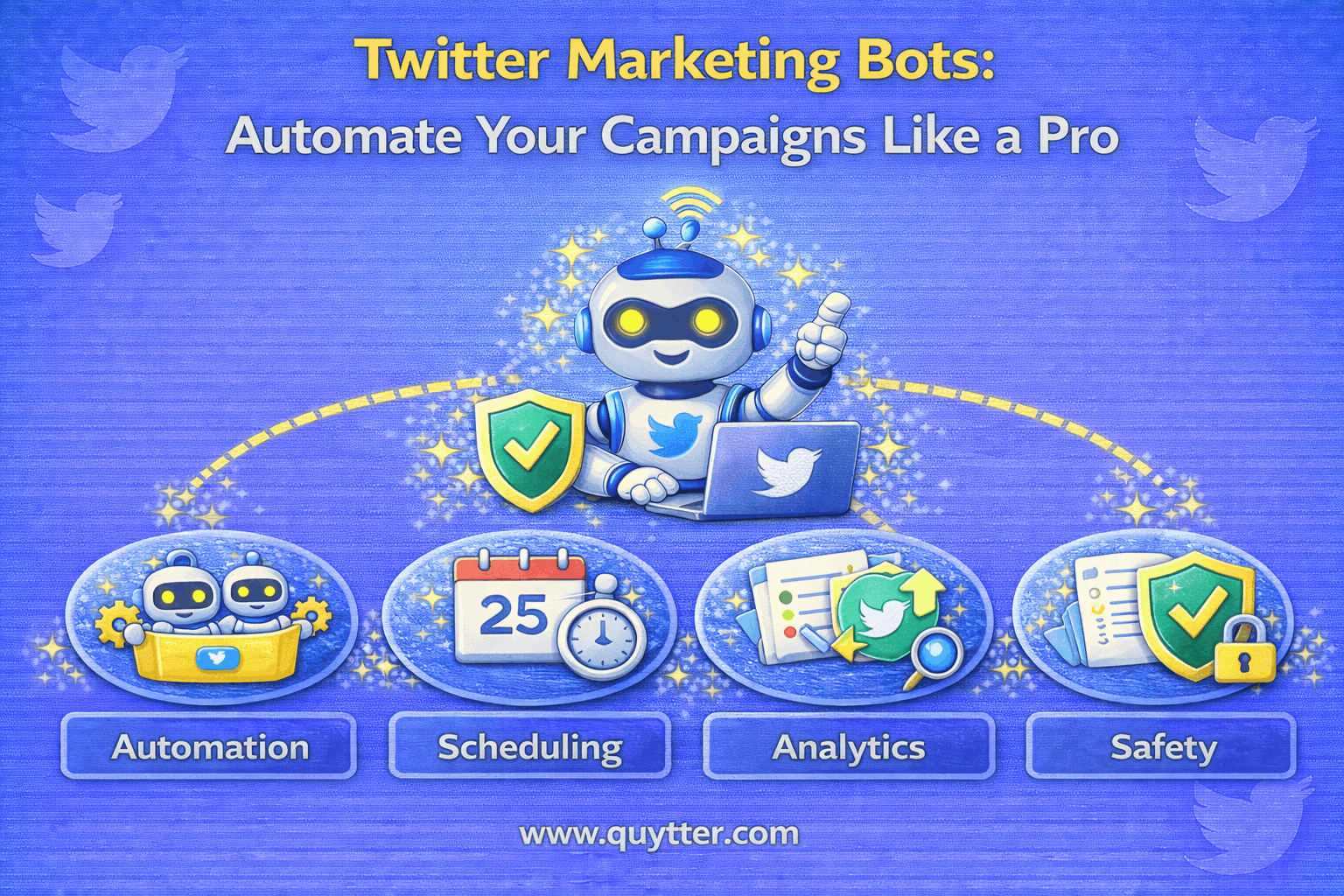
Automation exists because manual execution does not scale efficiently. Running consistent twitter marketing campaigns requires posting at optimal times, responding quickly, and maintaining presence across time zones. Bots reduce friction by handling predictable tasks.
One major benefit is consistency. Automated scheduling ensures content is published regularly, even outside working hours. This consistency strengthens algorithmic signals and audience expectations. Without automation, many campaigns suffer from irregular posting patterns.
Another reason marketers use bots is workload reduction. Tasks such as monitoring mentions, retweeting branded content, or tracking keywords can be automated, freeing human resources for creative and strategic work. This is especially valuable for small teams.
Automation also enables experimentation. Marketers can test posting times, formats, or campaign variations more efficiently when execution is automated. Data collection becomes more structured, supporting optimization efforts.
However, experienced marketers do not automate everything. They understand that automation is most effective when it supports intent rather than replaces interaction. Bots should amplify strategy, not dictate it.
Core Types of Twitter Marketing Bots
Not all twitter automation bots serve the same purpose. Professional campaigns typically use different types of bots depending on objectives.
Scheduling bots focus on content distribution. They queue posts and publish them at predefined times. These tools are considered low risk because they do not interact directly with other users.
Posting bots extend scheduling by recycling evergreen content or cross posting from other platforms. When used carefully, they maintain visibility without overwhelming followers.
Engagement bots automate interactions such as likes, retweets, or replies. This category includes auto like bots, auto retweet bots, and reply automation. These tools carry higher risk because interaction patterns are closely monitored.
Lead generation bots automate replies or direct messages based on triggers. While useful for funnels, misuse can quickly damage brand trust if messages feel generic or intrusive.
Professional marketers rarely rely on a single bot type. Instead, they combine limited automation across functions while maintaining manual control over sensitive interactions.
How to Automate Twitter Campaigns Like a Pro?
Automating campaigns like a professional requires shifting mindset. The goal is not maximum automation, but optimal automation. Pros begin with campaign objectives and work backward to determine what should be automated.
The first step is defining intent. Are you increasing awareness, driving traffic, or nurturing relationships? Each goal demands different automation intensity. Awareness campaigns may tolerate more scheduling. Relationship building requires human interaction.
Next comes workflow design. Professionals map campaign stages and identify repetitive tasks. Automation is applied only where predictability exists. For example, publishing announcements can be automated, but responding to feedback should remain manual.
Timing control is another hallmark of pro automation. Bots operate within narrow windows and realistic frequencies. Over automation creates unnatural patterns that degrade engagement quality.
Monitoring is equally important. Automated campaigns are continuously reviewed. Metrics such as engagement rate, reply quality, and audience growth guide adjustments. Automation without monitoring is negligence, not efficiency.
What Separates Professional Automation from Spam Automation?
The difference between pro level twitter marketing automation and spam automation lies in intent and execution. Spam automation prioritizes volume. Professional automation prioritizes relevance.
Spam bots engage indiscriminately. They like any tweet, follow random accounts, and reply with generic messages. This behavior generates noise and erodes trust.
Professional automation operates within context. Actions are limited, targeted, and aligned with content themes. Bots support campaigns rather than flooding timelines.
Another distinction is restraint. Pro marketers deliberately under automate. They accept slower growth in exchange for stability. Spam automation seeks shortcuts, often triggering suppression or shadowbans.
Finally, professionals view automation as temporary assistance, not permanent dependency. As campaigns evolve, automation settings change or are removed entirely.
Risks of Using Twitter Marketing Bots Incorrectly
Misusing twitter marketing bots introduces significant risk. The most common consequence is reduced reach. Platforms quietly suppress accounts exhibiting suspicious patterns without issuing warnings.
Another risk is engagement dilution. Automated interactions often attract low quality responses, reducing meaningful engagement. This weakens campaign performance over time.
Brand damage is also a concern. Automated replies or messages that feel robotic harm credibility. Audiences quickly recognize inauthentic behavior.
There is also strategic risk. Over reliance on automation discourages skill development in content and community management. When automation fails, teams lack the capability to adapt.
Understanding these risks reinforces the need for controlled, intentional automation rather than unchecked execution.
Twitter Automation Rules Marketers Must Understand
Every professional using twitter automation bots must understand platform rules, even if they change. Rules define acceptable behavior ranges, but they are not guarantees of safety.
Rate limits exist, but operating below limits does not ensure immunity. Context matters. New accounts face stricter scrutiny. Sudden behavior changes raise flags.
Automation abuse is defined by patterns, not tools. Even compliant software can cause issues if misused. This is why rule awareness must be paired with behavioral understanding.
Professional marketers treat rules as guidelines, not targets. They aim to stay comfortably below thresholds to maintain trust signals.
Measuring Campaign Performance When Using Bots
Measuring performance in automated campaigns requires looking beyond surface metrics. Likes and retweets matter less than engagement quality and conversion relevance.
Metrics such as profile visits, reply depth, and follower retention indicate whether automation supports real interest. Declining quality signals over automation.
Pros also monitor negative indicators. Sudden drops in impressions or reply visibility often indicate suppression. Early detection allows adjustment before damage compounds.
Automation should improve efficiency, not distort insight. Clean data is essential for long term optimization.
Bots vs Manual Twitter Marketing Campaigns
Comparing bots and manual campaigns highlights tradeoffs. Manual marketing builds stronger relationships but scales slowly. Automation scales but risks authenticity.
Professional campaigns blend both. Automation handles repetition. Humans handle conversation, creativity, and judgment.
This hybrid approach balances efficiency and trust. It reflects how experienced marketers use tools without surrendering control.
Smarter Alternatives to Fully Automated Twitter Marketing
After understanding how twitter marketing bots work and where they fail, many professionals reach the same conclusion. Full automation is rarely the smartest long term strategy. While bots can handle execution, they struggle with context, nuance, and trust. This is why experienced marketers increasingly explore alternatives that preserve efficiency without inheriting automation risk.
One alternative is semi automated workflows. In this model, automation supports logistics rather than interaction. Scheduling, content recycling, and monitoring are automated, while engagement decisions remain human led. This approach reduces workload without generating suspicious behavior patterns. It also keeps brand voice consistent and responsive.
Another alternative focuses on distribution rather than action. Instead of automating likes or follows, marketers amplify reach by improving visibility. This can involve coordinated promotion, influencer exposure, or controlled engagement from real users. The key distinction is that the account itself does not perform automated actions. As a result, behavioral fingerprints remain clean.
Strategic content amplification also outperforms blind automation over time. Well distributed content attracts organic interaction that compounds naturally. This builds trust signals that algorithms reward. Automation can initiate exposure, but sustainable engagement depends on relevance and audience interest.
Professionals also diversify channels. Twitter campaigns integrated with newsletters, communities, or other platforms reduce pressure on automation. Growth becomes multi directional rather than bot dependent.
Ultimately, smarter alternatives shift focus from replacing human effort to enhancing it. Automation becomes a support system, not the engine. This mindset separates scalable marketing from fragile growth hacks.
When Automation Should Be Reduced or Removed Entirely?
Knowing when to step back from twitter marketing automation is as important as knowing how to use it. Many campaigns underperform not because automation exists, but because it continues beyond its usefulness.
One clear signal is declining engagement quality. If likes increase but replies disappear, automation may be attracting low intent interactions. This erodes content value and weakens community connection.
Another signal is reach instability. Sudden drops in impressions or inconsistent visibility often indicate suppression. Continuing automation under these conditions compounds damage. Reducing activity allows systems to normalize.
Brand maturity also matters. As accounts grow, expectations change. Audiences expect authenticity and responsiveness. Automated replies or generic interactions feel out of place for established brands. At this stage, manual engagement delivers higher returns.
Automation should also be reduced during sensitive campaigns. Product launches, announcements, or reputation management require contextual judgment. Bots lack emotional intelligence and situational awareness.
Professionals treat automation as adjustable, not permanent. They scale it up during execution heavy phases and scale it down when human presence matters most. This flexibility protects brand integrity and campaign effectiveness.
How Experienced Marketers Balance Automation and Human Control?
The hallmark of pro level twitter marketing bots usage is balance. Experienced marketers rarely debate automation versus manual work as opposites. Instead, they integrate both into layered workflows.
At the top layer sits strategy. Humans define goals, messaging, and audience targeting. This layer never gets automated. Below that is content creation, which remains human driven due to creativity and nuance.
Automation enters at the execution layer. Scheduling ensures consistency. Monitoring alerts surface opportunities. Limited engagement automation supports reach without dominating behavior.
Crucially, professionals review automation outputs regularly. They adjust timing, volume, and targeting based on performance data. This feedback loop ensures automation aligns with evolving strategy.
Another balancing technique involves segmentation. Not all campaigns deserve the same automation level. Awareness campaigns may tolerate more automation. Relationship building campaigns require restraint.
This balanced approach reflects experience. It acknowledges automation’s strengths while respecting its limits. Growth becomes intentional rather than reactive.
Why Engagement Quality Matters More Than Automation Volume?
One of the most overlooked truths in twitter marketing automation is that volume does not equal value. High interaction counts mean little if engagement lacks relevance.
Algorithms increasingly prioritize meaningful signals. Replies, dwell time, and follow through matter more than superficial actions. Automation that inflates likes without conversation weakens these signals.
From a trust perspective, audiences recognize genuine interaction. Automated behavior feels transactional. Over time, this reduces loyalty and advocacy.
Engagement quality also affects downstream outcomes. Campaigns designed to drive traffic, leads, or conversions suffer when automation attracts disinterested users. Numbers rise, results stagnate.
Professional marketers optimize for depth. They measure how people interact, not just how many do. Automation supports exposure, but quality engagement sustains growth.
This shift in focus explains why many teams move away from aggressive bots toward controlled amplification methods.
Grow Campaigns Safely with Strategic Engagement Support from Quytter
For marketers who understand the limitations of twitter marketing bots but still need scalable results, Quytter offers a fundamentally different solution. Instead of automating actions on your account, Quytter focuses on enhancing visibility through controlled engagement delivered externally.
This distinction matters. By avoiding direct automation, accounts maintain natural behavior patterns. There are no scripted likes, no mass following, and no repetitive engagement actions that trigger detection systems. Growth happens without exposing the account to automation abuse or suppression risk.
Quytter supports marketing campaigns by increasing social proof and reach in a way that mirrors organic interaction. Likes, retweets, views, and comments are delivered gradually, aligning with realistic growth curves. This helps content gain traction without distorting analytics.
For professionals, this model solves a core problem. You retain full control over messaging and interaction while benefiting from amplified exposure. Campaigns scale without sacrificing trust or account stability.
Quytter is particularly effective for:
- Launch campaigns needing early momentum
- Brands protecting long term credibility
- Creators avoiding risky automation tools
- Agencies managing multiple client accounts safely
By separating engagement amplification from account behavior, Quytter bridges the gap between manual marketing and unsafe automation.
Conclusion
Twitter marketing bots can be powerful tools when used with intention, restraint, and oversight. They excel at reducing repetitive workload and supporting execution, but they fail when asked to replace strategy or authenticity.
Professional marketers succeed by understanding automation’s role rather than chasing shortcuts. Sustainable Twitter campaigns are built on relevance, trust, and consistent value. Whether through limited automation, hybrid workflows, or safer alternatives like Quytter, growth depends on respecting both platform dynamics and audience expectations.
Automation should serve marketing, not define it.